
In Brief: Harvard College students, alumni awarded 2026 Hertz Fellowships
The Hertz Fellowship recognizes exceptional doctoral students pursuing research in applied science, engineering, and mathematics
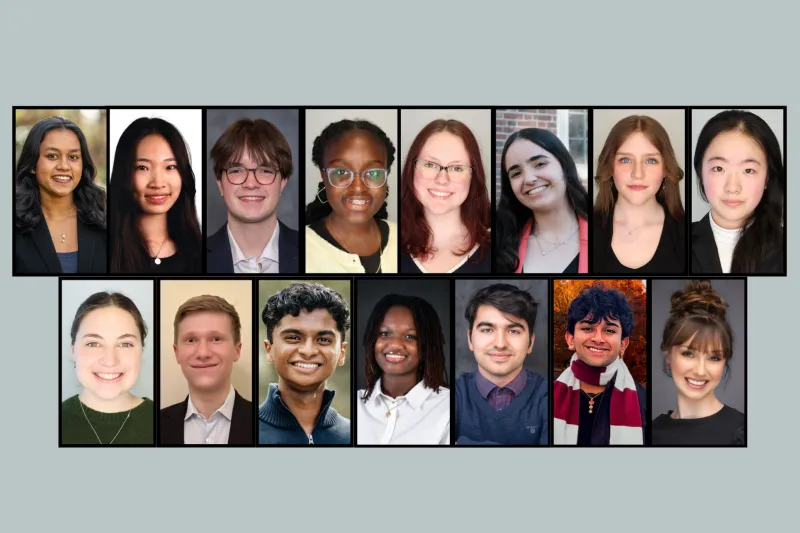
Two Harvard College students and two recent alumni are among the 19 recipients nationwide selected for the 2026 Hertz Fellowship, one of the country’s most competitive doctoral fellowships in science, engineering, and mathematics. Awarded annually by the Fannie and John Hertz Foundation, the fellowship supports graduate students whose research shows exceptional potential to address complex scientific and technological challenges.
This year’s fellows were chosen through a highly selective process involving nearly 1,500 applicants from more than 300 universities. In addition to funding for graduate study, fellows join an interdisciplinary community of researchers, engineers, and innovators working across academia, industry, and public service.
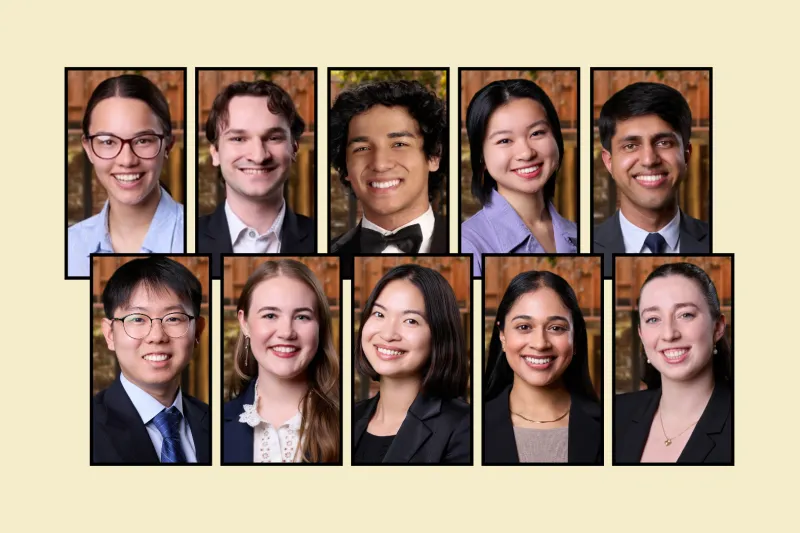
Among this year’s fellows are Harvard College seniors Andrew Chu ’26 and Miller MacDonald ’26 and alumni Nikhil Seshadri ’25 and Elizabeth Kozlov ’24.
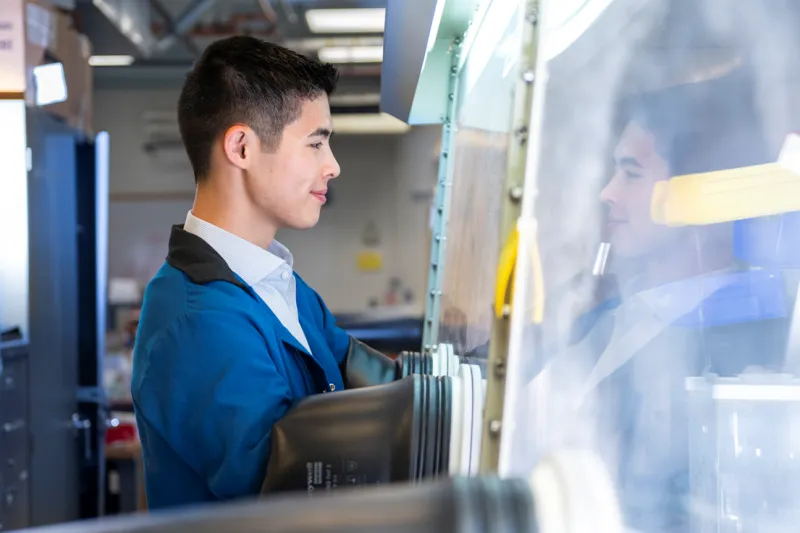
Andrew Chu ’26, of San Francisco, California, is a Chemistry and Physics concentrator whose research focuses on materials science and electrochemistry for energy technologies. While at Harvard, Chu founded the Energy Seminar speaker series focused on the intersection of climate and energy, and conducted research with Massachusetts Institutes of Technology professor Yet-Ming Chiang on sustainable electrochemical metals production and separations. At electric vehicle manufacturer Rivian, he led efforts on battery supply chain decarbonization and circularity. He is a Cameron Impact Scholar and Phi Beta Kappa Class Marshal and has been first author four peer-reviewed papers. Chu will begin doctoral studies in materials science and engineering at Stanford University in 2027.
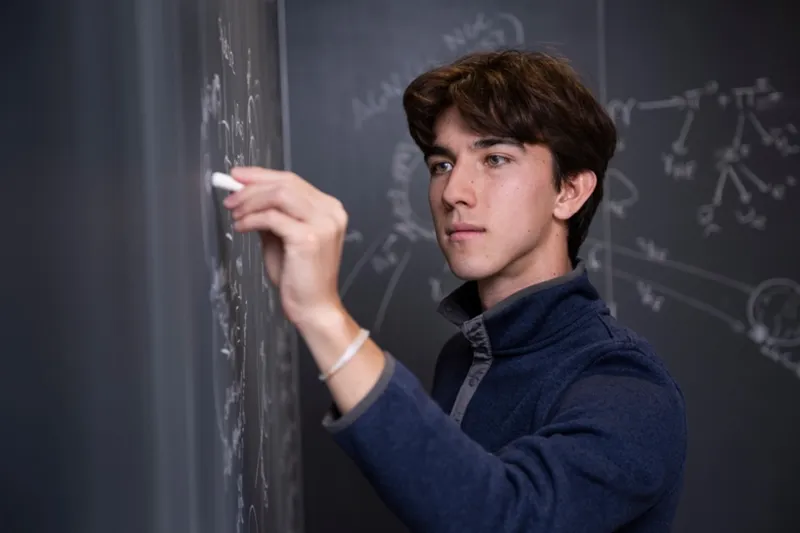
Miller MacDonald ’26, originally from Santa Cruz, California, and raised in Columbus, Ohio, is a senior studying Physics and Mathematics at Harvard College. His research investigates high-energy astrophysical neutrinos through work with the IceCube Collaboration, using data from the world’s largest neutrino telescope to better understand both astrophysical sources and neutrino physics. His work has been supported by the Harvard Herchel Smith Undergraduate Research Program and the Yun Family Research Fellows Fund for Revolutionary Thinking. Before beginning doctoral studies at Harvard University, MacDonald will spend the 2026–2027 academic year as a guest researcher at the Niels Bohr Institute within the University of Copenhagen as a Fulbright Fellow.
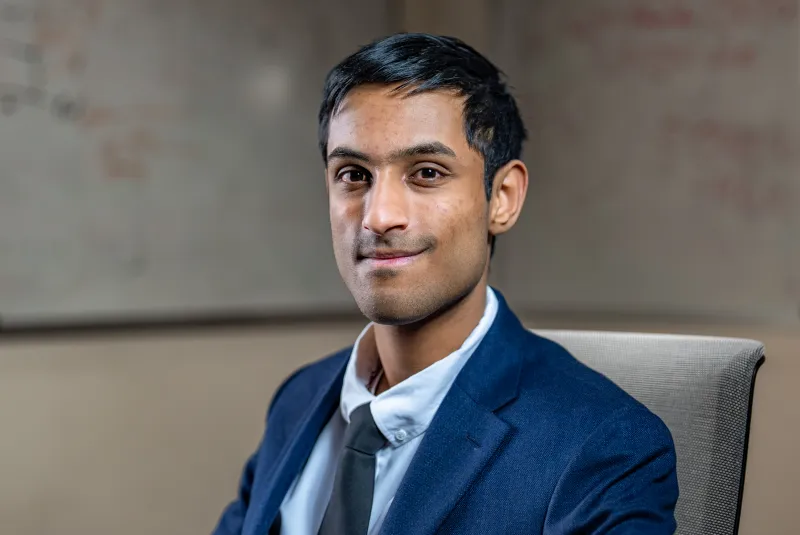
Nikhil Seshadri ’25, originally from San Diego, is a post-baccalaureate student and researcher at Los Alamos National Laboratory studying theoretical chemistry, chemical physics, and the physics and chemistry of materials. At Harvard, he completed concentrations in Chemistry and Physics (Chemical Physics) and Computer Science, with a secondary in Mathematical Sciences. His undergraduate research spanned quantum thermodynamics, open quantum systems, porphyrin chemistry, and X-ray diffraction. He was also a member of the Harvard Baroque Chamber Orchestra and performed at Harvard’s Memorial Church. Seshadri will pursue doctoral studies in chemistry at California Institute of Technology beginning in fall 2026.
As Hertz Fellows, these recipients will continue their work at leading research institutions while helping shape the future of scientific discovery and technological innovation.
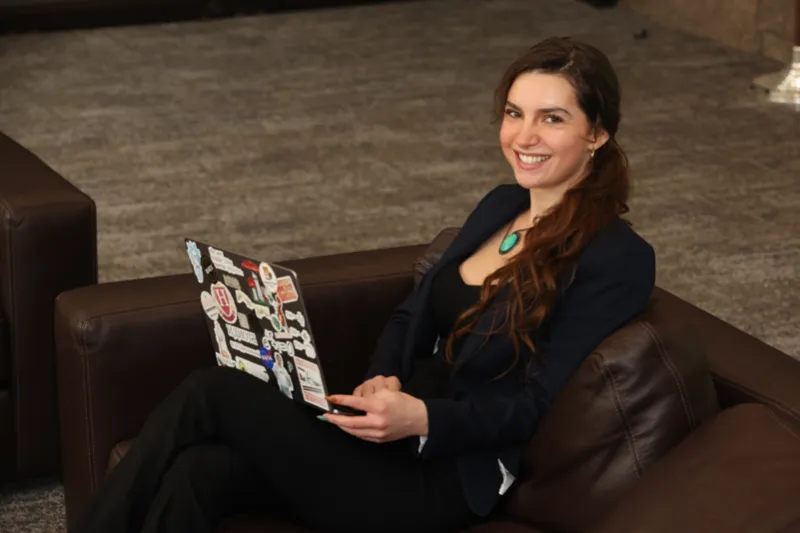
Elizabeth Kozlov ’24, originally from Maine, is currently pursuing a doctorate in astrophysics at Princeton University, where she studies black holes and geometry of spacetime at its most extreme limits. At Harvard, Kozlov graduated cum laude with high honors in Physics and received the Carol Davis Prize, the Herchel Smith Fellowship, and a Certificate of Distinction in Teaching for her work in quantum mechanics. She also served as president of the Harvard Society of Physics Students, conducted research at institutions including the European Organization for Nuclear Research (CERN) and the Harvard-Smithsonian Center for Astrophysics, wrote for the arts board of The Harvard Crimson, and served as a teaching fellow in chemistry, physics, and philosophy. At Princeton, she has been awarded the Centennial Fellowship in the Natural Sciences and Engineering.
Information and photos courtesy of the Fannie and John Hertz Foundation. Learn more at hertzfoundation.org.