
Living Communities Camp Builds Sustainability Consciousness
Overlooking campus from the Beren Rooftop Room of Winthrop House, a group of Harvard College students explored sustainability, relationships, and resilience through the weeklong Living Communities Camp.
Organized by Mauro Morabito, Mather House Climate Education and Sustainability Tutor and Teaching Fellow at Harvard College and Harvard Kennedy School, participants practiced embodiment exercises and active listening in discussions about the ecological, psychological, and spiritual impacts of a changing world.
With a teaching staff drawn across Harvard’s graduate schools, the camp’s reflection exercises, decolonial group games, and guest speaker discussions offered students a rich diversity of perspectives, while creating a strong container for deep inquiry and relationality. The camp also encouraged students to think about their personal and academic journeys in a new light prior to the spring semester.
During the January Wintersession, the camp allowed students the space and time to experiment with different ways of community-making, how to slow down and hold space for complexity, contemplation, and collaboration.
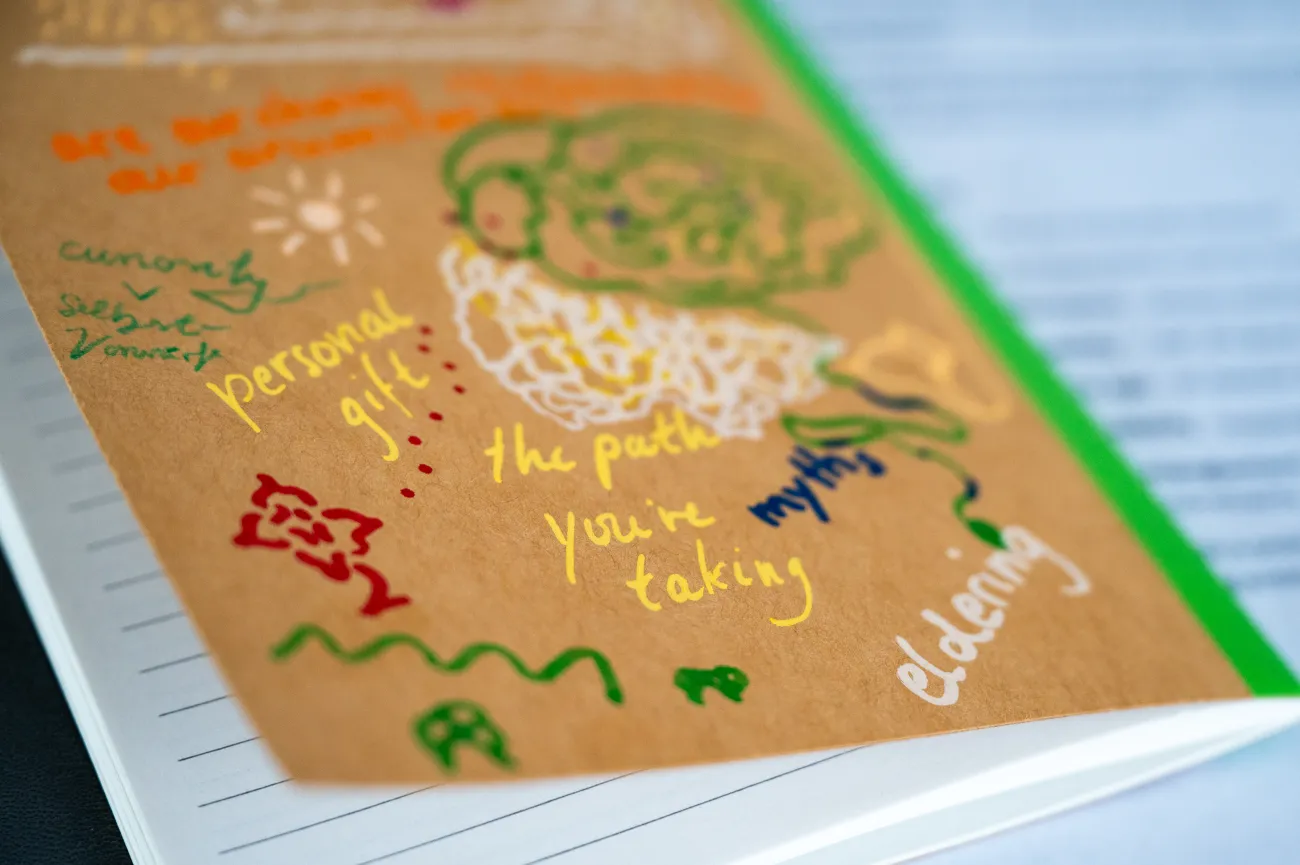
Students illustrated important takeaways from the session on their Living Communities Camp notebooks. Photo by Sarah Bastille.
Early in the week, students met with Peter C. Frumhoff, Lecturer on Environmental Science and Public Policy. After their time with him, many noted feeling inspired to reflect on their own careers, power, courage, and responsibility, and how their paths might move from individual concern to collective agency.
Inspired by the scholarship of Machado de Oliveira Andreotti and the Gesturing Towards Decolonial Futures collective, Morabito designed and led throughout the week a series of game-workshops to play out collective responses to disaster, deal with complicity and the illusion of innocence, and to learn through myths-making and generational interdependence. One of the sessions was dedicated to eldering, a concept used by some Indigenous knowledge keepers for the reciprocal lifelong practice of stepping up to one’s role in the world, becoming a good ancestor for all relations, recognizing one's responsibilities and interdependence to all beings.
The teaching team invited the students to enter the world of The Four Mountains—a story from the Cree people, that prompted them to imagine different stages of life and the responsibilities they hold in their communities in each of the stages. Morabito invited campers to consider in what ways their Harvard journeys could help cultivate a healthy eldership of all relations, inciting reflection and conversation within the room.
Jeannine Cavender-Bares, Professor of Organismic and Evolutionary Biology and Director of Harvard University Herbaria, also encouraged students to think about the deep interconnectedness of life. Through presenting her research, she explained nature’s interdependence, and how that reflects on society through shared existence.
Tina Grotzer, Principal Research Scientist in Education at the Harvard Graduate School of Education, provided a lecture on collectivity and distributed causality. She emphasized the importance of bridging distance to be able to “see” what is far away and to hold empathy for each other and the unknown, challenging how the group saw themselves and their responsibilities. Her central question asked: What does it take to act on that empathy?
Reverend Mariama White-Hammond, founding pastor of New Roots African Methodist Episcopal Church and a leading voice in environmental justice, also sat with the group to discuss the role of communities and faith, leading to a vulnerable and moving conversation between students and camp leaders across an array of spiritual and religious backgrounds.
Photobook
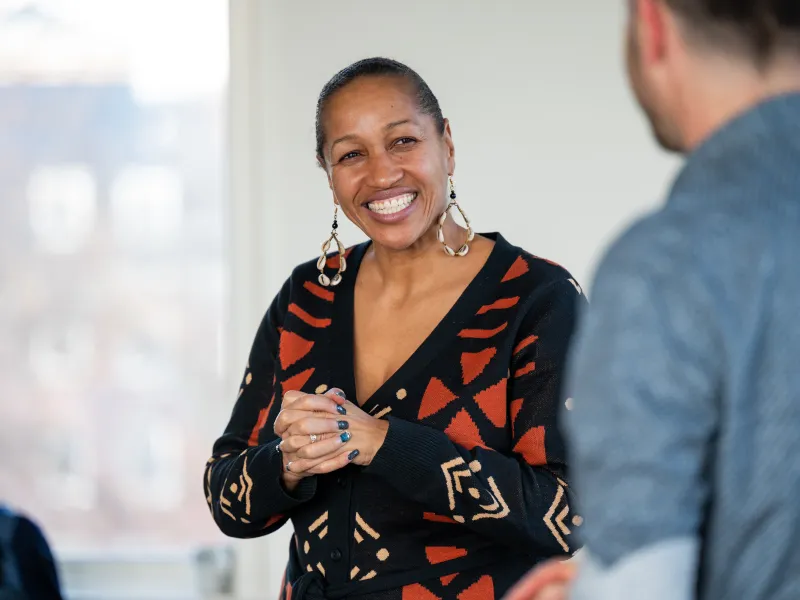 Reverend Mariama White-Hammond smiled during her conversation with students and camp leaders. Photo by Sarah Bastille.
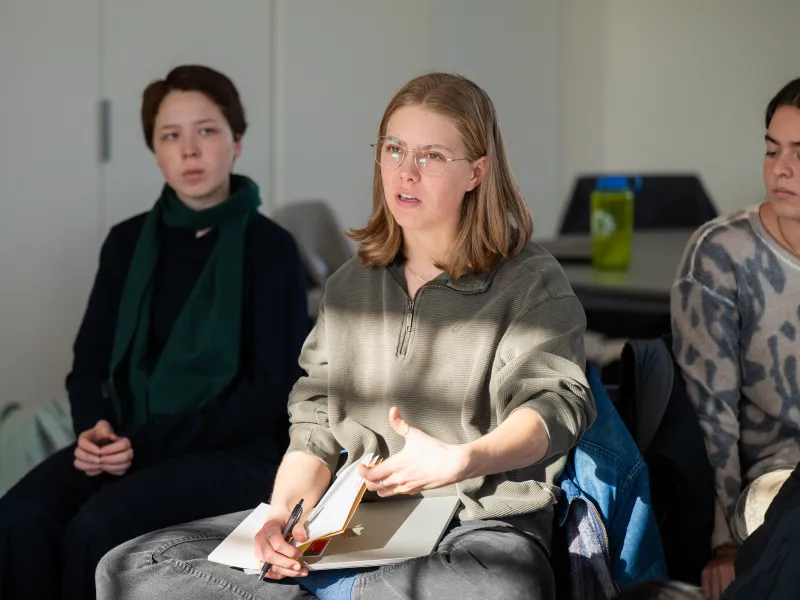 Student Halianna '28 participated in the group discussion. Photo by Sarah Bastille.
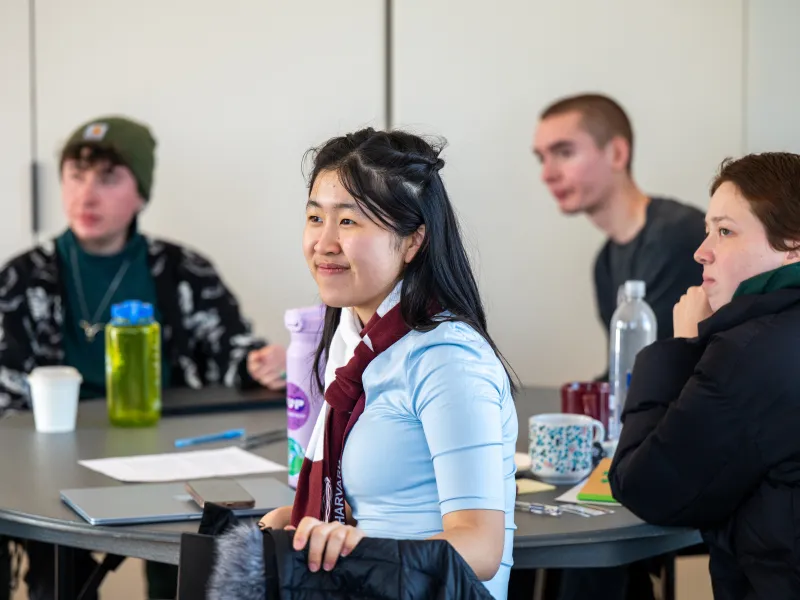 At their tables, students discussed in small groups before sharing their thoughts with the rest of the session's participants. Photo by Sarah Bastille.
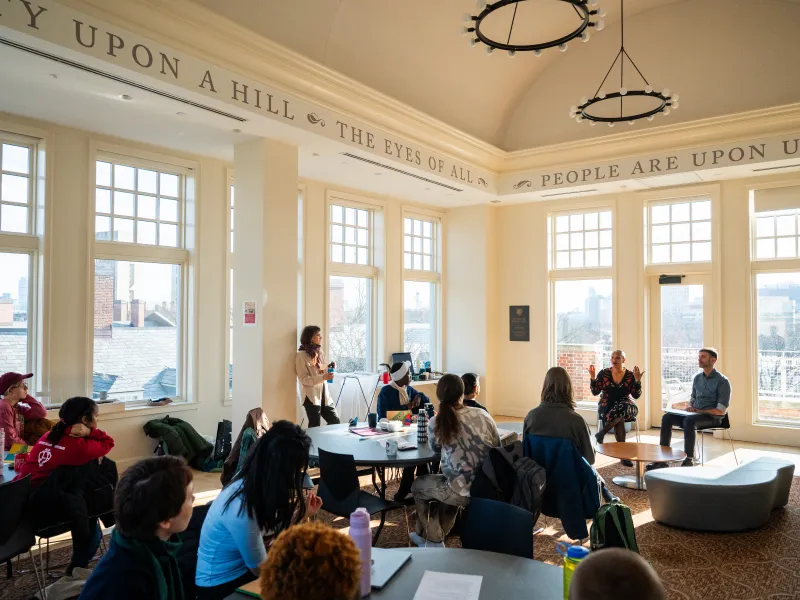 The Beren Rooftop Room of Winthrop House was full of session participants. Photo by Sarah Bastille.
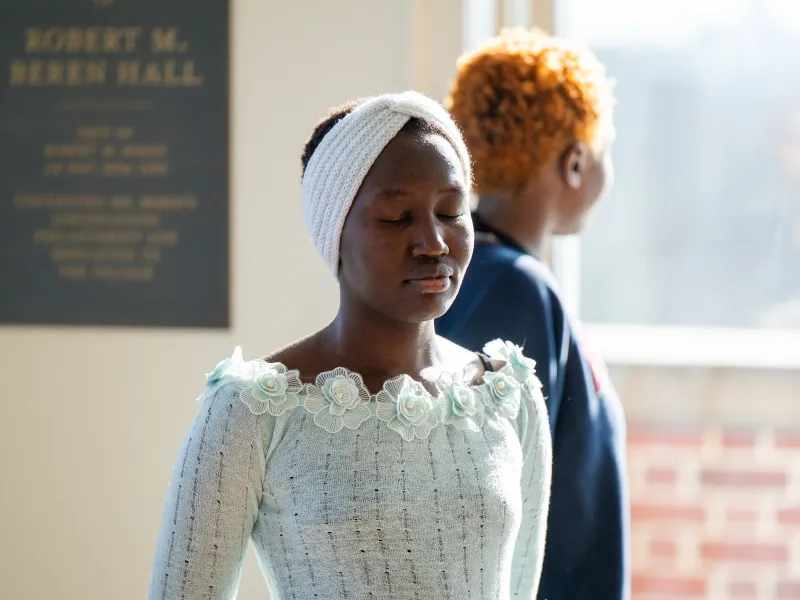 Students were encouraged to close their eyes and think deeply while working on embodiment excercises. Photo by Sarah Bastille.
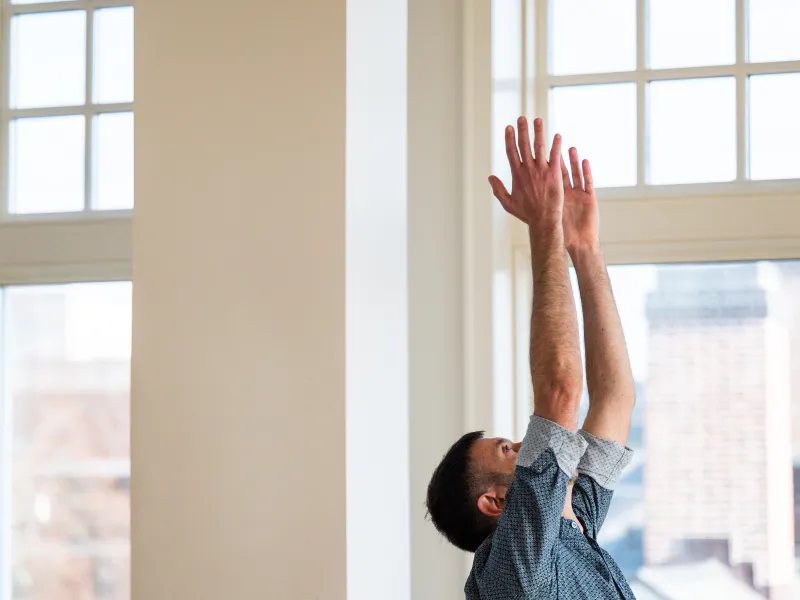 Mauro Morabito reached up to the sky during an embodiment exercise. Photo by Sarah Bastille.
The final session of the camp featured an environmental justice tour of East Boston and a visit to Eastie Farm—an urban agriculture and education project serving a diverse and vibrant local community. Led by Eastie Farm Founder and Director Kannan Thiruvengadam, the tour began with a walk along the East Boston Harbor, where campers discussed the history of land-building, the human and non-human communities living across waters, and enjoyed a view of the Atlantic Ocean.
The tour continued in the neighborhood walkways, where campers learned about community heroes such as local activist Mary Ellen Welch, who fought to preserve East Boston public spaces. Along the walk, students were shown hidden floodgates meant to protect downstream neighborhoods from storm surges, and storm gardens designed with native flora to absorb floodwater and filter pollution. To end the walk, the group passed through a tunnel of graffiti art with sustainability messages, including a mural of layered lines demarcating how much water levels could rise with every 0.5 degree Celsius increase in average global temperature.
Photobook
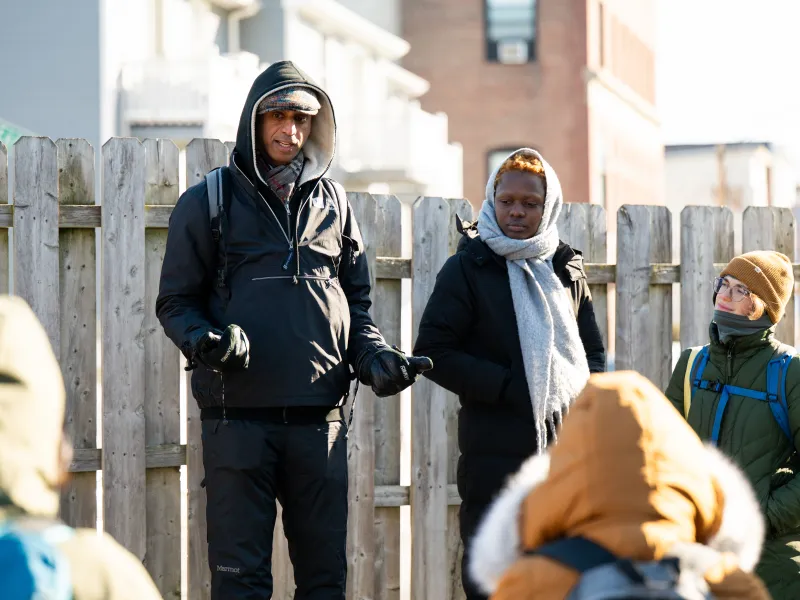 Eastie Farm Founder and Director Kannan Thiruvengadam guided the tour through neighborhood walkways. Photo by Sarah Bastille.
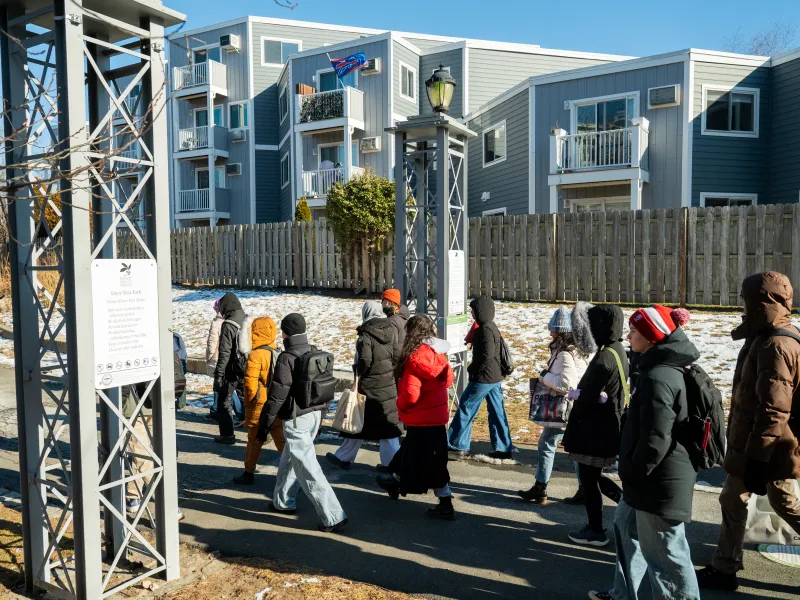 The tour of East Boston included neighborhood walkways. Photo by Sarah Bastille.
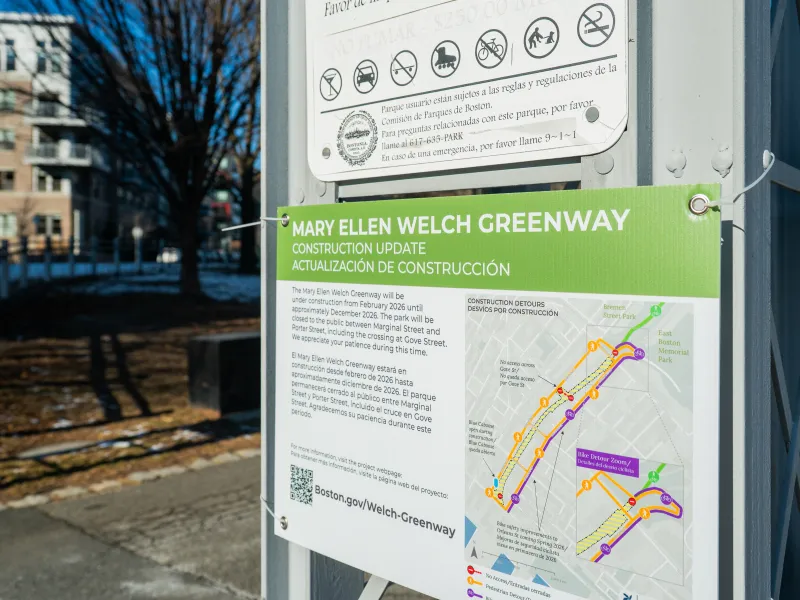 The group learned about local activist Mary Ellen Welch during the tour. Photo by Sarah Bastille.
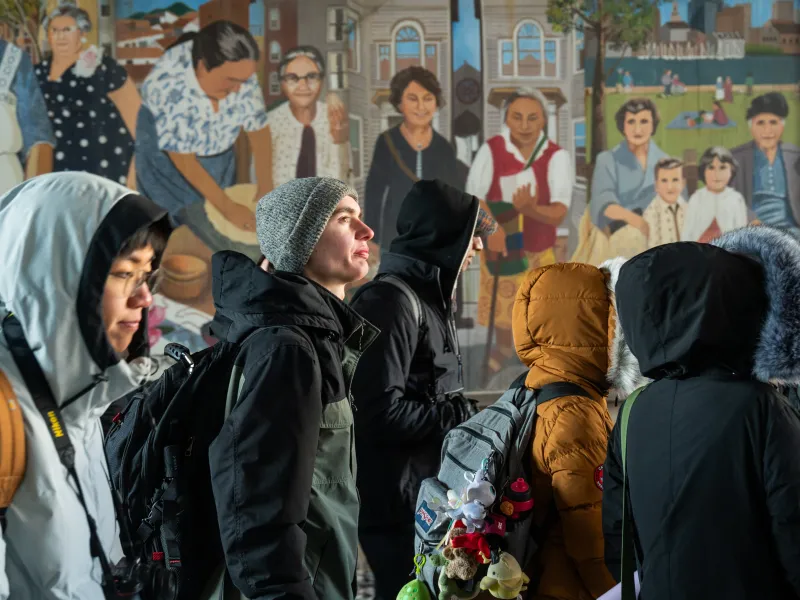 Students explored the tunnel of graffiti art during the tour. Photo by Sarah Bastille.
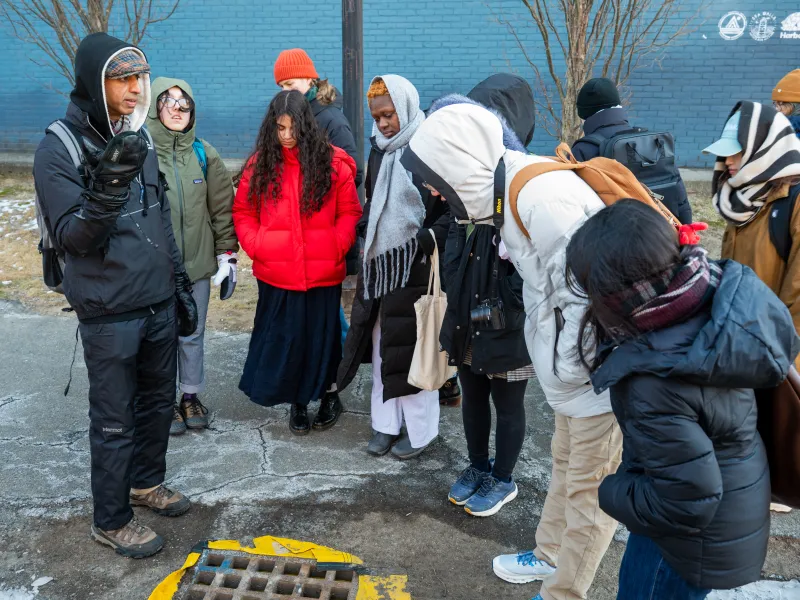 Students were shown hidden floodgates meant to protect downstream neighborhoods from storm surges. Photo by Sarah Bastille.
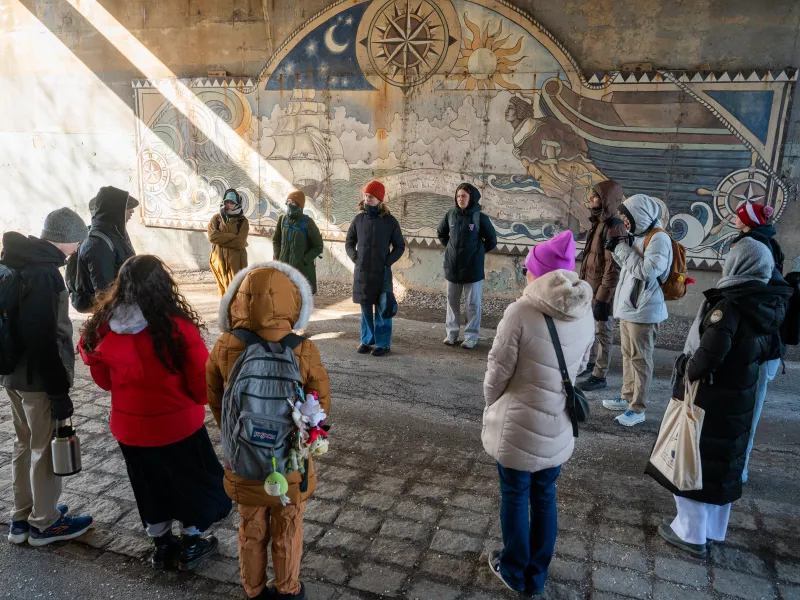 The group huddled in a large circle to discuss important topics during the tour. Photo by Sarah Bastille.
Once at Eastie Farm, the group visited its award-winning geothermal greenhouse adorned with draping vines and a multitude of potted plants, from spider plants to banana trees. There, the conversation shifted to policy and collective action, in the company of Massachusetts Climate Chief, Melissa Hoffer. The group also visited Eastie’s new hydroponics and mushroom inoculation modules.
Throughout the week, relational warm‑ups, movement exercises, and unhurried lunches helped students feel “comfortable,” “included,” and “free to grow from where we are,” as they put complex ideas in conversation with their own lives.
Nitya Basrur, student at the Harvard Graduate School of Education whose research and practices focus on embodiment in community action, conducted some of the embodiment activities. During the Eastie Farm visit, she conducted an activity that reflected on the experience of power and negotiating it with action and intention.
Lastly, the group explored Eastie Farm’s community contributions, from providing fresh food, to educational opportunities in an urban environment.
On the ride back to campus, the students reflected on the camp’s diverse stories and impactful lessons on relationality, resilience, and justice.
Photobook
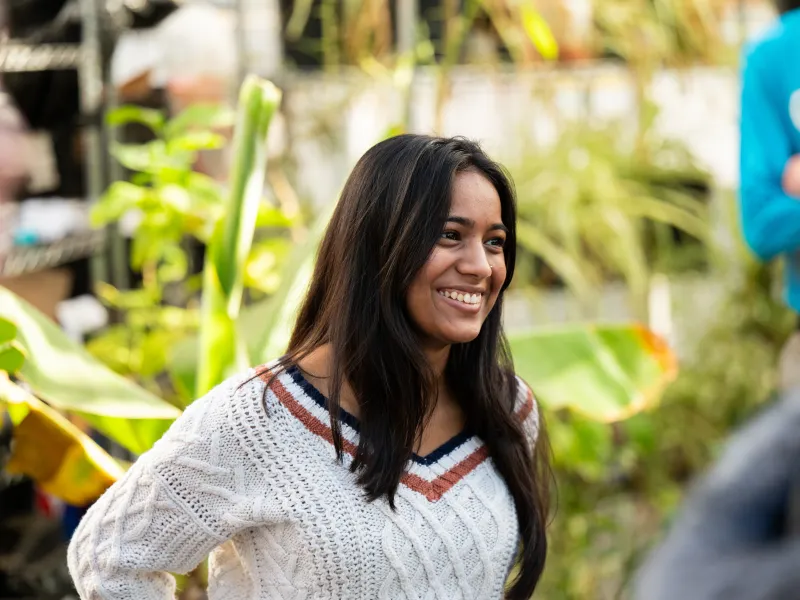 Participants couldn't help but smile during their time at Eastie Farm. Photo by Sarah Bastille.
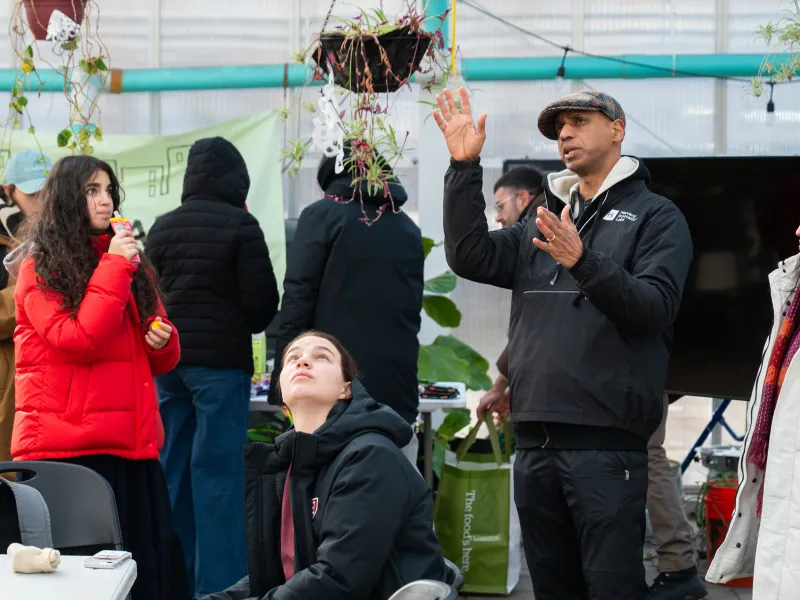 Kannan Thiruvengadam gave a tour of the geothermal greenhouse at Eastie Farm. Photo by Sarah Bastille.
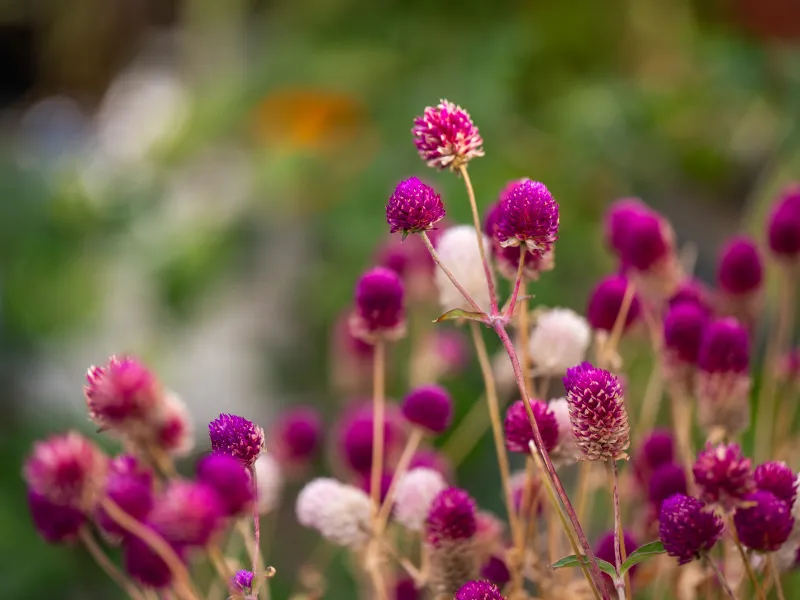 Participants enjoyed looking at the many beautiful plants inside Eastie Farm. Photo by Sarah Bastille.
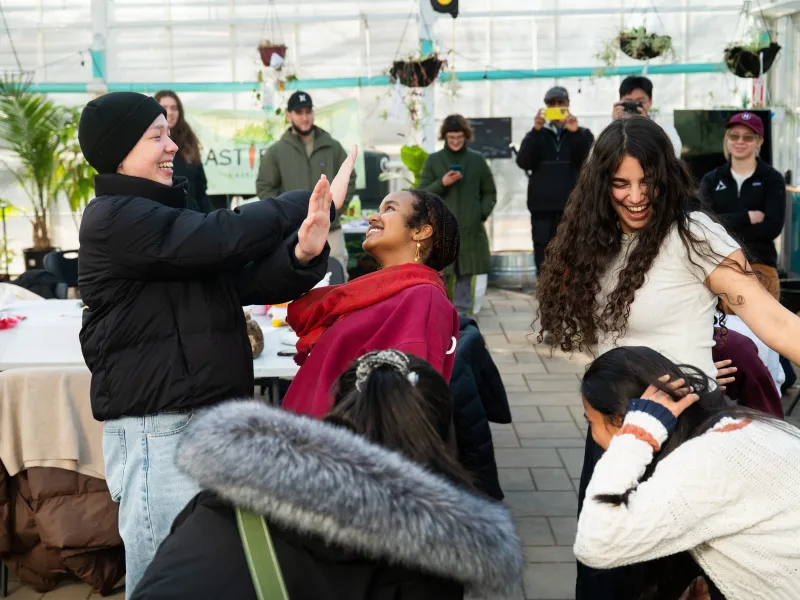 Students enjoyed participating in embodiment exercises at Eastie Farm. Photo by Sarah Bastille.
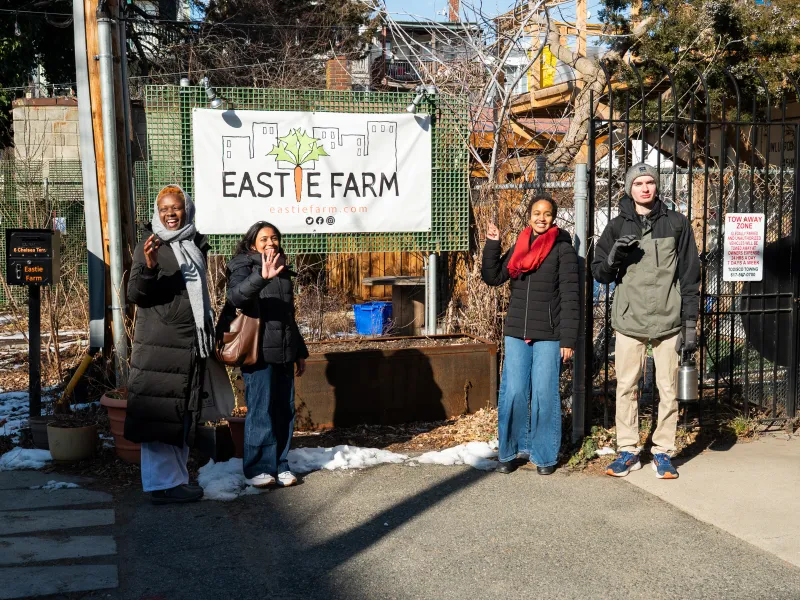 Students were all smiles when they arrived at Eastie Farm. Photo by Sarah Bastille.
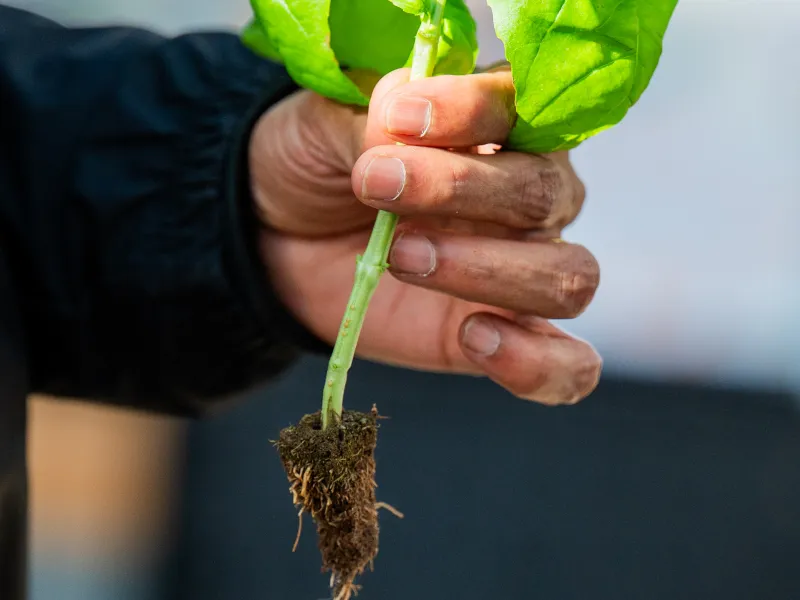 Participants got a close look at a multitude of plants inside Eastie Farm. Photo by Sarah Bastille.
Interested students are encouraged to contact Mauro Morabito and watch for announcements from the Dean of Students Office for similar programming in the future.