
Progressing Education at the Bok Center
Tucked inside 50 Church Street on the outskirts of Harvard Square, faculty, graduate students, and undergraduates at the Derek Bok Center for Teaching and Learning are reimagining what learning at Harvard can look like, and turning teaching into a creative practice.
At the heart of that work is the Teaching and Learning Lab, a studio space and collaborative team that partners with instructors to design innovative, student-centered assignments across disciplines, from literature seminars to large science lectures. Since its launch in 2015, the Learning Lab has supported dozens of courses each semester, helping faculty experiment with new ways of teaching while keeping students' experiences in mind.
“We put students at the center of everything we do,” Jordan Koffman, Assistant Director of the Learning Lab, said.
From Ideas to Iteration
Unlike traditional teaching support that focuses on one-off consultations, the Learning Lab works through iterative cycles of design. Faculty often arrive with a rough idea, such as a new use of media or a desire to rethink assessment altogether. From there, the Learning Lab staff and fellows help prototype the idea, test it with students, and refine it before it ever reaches a classroom.
That process is powered by an intergenerational team consisting of Bok Center staff supported by graduate and undergraduate fellows. Graduate fellows bring disciplinary expertise from across Harvard, while undergraduate fellows contribute something just as critical: the perspective of learners themselves.
“Undergraduates aren’t just helping us test assignments,” Koffman explained. “They’re collaborators. They help us catch assumptions, clarify instructions, and think about what will actually be meaningful for students.”
Supporting Courses Across Disciplines
The Learning Lab works with both humanities and STEM courses, often challenging the idea that creative or multimodal assignments belong only in certain fields. In one science course, students might be asked to explain a complex concept through a drawing or oral presentation. In a humanities class, students might design a game or use visual media to interpret a text.
One example Koffman highlighted was a course where students randomly drew key terms from a tarot card deck. They then had to explain those concepts aloud, on the spot, and in their own words, without referencing course materials. Novelty wasn’t the goal, but rather deeper engagement and long-term learning. “You’re not going to remember question 32 on an exam,” Koffman noted, “but you’ll remember these projects, sometimes even decades later.”
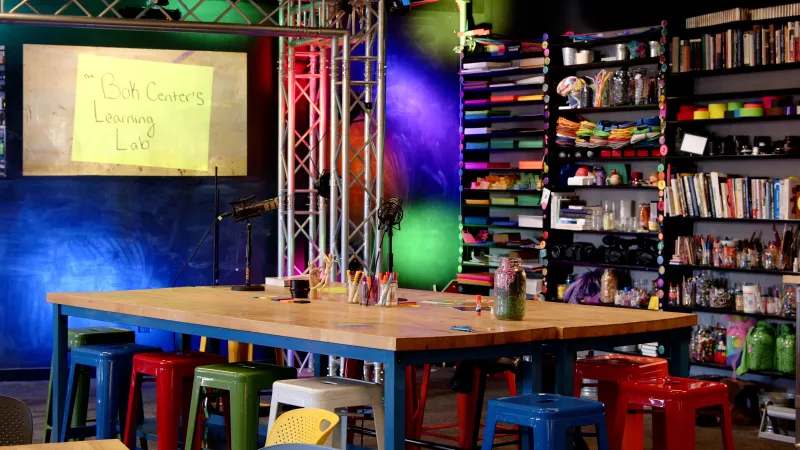
For The Love Of Learning
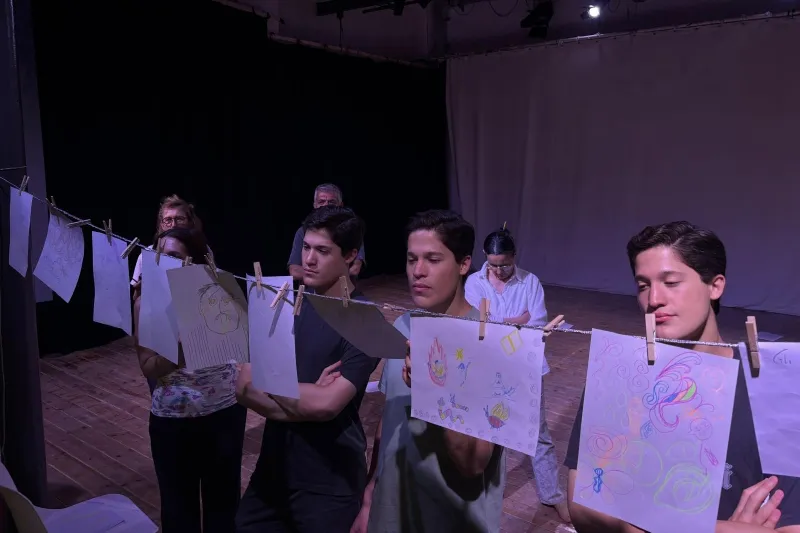
Inside the Learning Lab, students' creativity and curiosity ignites, helping them excel in their academic pursuits. Photo provided by Jordan Koffman.
Teaching in an Age of Artificial Intelligence
As artificial intelligence reshapes higher education, the Learning Lab has increasingly become a space for faculty to reflect on how AI may supplement their teaching. The Lab supports a wide range of approaches; “there’s a whole landscape of how scholars are approaching AI,” Koffman clarified. “We’re not solely focused on policing it. We can help faculty design AI-resistant assignments using multimodal projects, but we’re also preparing to support faculty who want to use AI as a tool.”
In some courses, instructors are experimenting with AI to help students generate follow-up questions or work through particularly confusing problems, while still emphasizing critical thinking and reflection.
Student and Faculty Involvement
For undergraduates, involvement with the Learning Lab often begins through their classes. Many syllabi now include visits to the Bok Center or assignments supported by the Lab. Students can also apply to become undergraduate fellows, working as paid collaborators on course design projects.
Faculty engagement is similarly flexible. Some instructors reach out with a specific idea in mind; others are connected through graduate fellows in their departments. Either way, the emphasis on student learning and reflection remains.
“At its core,” Koffman said, “teaching and learning are reciprocal. You can’t teach something without someone learning it. Our job is to help create the conditions where that learning really happens.”
Looking Ahead
Looking to the future, the Learning Lab is expanding its support for science communications, oral examinations, and reflective assignments that help students articulate what they’ve learned and why it matters. Long after a semester ends, it’s not the exam questions that linger—it’s the projects where students can joyfully discover new pathways of learning.
Lab Reimagined
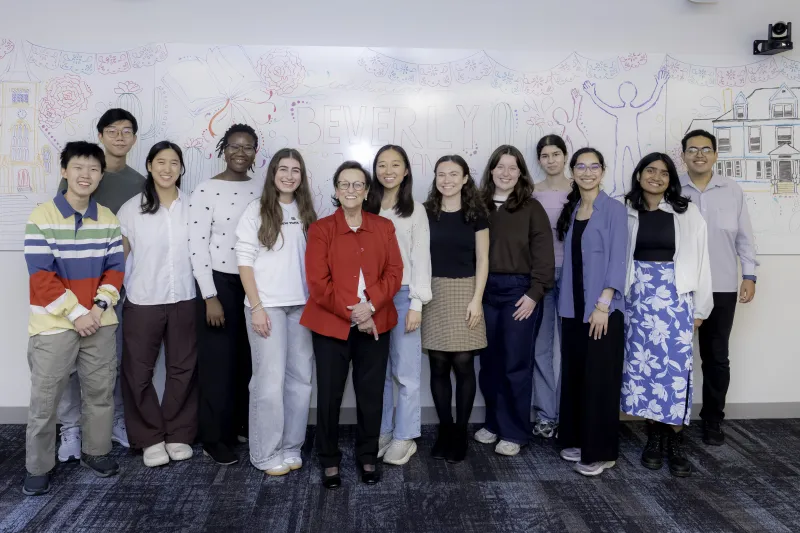
Innovation and scholarship unite at the Bok Center's Learning Lab. Photo provided by Jordan Koffman.