
Twenty Years of Peer Advising at Harvard College
When students arrive at Harvard College for the first time, many experience a mix of excitement and uncertainty about classes, community, and where they fit within it all.
For some first-years, that uncertainty can feel overwhelming. But for the past two decades, the Peer Advising Fellows (PAF) Program has helped transform those early anxieties into confidence, connection, and belonging.
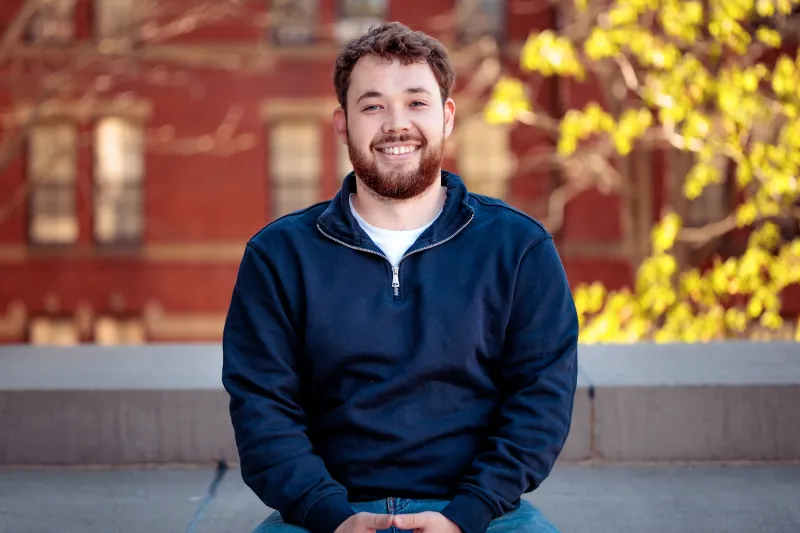
“I was nervous,” Matthew Myslenski ’27 recalled of his own first year. “I came from a small town and honestly did not have a lot of confidence meeting new people.” That changed after a conversation with his Peer Advising Fellow (PAF), who not only alleviated his fears but also inspired him to put himself out there. The experience with his PAF stayed with him, and he now serves as an Eagle PAF to continue “making a difference in the lives of [first-years].”
The deep impact Peer Advising Fellows have in supporting first-year students is the result of a carefully designed model that places peer connection as a key pillar of first-year advising. In 2006, the Report of the Standing Committee on Advising and Counseling considered a number of recommendations from the 2004 Curricular Review of Harvard College and formally recognized that “students are uniquely placed to talk to their newly arrived peers about the challenges and opportunities presented by life and learning in a residential undergraduate college.”
The report proposed the establishment of an extensive peer advising system covering all first-years, which would “replace and augment” the functions performed by the former Prefect Program. While Prefects were peers in residential houses that provided social support and fostered community-building, the proposed peer advisors would take on a more comprehensive role, helping students navigate academic expectations and college resources.
The Peer Advising Program emerged the following fall. Brooks Lambert-Sluder, Assistant Director of the Advising Programs Office and member of the office since its inception, remembers that “the shift was really about bringing academic advising into that peer space.” By formalizing a role to cover the conversations already taking place among students, the College could ensure that they were more informed, intentional, and connected to the broader advising network.
While the program has evolved over the past twenty years, Lambert-Sluder emphasized that the core principles have always been the same.
“We really want our PAFs to be informed and knowledgeable about the basics of the concentrations, about academics, and about the curriculum, so that if one of their PAFees (first-year student advisees assigned to a PAF) asks them a question, you can feel confident that they're giving an answer that is accurate and directionally correct.”
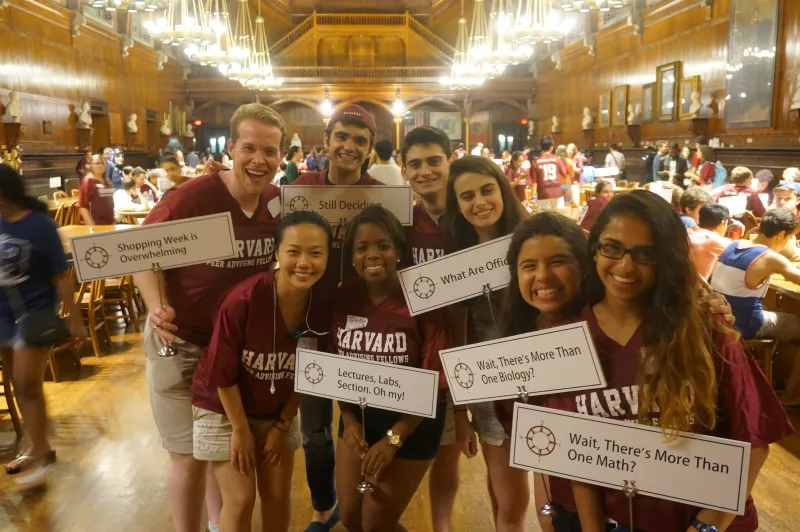
Peer Advising Fellows helped answer questions from first-year students in 2015. Photo by the Advising Programs Office.
Today the program includes 190 PAFs, who each work closely with a group of six to eleven first-year students. New PAFs are hired in the spring semester and expected to engage with weekly newsletters over the summer that highlight important resources and tasks for first-years. In August, all PAFs participate in training focused on advising scenarios, community building, and team development, before continuing their learning throughout the year with workshops, newsletters, and monthly Yard Meetings.
The program’s robust training and structure ensures PAFs are equipped with the knowledge and skills to support first-year students across a range of decisions, or simply be someone to talk to. The empathy, open-mindedness, and commitment to fostering inclusive communities required for the role are critical in helping first-years through what can sometimes be a challenging transition.
“Harvard, despite its many wonderful parts, can feel incredibly isolating in the beginning, and it is the PAFs' work that reminds us that there are people who want to support us and who want to see us succeed,” Eagle PAF Helen Blake ’26 reflected. “The people in the PAF program are some of the kindest, most thoughtful, and most dedicated people on campus and that absolutely shines through in their ability to guide first-years through their new lives on this campus and simultaneously build a cohesive entryway community.”
This impact is reflected in first-year feedback. In a recent survey, 95 percent of student respondents said they could turn to their PAF and that their PAF helped foster a sense of community. 96 percent felt that their PAF made a positive contribution to their first year. Additional responses confirm extremely high satisfaction with PAFs role in supporting course selection and registration, connecting students to College resources, and encouraging students to think broadly about intellectual pathways at Harvard.
For many PAFs, it was their own experience with their PAF that inspired them to serve in the role.
“I had an incredibly warm, energetic, and thoughtful PAF team as a first-year,” Eagle PAF Lexi Williams ’26 said. “[She] was a senior and magically wise but relatable, so when I was thinking about how I wanted to be in my next three years of college, I imagined her. I thought that if she and the team could turn my fear of the unknown into excitement and care for others, maybe I could do the same.”
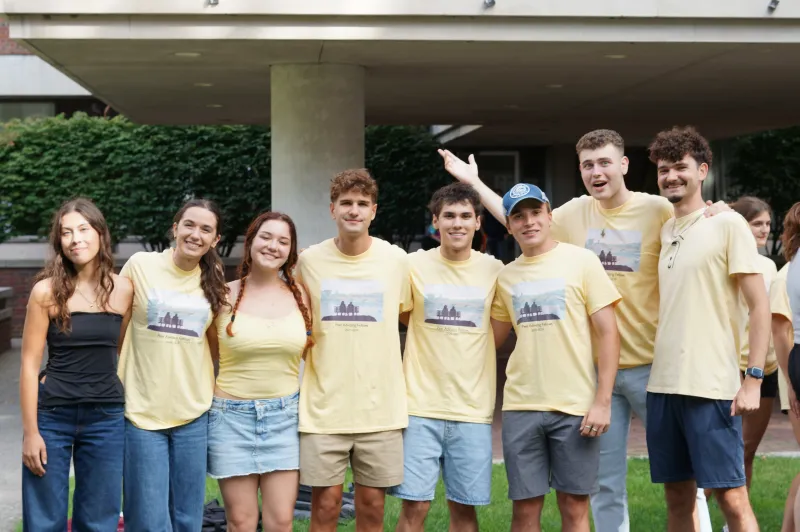
Peer Advising Fellows supported First-Year Orientation in summer 2025. Photo by the Advising Programs Office.
The relationships formed through the program are enduring. Alumni who served as PAFs describe lifelong friendships with fellow PAFs and proctors, mentorship that extends beyond college, and skills that continue to shape how they build community and lead in their professional lives.
“My time in the PAF program was a masterclass in how to build community,” Matt Thomas ’21 said. “I try to do that today, whether it is arranging hang outs with friends in a weekly cadence (like a study break) [or] lending a nonjudgmental listening ear to a friend who is struggling.”
For other alumni, the skills they practiced as a PAF have translated directly to their careers. “As a medical trainee, I recognize how deeply that role shaped the way I show up for others,” Raj Vatsa ’18 reflected. “PAFing taught me to suspend preconceived notions, to listen with intention, and to partner with the person in front of me to find their own voice. It taught me how to support others in recognizing their strengths, navigating setbacks, and defining success (or healing) on their own terms.”
Ginny Fahs ’14 emphasized the program’s influence on her mentoring skills as the manager in a large organization. “I need to understand what motivates each person on my team, why they’re here, what growth looks like for them, and how to help them navigate the institution,” she shared. “I get to listen carefully, ask questions, and help people see themselves clearly so they can move toward work they find meaningful. I feel lucky that the skills I built as a PAF have proven to be both useful and rewarding as a professional.”
When the PAF program celebrates its 20th anniversary this April, its impact can be found in the everyday work of its dedicated students: small but meaningful gestures that foster connection, study breaks filled with laughter, conversations that help students find the right people and resources, and the quiet confidence first-years gain from not having to navigate their first year alone.
“The best welcome that Harvard gives its first-years is another student who cares about them,” Kathleen Young Noon ’19 said, “and that person is a PAF.”