
First-year student improves healthcare through SPARK
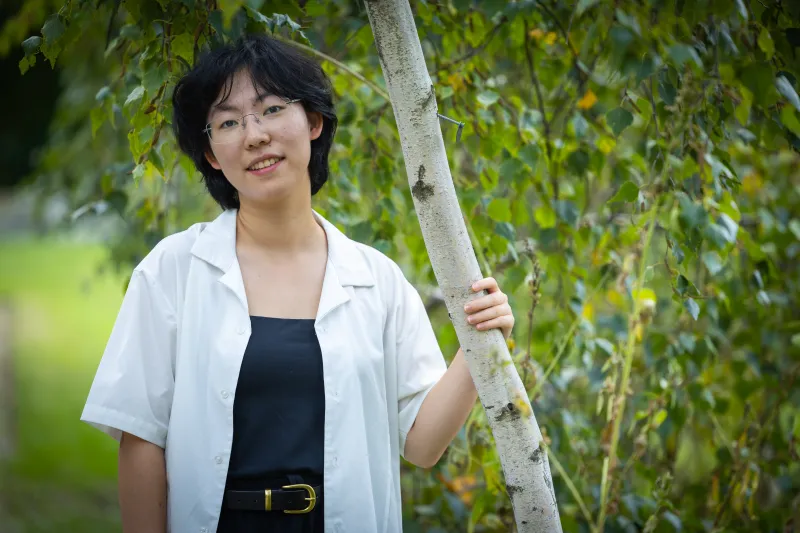
Before her first day at Harvard, first-year student Sydney Mafong ’30 spent six weeks in her hometown of San Diego, California as a SPARK fellow, working alongside physicians and helping osteoporosis patients protect their health.
Her project sits at the intersection of the things she cares about most—healthcare access, service, and the Spanish-speaking community she grew up in. It began, as many good ideas typically do, with a question she kept pondering, “why do so many patients leave the hospital without understanding what put them there?”
Through Harvard College’s Center for Public Service and Engaged Scholarship, SPARK is an immersive, paid, six-week public service program for incoming first-year students. Participants, also referred to as “SPARKlers”, design and execute a service project in their hometowns the summer before college, guided by a dedicated mentor and supported by Harvard staff, faculty, and student leaders through virtual programming. Students commit to roughly 100 hours over the summer and receive a $2,000 stipend upon matriculation and completion of the program. The program’s goals include addressing a community challenge and helping students build a sense of public purpose.
Mafong’s project lives inside the Healthy Bones Program, a Kaiser Permanente Foundation initiative for patients at high risk of osteoporosis, the gradual thinning of bone that disproportionately affects older adults and women. Her mentor, endocrinologist Dr. Patricia Shen-Chi Wu, directed the program. Together, Mafong and Dr. Wu narrowed her focus to a specific, high-need group of patients who had already been admitted to the hospital with a hip fracture. A broken hip, Mafong explains, is often the clearest sign that someone’s osteoporosis has become severe, and puts them at risk for another fracture.
Mafong noticed that in a hospital setting, the immediate emergency was solved, but there was still something missing. “They’ll treat the fracture, they’ll get their surgery, and then the patients are just let go,” she said, “but there’s no addressing the condition that caused it. A lot of patients don’t know [if they] should follow up, or how they can cure the actual root cause,” she said.
The instinct to close that healthcare disparity came from high school, when Mafong volunteered at a free medical clinic through the University of California San Diego. The clinic’s patients were mainly low-income and Spanish-speaking, and she often stepped in as an interpreter.
“I grew up speaking Spanish at home, and then I learned it more formally in high school,” she said. “I’ve always had a very personal connection to the Spanish-speaking community.”
When she reached out to local Kaiser physicians about a summer project, she arrived with a belief that health information should be easier for patients to comprehend, especially for non-English speaking individuals.
Mafong’s initial, broad idea was to take existing patient-education materials and translate them into as many languages as possible, but during her first SPARK webinar, a line that stuck with her: “you can’t walk into a community with a solution before you truly understand the problem.”
“I feel like I approached Dr. Wu with that solution without knowing the need first,” she reflected. After talking it through with her supervisor, she realized masses of general translations would be difficult to measure and prone to misjudgement, while the hip-fracture population had a sharp, documentable need.
She then pivoted to a three-pronged approach, offered in English and Spanish.
The first was a digital doctor’s note, added to a patient’s chart at discharge, explaining why they’re at high risk and recommending relevant and researched medications and lifestyle changes. The second was a set of take-home brochures covering healthy eating and medications, including their potential side effects. The third was short, engaging video clips for use in hospital rooms and on social media, so patients can return to the information from home.
“I’m trying to think of ways to make the education more accessible to patients in their day-to-day lives,” Mafong said.
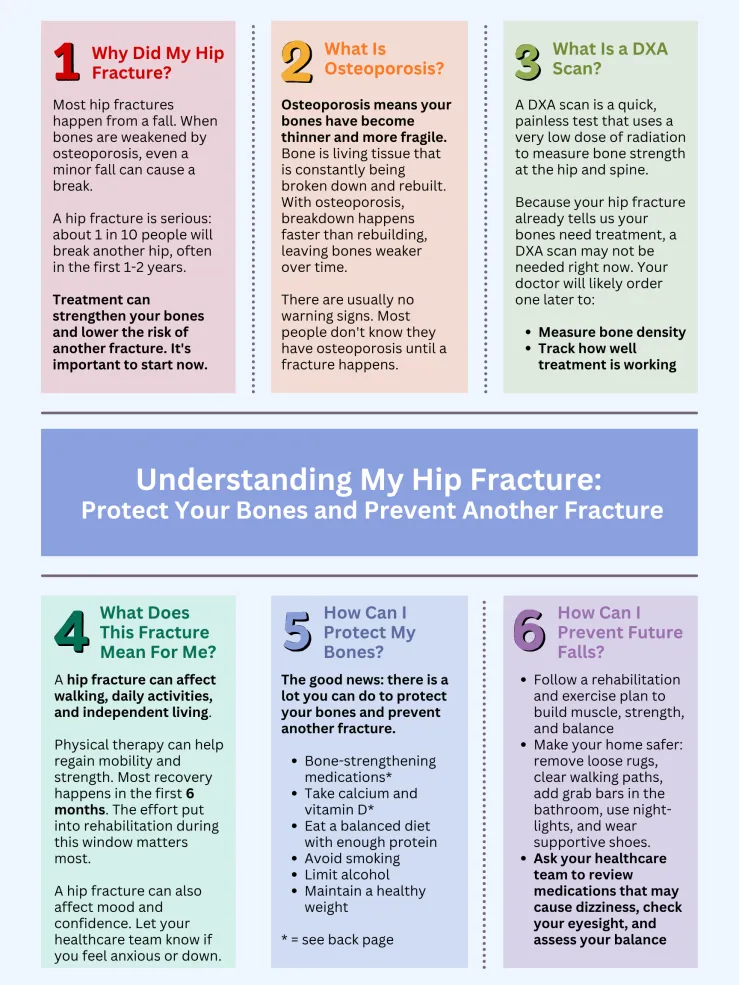
Mafong created this education sheet as a part of her SPARK project, and created an additional version in Spanish.
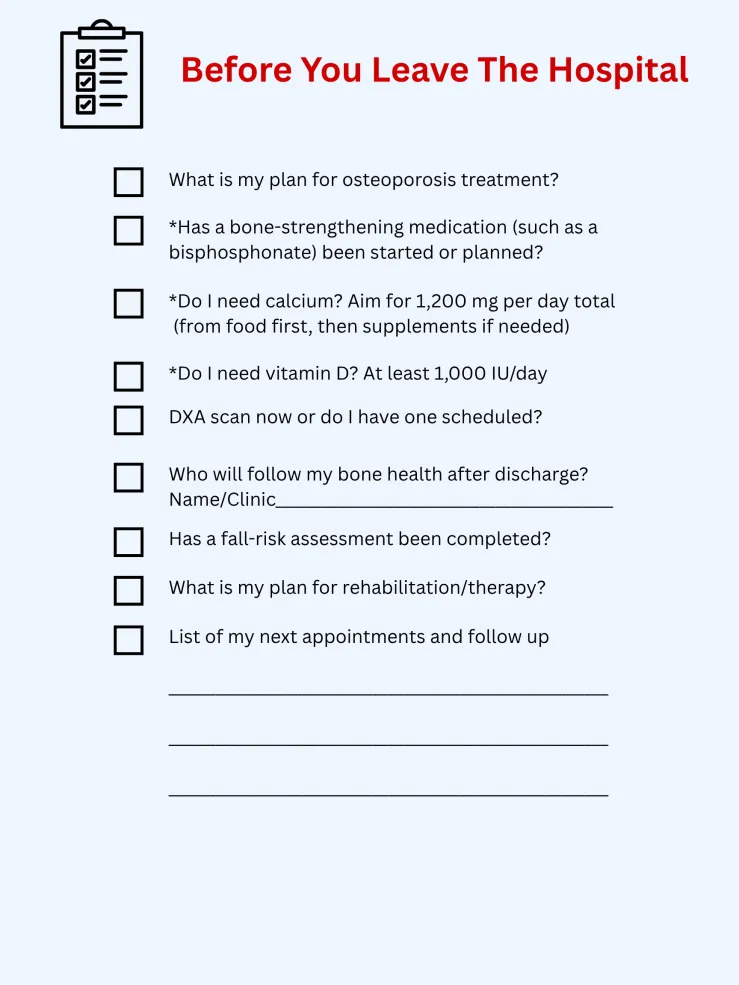
Mafong created this checklist for patients leaving the hospital as a part of her SPARK project, and created an additional version in Spanish.
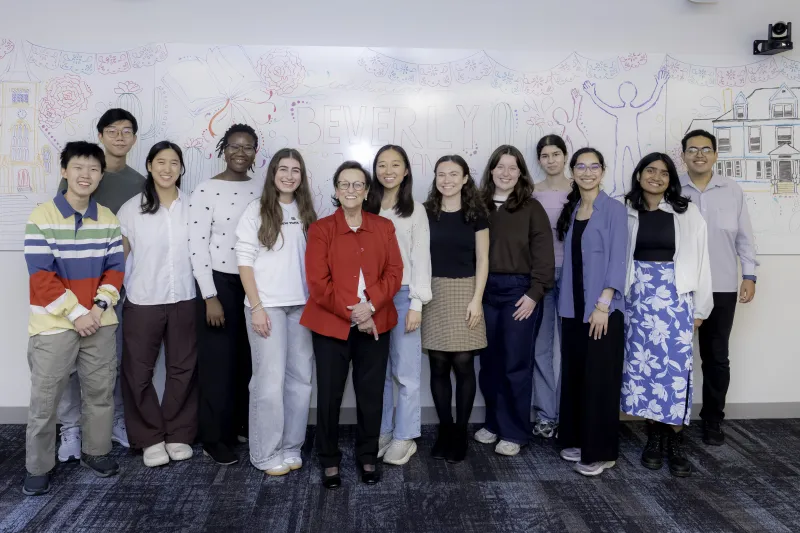
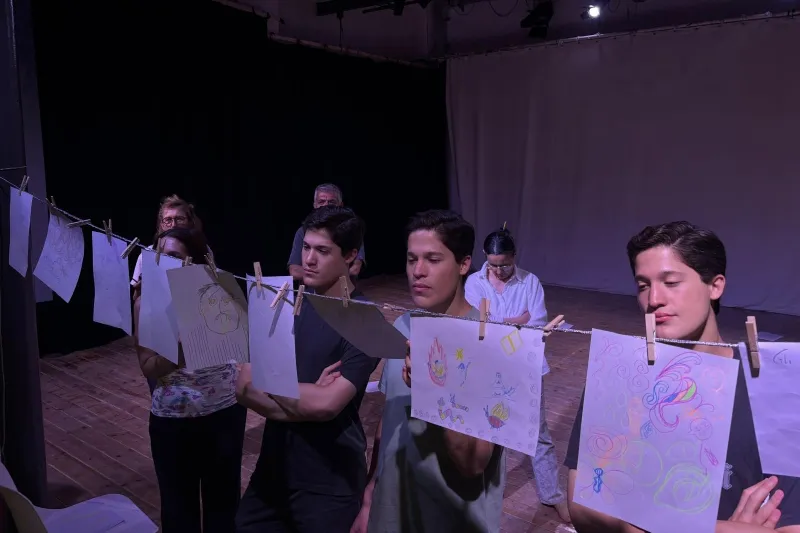
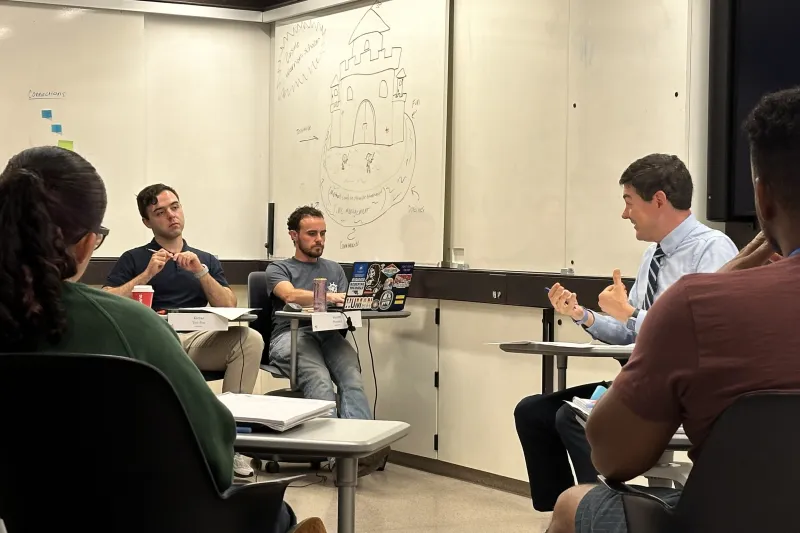
The SPARK cohort’s company was one of her most pleasant surprises. Although she led projects on her own, and volunteered in big groups before, she never had the opportunity to work independently on a project surrounded by peers doing the same type of work. In cohort meetings and small breakout sessions, she found students whose projects looked nothing like hers on the surface, yet drew on the same instincts. “Your projects might seem totally unrelated, but a lot of them require similar skills, or similar ways of thinking,” she said. “It’s really nice to have this community where you can bounce ideas off each other.” In one early session, she connected with peers working on translation and legal-access projects, and the group ended up talking about the importance of translation work.
Mafong hopes her SPARK project leaves behind an empowering sense of dignity for patients.
“I hope that patients feel like they’re being seen and cared for, because older adults and Spanish-speaking patients can sometimes be overlooked in healthcare,” she said. “I hope they know there are people looking out for them and that they deserve access to the same quality of care as anyone else.”
Mafong looks forward to starting her Harvard journey with a renewed sense of purpose and exploration among her many interests. “At Harvard, you have the ability to really craft everything that you want to be involved in,” she said.