
Army veteran attends Harvard after 20 years of service
Applying to and attending an Ivy League institution can seem daunting for many veterans who have spent years away from the classroom—and are older than their fellow classmates.
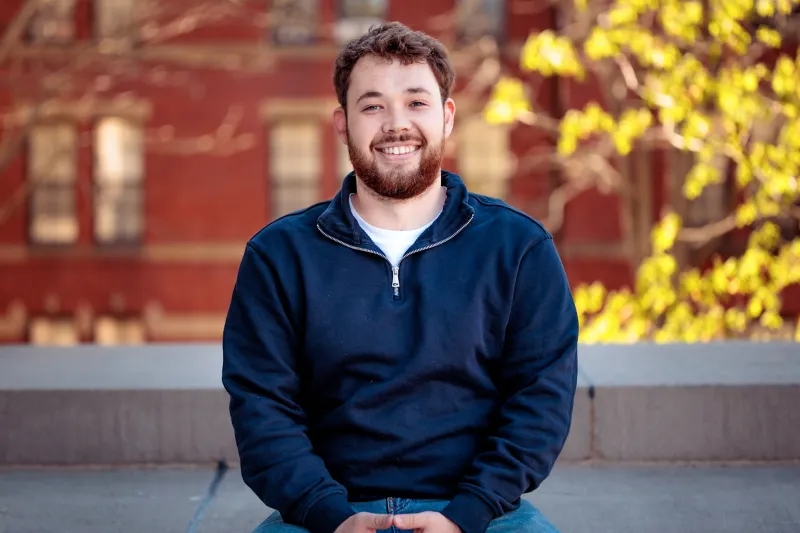
At age 47, Army veteran Cory Garbe '30 believes these differences aren’t barriers to thriving at Harvard.
“It’s an amazing institution,” he said. “Come here with an open mind, ready to learn. For my service members—all the service members, active or otherwise—don’t self-select out.”
After retiring from the Army after more than two decades of service, Garbe began to consider his next steps. He first came to campus through the Warrior-Scholar Project, an academic program that helps veterans prepare for college rigor. The Warrior-Scholar Project gave him a chance to return to the classroom, though Harvard wasn’t part of his original plan. Garbe was initially hesitant, and it was only after the program’s CEO visited the students that he began to seriously consider applying.
With encouragement from his fellow classmates and wife—that he now is grateful for the push from—he decided to apply. He reached out to former supervisors for recommendations, took the ACT, and applied through Restrictive Early Action.
When his decision arrived in December 2025, he didn’t hesitate to accept.
Attending college was always a goal for Garbe, but after initially enrolling for a semester years ago, he found it too expensive to continue. Army recruiters offered him an alternative: serve for a few years and the military would pay for college afterward. He enlisted expecting to stay only a short time, unaware that he would go on to serve for 24 years.
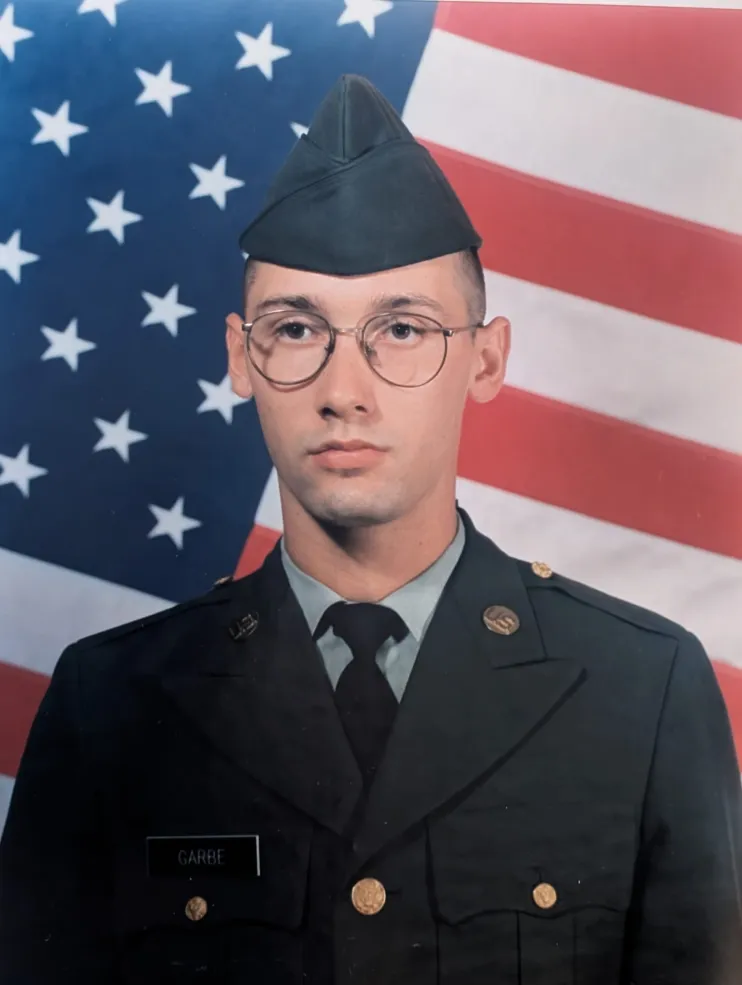
Garbe in his 20s during basic training.
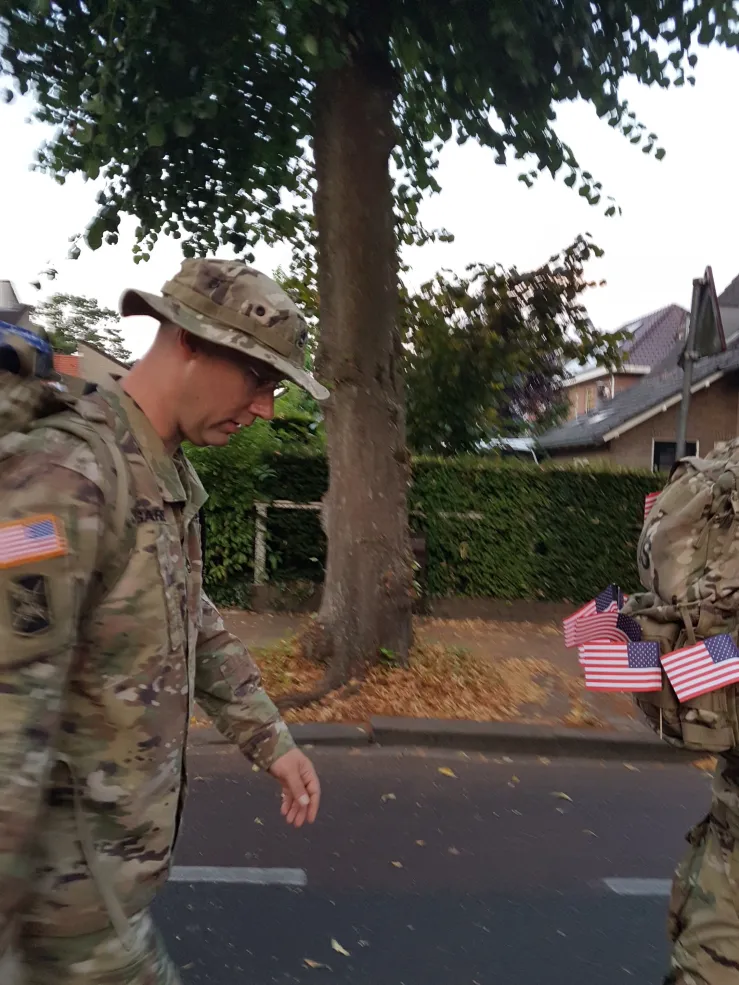
Garbe in 2018, participating in the Nijmegen 100 Mile March in the Netherlands.
During his time in the Army, Garbe worked as a signals intelligence analyst—then colloquially called a “98 Coffee Maker”—collecting raw data, turning it into reports, and passing information to commanders. The work demanded precision, accuracy, clear communication, and the ability to quickly adapt.
His responsibilities also extended beyond technical skills. Garbe recounts serving as a first sergeant during one of his deployments, taking on a leadership role that involved guiding and supporting other soldiers.
“You cared for them. You taught them. You tried to make them be as good as they could be,” he said of the responsibility towards his fellow soldiers.
Through that experience, he now understands leadership as being attuned to the people around him, recognizing their strengths and limitations, and knowing when to push them and when to offer support. That same instinct to help others carried over to Harvard. In his smaller discussion sections, Garbe sees his classmates as a team working towards a common goal. When someone struggles with the material, he tries to help them figure out what they are missing. If he knows the subject, he can explain it; if not, he can point them towards resources on campus.
Working alongside people whose experiences differ from his own is also nothing new for Garbe. Though he is significantly older than many of his classmates now, back in the Army, he was accustomed to regularly working alongside people of all different ages, backgrounds, and levels of experience. He has found that, in some ways, even the classroom itself feels like a familiar, self-described “mission”. “This is the objective—I got to do X, Y, Z,” he said.
While many of his classmates have little exposure to the military or service members, through Garbe’s conversations with them, he discovered they are often receptive to learning about his enlistment. One peer asked him what he had learned in the military that he could not have learned in the civilian world—a question he found thought-provoking.
“There’s nothing you learn in the military that you can’t learn in the civilian world, in the corporate world,” he said. “I think the difference is in the military. It’s more of a crucible. You are exposed quickly, and you have to adapt quickly.”
His experiences in the Army have also shaped his academic interests and motivations, including plans for after graduation. Garbe is considering concentrating in sociology with a secondary in global health and health policy, and hopes to work on veteran healthcare policy.
With Veterans Day approaching, Garbe hopes people will take a moment to consider what military service entails, whether or not they personally know a veteran. He hopes people will remember the time, family commitments, and, in some cases, lives that service members sacrifice so others can continue pursuing their own goals.
“It’s just a way of taking a moment,” he said, “to think about the people who have raised their right hand, who’ve decided to defend the country.”
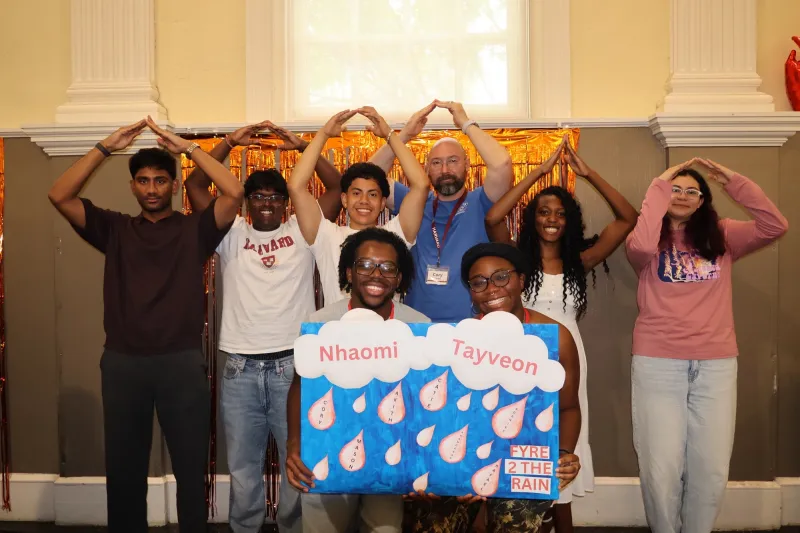
FYRE Family
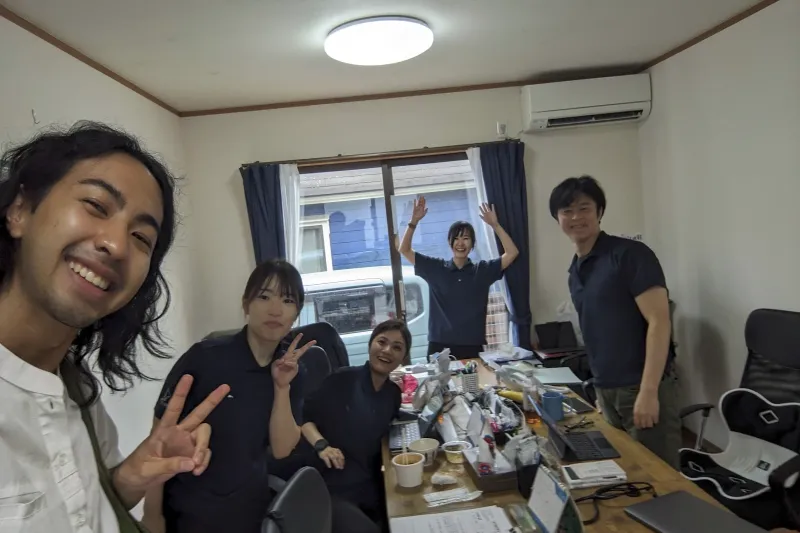
Garbe (center, blue shirt) surrounded by other students who participated in FYRE, the First-Year Retreat and Experience pre-orientation program, in August 2026. Photo provided by the Harvard Foundation.
As part of the Office of Culture and Community within the Dean of Students Office, the Harvard Foundation supports military veterans studying at Harvard through inclusive programming, engaging events, and opportunities for meaningful connection. Garbe experienced that support firsthand by participating in the Harvard Foundation’s FYRE pre-orientation program before beginning his first semester. The program helped ease his transition to Harvard by giving him an opportunity to connect with fellow students, become familiar with campus resources, and begin building a sense of community before classes started. For Garbe, FYRE provided an important foundation as he adjusted to the academic and social environment of Harvard and began navigating college life alongside students from a wide range of backgrounds and experiences.
On November 11, 2026, the Harvard Foundation will host a Veterans Day observance at Memorial Church, open to all members of the Harvard College community and general public. The event will recognize the service and sacrifices of veterans and service members while creating space for the broader Harvard community to learn from and honor their experiences.