
Building confidence and community through peer tutoring
At the Harvard Academic Resource Center (ARC), some of the most valuable academic resources are the students themselves.
Situated at the edge of Harvard Square just across from the Yard, the center serves students from Harvard College and the Harvard Kenneth C. Griffin Graduate School of Arts and Sciences. Since its opening in the fall of 2019, the ARC’s mission has been to empower students to reach their full academic potential.
“We do that by helping them cultivate the habits, mindsets, and strategies that they need to pursue academic excellence in a way that feels possible, and is also sustainable over time,” ARC Director Donna Mumme said. The center puts that mission into practice through academic coaching, peer tutoring, group tutoring sessions, accountability hours, and other programs designed to help students become more independent, self-regulated learners.
The Beverly J. Duran Peer Tutoring Program connects students with Harvard peers who have previously taken the courses in which they are seeking support. Compared to traditional forms of instruction, the program gives students a place to work through questions with someone who understands the particular challenges of the course.
Tutors made all the difference for Beverly Duran ’82, whose generosity supports the program. She remembers how essential their help was when she was navigating the nuances of Harvard and tackling difficult psychology coursework as a parent to two young children. Duran is thrilled the program gives undergraduates an extra layer of academic support and fosters an ongoing, encouraging environment.
“I want students to have skills that will help them not only get through Harvard, but also succeed in their future endeavors,” Duran said. “Harvard is more than an academic institution. If you really take advantage of it, it shapes you for the rest of your life. The life lessons you learn at that university are profound.”
Proud of her peers
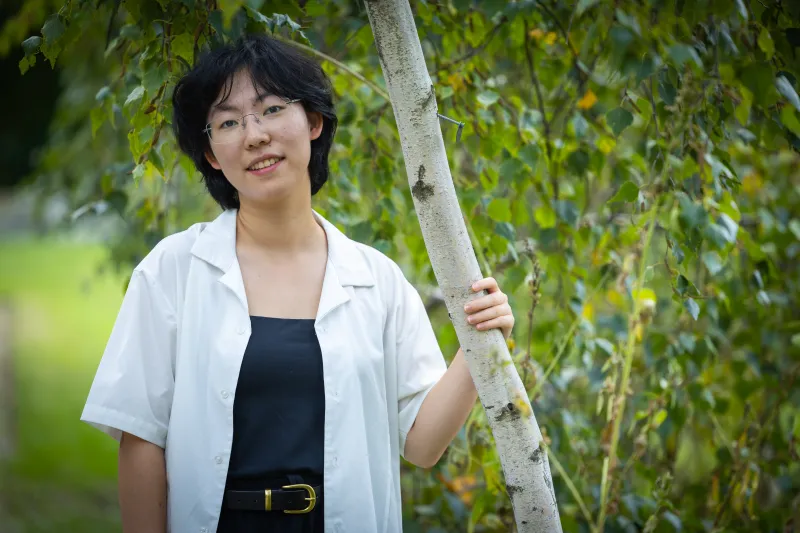
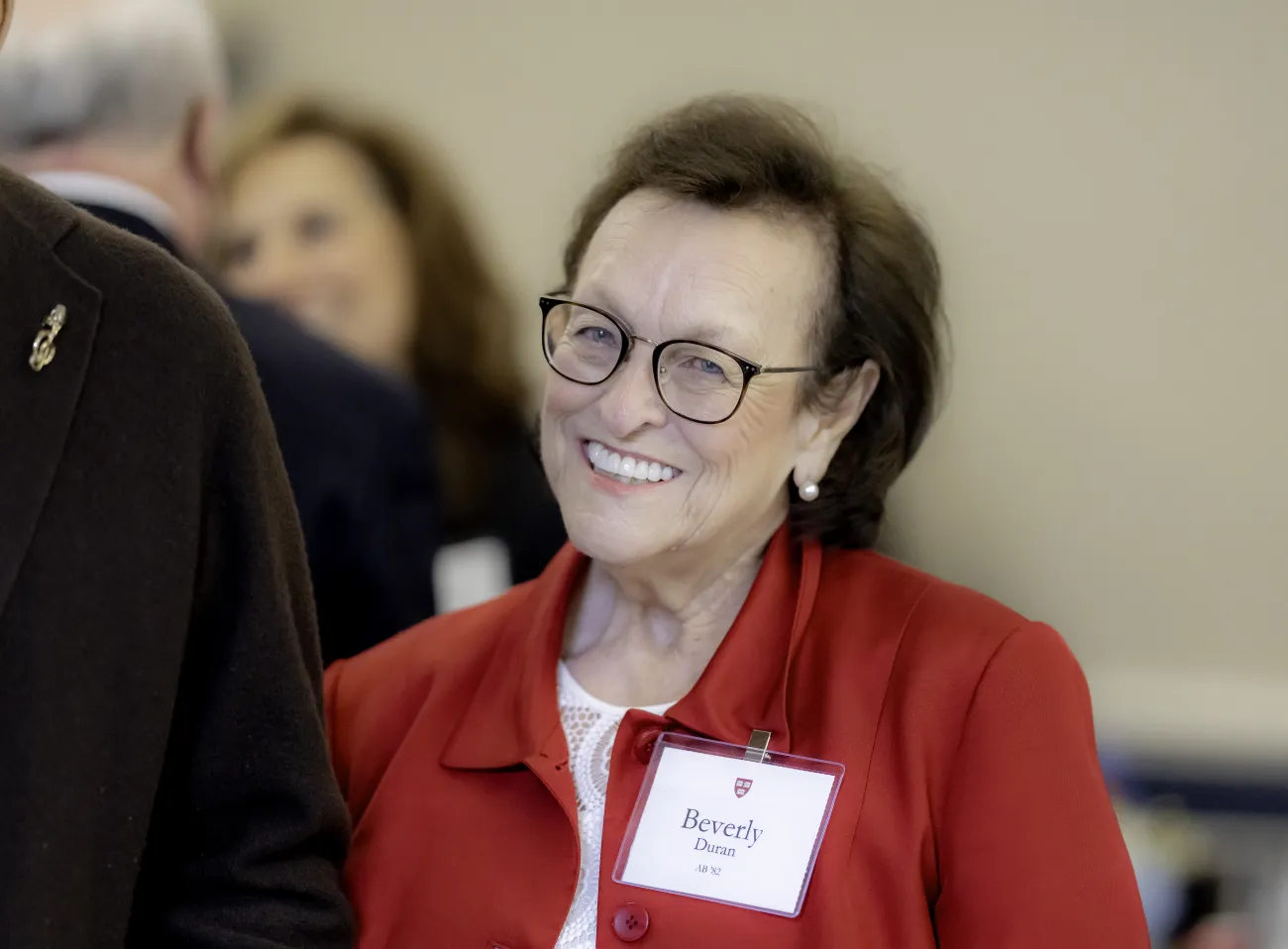
Beverly Duran '82 generously supports the peer tutors as a way to give back to the program that she says was influential during her time at Harvard. Photo by John Deputy Photography.
The ARC describes peer tutoring as a judgement-free, low-stakes zone where students can ask questions without worrying that their academic performance will be evaluated. Peer tutors have “no access to the grades of students or input on those grades,” which Jill Eisenberg, Associate Director for Peer Tutoring, says often helps to alleviate student stress and lower the barrier of reaching out for help.
Peer tutor Catherine Feng ’27 agrees. “My college experience has been marked by such amazing support and advising, and ARC is another point in that network,” she said. “They're free for all Harvard College students, and give you an opportunity for one-on-one tutoring or advising with someone who has no sway over your grades, so you can just focus on learning.”
Tutors in various fields, from STEM to writing, are trained to use active tutoring practices, which emphasize helping students develop the skills to solve problems independently rather than simply finding or providing solutions. “Our support is really focused on helping students identify the tools they need to succeed and strategies that they can implement,” Mumme said. “Peer to peer support is one of those places where the learning and the community come together.”
Students who come in seeking help often return for additional sessions. As students and tutors work together, bonds form between them, creating a peer-to-peer relationship that wouldn’t traditionally be found in the formal setting of a classroom⸺tutors themselves are also learning through teaching.
“There's no better way to learn the content of a course than to actually try to teach it to someone else,” Eisenberg said. That exchange can continue beyond the tutoring session, and even beyond the course itself. According to Eisenberg, many students use the ARC’s services as they work through a class, and the following semester or academic year, come back to work as peer tutors themselves.
Tutors such as Matthew Myslenski ’27 cite their own experience with the ARC as motivation for applying for the position. “I've been a peer tutor for two years now, but I've known about the ARC since I first used their services as a freshman,” he said. “The team made such a difference in my learning that I wanted to stay involved in the course community and help other students like myself.”
Emefa Dake ’27, a peer tutor for three years and a tutor mentor for two, also joined to make an impact. “My favorite aspect has been watching the click when students understand a concept,” Dake said, “especially when a student comes in thinking they know nothing.”
“I think this [Peer Tutoring] is vital to the college experience, because you should not walk through learning on your own,” Dake said.
“Many students come into tutoring with little confidence,” Mylenski added. “What I have found is that most of the time there is one small detail that they do not understand, and once they do, their confidence greatly increases. It is up to us to work with them to find that small detail.”
In Myslenski’s experience working with students in facilitated study groups, he credits success to having students truly understand material instead of merely memorizing. Through the ARC’s collaboration with select courses, tutors host small sessions with the same group twice per week throughout the semester, focusing on problem-solving, goals for the semester, exam strategies, study schedules, and their overall confidence.
“I have seen tremendous growth of these students throughout the semester,” he said. “It is a unique program that I believe should be more broadly available throughout higher education. We are giving students the tools they need to be successful in the future classes⸺not just to help them with their homework⸺and my hope is that students can carry these skills with them throughout their college career.”
Driving education with a personal approach
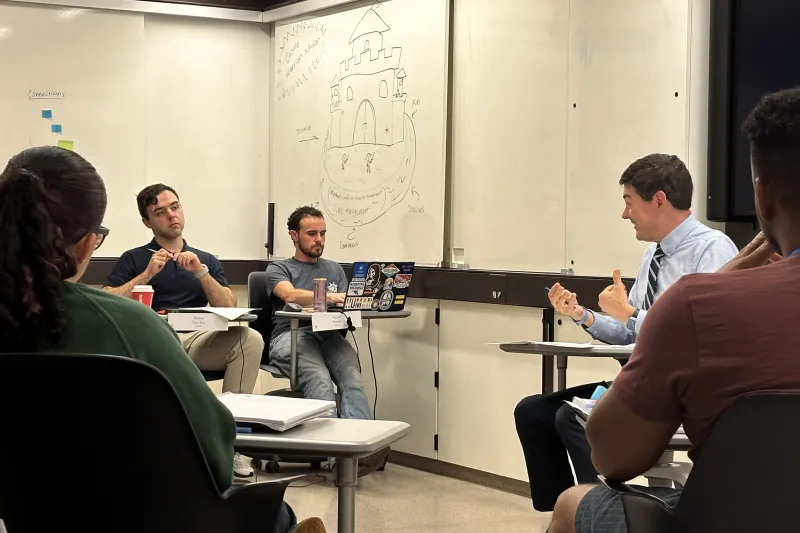
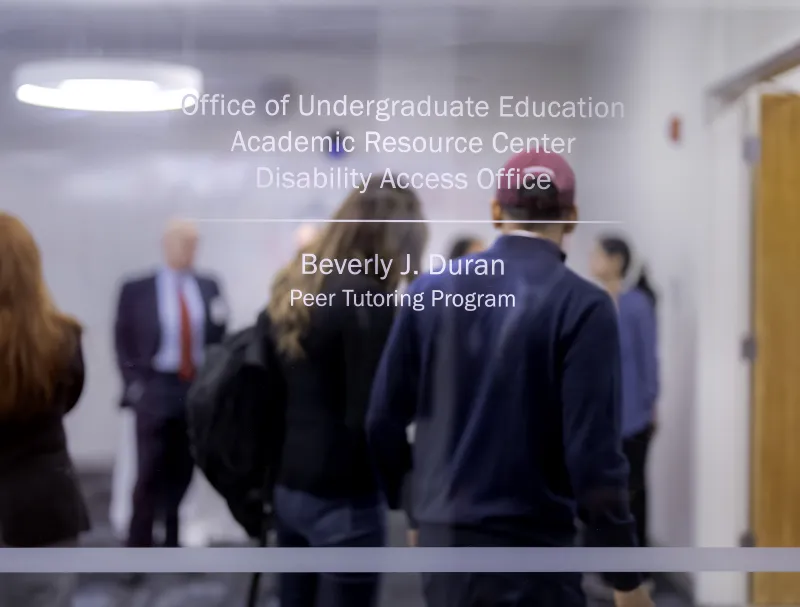
The Beverly J. Duran Peer Tutoring Program is situated within the Office of Undergraduate Education and Academic Resource Center. Photo by John Deputy Photography.
For the ARC, peer tutoring is ultimately part of Harvard’s long-term learning vision. Aligned with the goals set forth by Danoff Dean of Harvard College David Deming, the center sees face-to-face interactions between students as one of the most valuable resources available on campus. That philosophy is shaping the ARC’s efforts to expand peer learning beyond one-on-one tutoring.
The center is beginning to create more small group opportunities for students to learn together with an expert peer tutor facilitating the conversation, allowing them to become resources for one another.
“When students are together in a small group, they learn from each other's questions; they give each other feedback,” Mumme said. “There's this dynamic that I think is a learning context that is really not matched by any other one.”
In this cooperative learning model, students can encounter different questions and approaches from their peers, exposing them to ways of thinking they might not encounter in a one-on-one tutoring session.
As part of its work with foundational courses, the ARC is also exploring new ways to bring peer learning into the classroom, extending the peer support model beyond one-on-one and small-group settings. This semester, for example, the center’s Assistant Directors, Meaghan Fallano and Margaret Rennix, are working with Economics 10: Principles of Economics to develop a Canvas module featuring videos of former Ec10 students describing how they approached the course, from problem sets to readings and lectures. The module is intended to help orient new students to the course through the experiences of those who have taken it before.
“I think the Peer Tutoring Center has done an incredible job hiring tutors who help students with a positive attitude,” Duran noted. “You want students to walk out with a smile on their faces, feeling that they got exactly what they needed.”