


Between classes, readings, papers, extracurricular commitments, and spending time with friends, a week at Harvard can fill up very quickly. Add doing laundry, calling your family, and getting enough sleep, and suddenly, you are wondering where all your time went!
As a senior, you would think that I have a set routine. However, I am still figuring out how to balance everything. Especially now that I am writing a thesis, being intentional about my time matters more than ever. While I cannot promise a perfect formula, here are a few ways to make your workload feel more manageable while leaving room to enjoy college.
Give Google Calendar a Try!
If there is one thing I would recommend for organizing your schedule, it is Google Calendar, or more affectionately known as GCal. Having your commitments in one place makes it a lot easier to see what your week actually looks like and what you can say yes or no to.
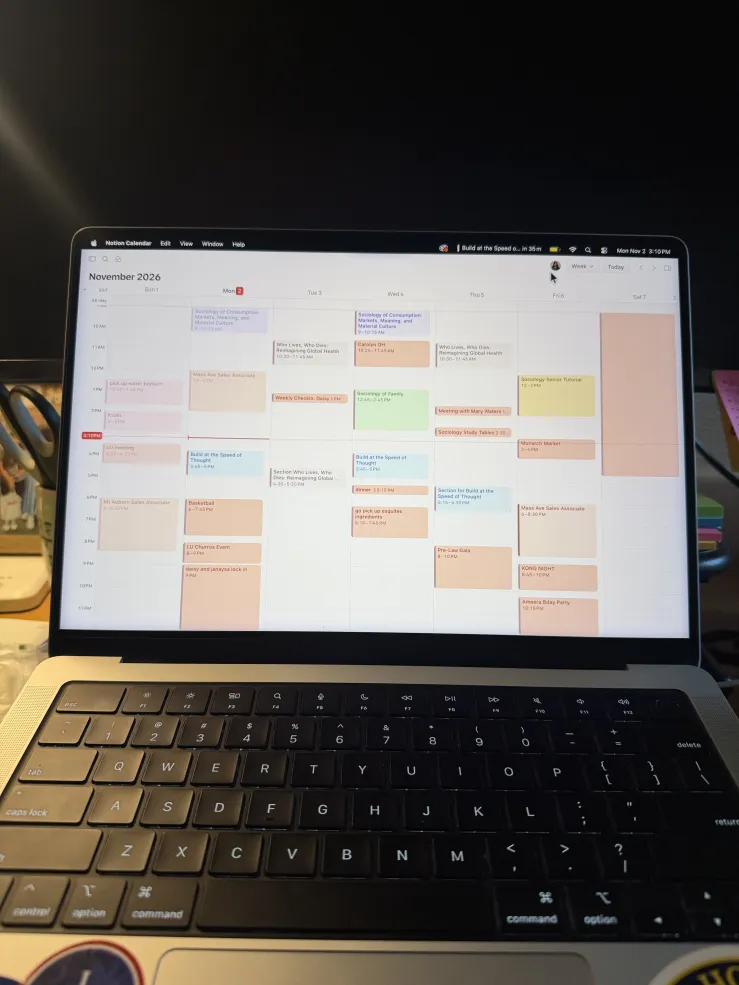
Here is my GCal. I actually connect it to Notion Calendar so I have access to certain colors. The calendar looks full but it's how I stay organized and remember my commitments.
I always start with classes and sections, then add extracurricular meetings, work shifts, appointments, and important deadlines. You can also use different colors for different parts of your life. Seeing everything laid out helps you recognize when you have time available and when you might be committing to too much. However, a blank space on your calendar does not always mean you are free. You still need time to walk between buildings, eat lunch, and take a break. Give yourself some breathing room!
Don’t Forget about a Physical Planner :)
As helpful as a digital calendar can be, there is something satisfying about writing things down and physically crossing them off. A physical planner is a great place to keep track of individual assignments and smaller tasks. While GCal can tell you when you have class, your planner can remind you to finish a reading before that class or start brainstorming for an upcoming paper.
Try making your tasks specific. “Work on paper” can feel overwhelming, especially when you are staring at a blank document. Instead, try giving yourself more direct work such as “choose a topic” or “outline the first section” so that you have a clearer place to begin. You do not have to finish an entire assignment in one sitting to make progress. Remember, little by little you can get everything done.
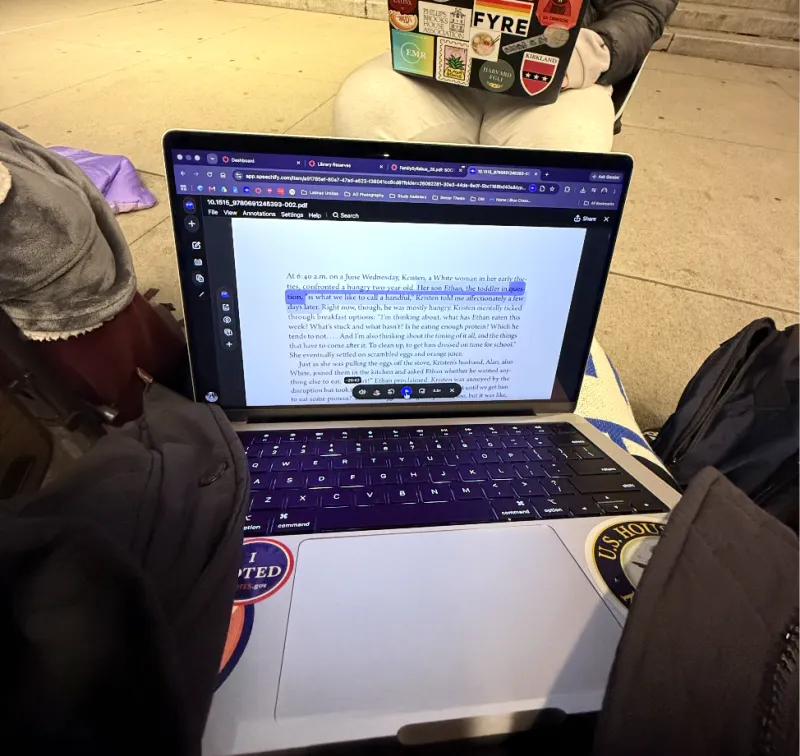
One of my favorite activities to insert into my calendar are study sessions with friends. It gives us the opportunity to be successful students together!
Plan When To Do Your Work
Writing down a deadline is helpful, but it is only part of the process. You also have to make time to complete the assignment. At the beginning of the week, look at what is due and where you can realistically fit in schoolwork. If a paper is due Friday, you might brainstorm on Monday, outline on Tuesday, and draft over the next two days. This gives you room to ask questions or adjust if something takes longer than expected.
Also, be honest about how you work best. If you struggle to concentrate late at night, try using a gap between classes for a focused study session. Your schedule should reflect your actual habits, rather than an imaginary version of yourself who can finish three readings in thirty minutes (Speechify would definitely help).
Make Room for Friends and Extracurriculars
Academics are a major part of Harvard, but so are the communities you find here. Spending time with friends and participating in organizations can give you something to look forward to during a busy week. Try to make room for those things when planning your schedule. That might mean setting aside an evening for an extracurricular event or making dinner plans with a friend after finishing an assignment.
Social time also does not always have to involve a big outing. A meal in the dining hall, a quick walk, or a conversation between classes can help you stay connected. You can take your coursework seriously and still make time for the people who make campus feel like home.
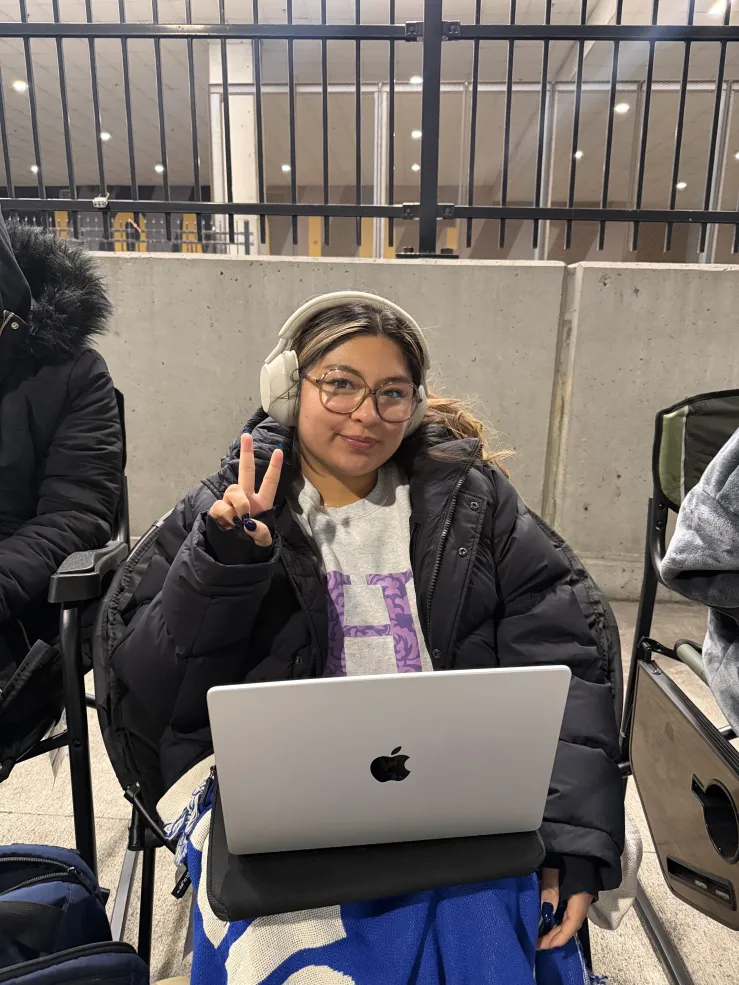
Here, I am camping out for Olivia Rodrigo tickets! However, instead of just sleeping or socializing, I brought my laptop and completed a few assignments.
Be Comfortable Saying No
There will almost always be another event to attend, organization to join, or opportunity to apply for. It can be tempting to say yes to everything, especially when everyone around you seems busy. Before adding a commitment, think about the time it requires beyond what appears on your calendar. A weekly meeting might also involve planning events, answering messages, or completing tasks throughout the week.
It is okay to enjoy an organization without taking on a leadership position. It is also okay to skip an event when you need to finish an assignment or rest. Choosing what you can realistically manage helps you show up more fully for the commitments you keep. And please, leave room for sleep, meals, and time to yourself. A schedule that only works when you never get tired or need a break will be difficult to maintain.
I want to leave Harvard proud of the work I have done, but I also want to remember the friendships and experiences that filled these years. Planning ahead can help make room for both. Some days will still feel overwhelming, and your to-do list might carry over into tomorrow. You can adjust your plans and keep going. Good luck!





 A photo of myself looking at the Zanzibari waters


 My bookshelf in my dorm!




 My First Harvard Yale Game
 Here's Harpreet and I with our best friends back in high school!
 Here is a picture of my family, including my mom, brothers, grandma, uncle and aunt, and cousins.
 trips into Boston are worth it!
 I have very specific playlists for every mood.


 Here I am teaching a government class from last summer!
 The view of the Charles River from Leveret House, which is right next to Winthrop House!