
30 Years of Pforzheimer House
Harvard College’s Pforzheimer House, often referred to as “Pfoho”, is celebrating its thirtieth anniversary during Housing Day week 2026.
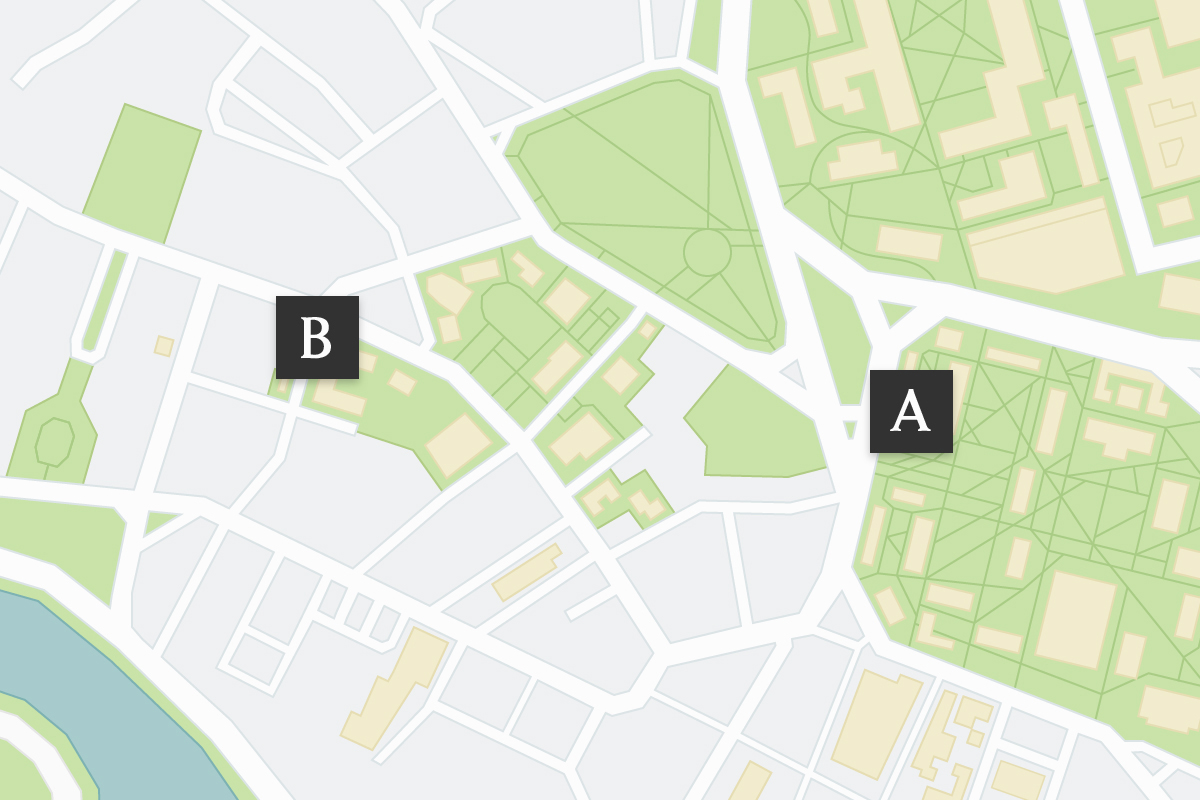
Though the House has been named Pforzheimer for three decades, its buildings date back to 1901, when it first housed students of former Radcliffe College. In the 1960s, it was officially named “North House”, a reference to its placement as the northernmost House on campus.
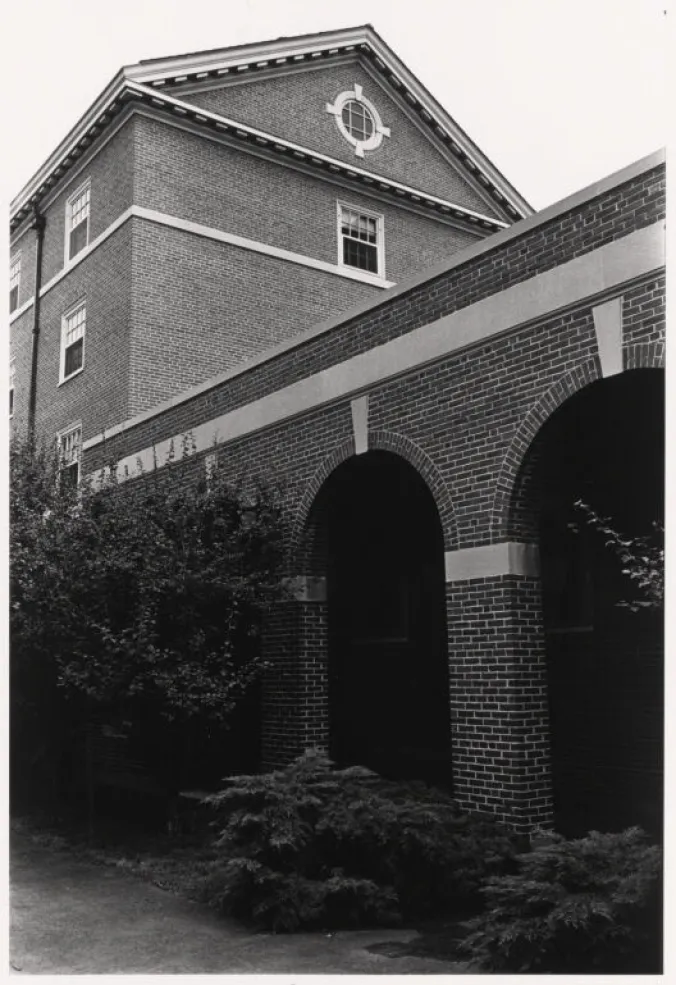
Exterior view of North House (1966 August), Photograph by Glen Pearcy, Source: Schlesinger Library, Harvard Radcliffe Institute.
In 1970, then all-male Harvard College began the process of integration with the all-female Radcliffe College, creating co-residential Houses. During this period, students were able to rank which House they wanted to join, the Faculty Deans handpicked each newcomer, and staff handed out the housing assignment letters. Harvard transitioned to the current randomized housing system in 1997.
North House was officially renamed to Pforzheimer House in December 1995, after alumni Carol Koehler ‘31 and Carl Howard Pforzheimer Jr. ‘28.
Pforzheimer Jr. passed away shortly after this dedication in 1996.
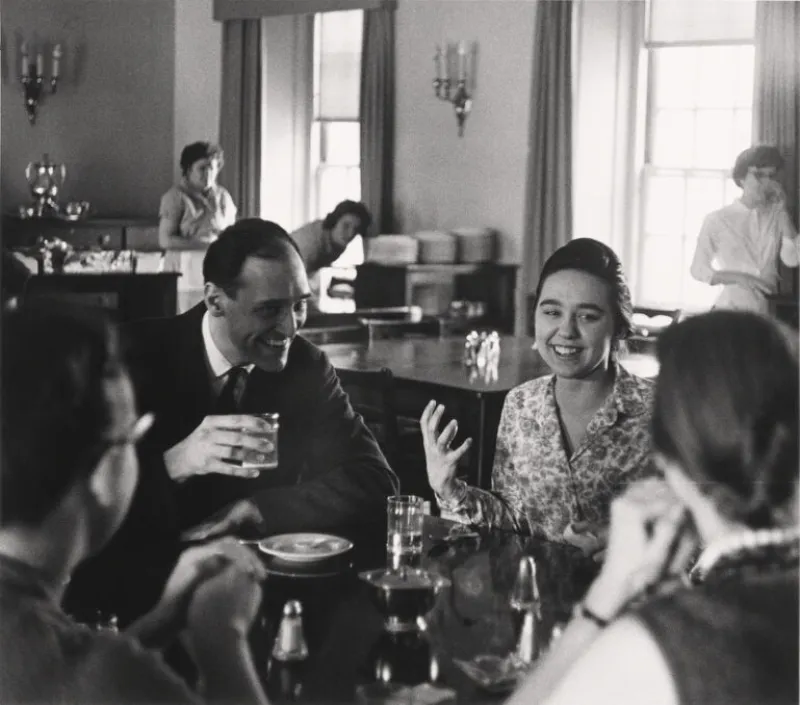
Events at North House, No photographer credited, Source: Schlesinger Library, Harvard Radcliffe Institute.
Similar to the other Houses, Pfoho has experienced a long evolution. Successive pairs of Faculty Deans have spearheaded many of the House’s milestones, ranging from its renaming, to refurbishments, to beloved House traditions.
“It is not easy to capture in a few words the privilege of overseeing the multigenerational community at Pfoho,” Anne Harrington, Faculty Dean from 2013-2023, said. “We loved the fact that the House had evolved historically out of the Radcliffe Housing system, and early on, we turned one of the common rooms into a “Heritage Room” filled with historical photos, so the students would appreciate that history too.”
At every following student-faculty dinner, students performed a short musical number as a nod to Pfoho’s previous role as the Radcliffe music center.
“There is a “forever” quality that comes with belonging to a community like Pfoho,” Harrington remarked.
Harrington’s successors, current Faculty Deans Erica Chenoweth and Zoe Marks, have overseen refurbishments of several House spaces, including the weight and cardio rooms, and inclusions such as the Serenity Space, Daily Grind Café, and a multicultural kitchen. These efforts have contributed to their “Visual Culture Rep-fresh”, which elicits participation from students to curate an ongoing art collection and interior spaces that reflect their interests.
“We were fortunate to inherit from prior Pfoho Faculty Deans a powerful legacy of inclusivity, friendliness, adventure, and fun,” Chenoweth and Marks said.
“We see ourselves as stewards of that legacy, and we prioritize making sure all our students know that they are seen and supported. Our brilliant tutors are constantly finding ways to provide thoughtful academic and professional mentorship, while also delighting students with creative study breaks, activities, and outings.”
The renaming brought with it a steadfast tradition of Pforzheimer House replacing the beginning of many commonly used House words with a “pf”, such as “pfolar bears” and “pfamily”. Alongside it came designation of the polar bear as the House’s official mascot. “We decided he needed a name — Percy — and we began to celebrate International Polar Bear Day every year,” Harrington shared. “In the winter months, we all also embraced "polar bear" sports: ice skating, cross-country and downhill skiing, snow tubing.”
Most notably, they introduced the “Hygge” tradition: a winter Sunday study break featuring donuts and hot cider, taken from the Danish tradition of fostering a warm, connected community environment. “Even polar bears need a chance to curl up with a hot drink,” Harrington joked.
While many of these long-beloved traditions persist in the House, new traditions have emerged as well. Chenoweth and Marks have also introduced a popular series of pop-up bouquet-making events called “Pflowers for Pfoho,” “Pfarm to Pfork” dinners featuring food and lessons from local farmers, an annual House outing to "Pfenway" Park, and their newest series for the 2025-2026 year, “Pfortuna,” which features “pfirestarter” talks and informal discussion with members of the Senior Common Room over drinks and sweets. Pfoho continues to honor its musical roots by hosting Open Mic nights on the D-Hall stage, featuring student, tutor, and staff collaborations.
“The House is always alive,” Isabelle Agarwal ’28 agreed. “The 2nd floor of the D-Hall is a hub for activity and the Quad Grille draws in people from across the River and Quad.” Agarwal builds community in the House by hosting events for students through the Housing Committee. Clyde Smith ’27 finds it in communal meals, by “spending hours on end in the dining hall chatting with anyone.” For Dmitry Bilous ’27, the community and location are his favorite aspects of Pfoho. “It’s like my own private little paradise that calms me down when I get home from all the hectic activities that I do during the day on campus,” he reflected.
Of all the elements involved with turning a House into a thriving “Pfohome”, the most important is “without a doubt – the people,” Chenoweth and Marks shared. “When it comes to talented, creative, brilliant, and generous people, Pfoho truly has an abundance of riches.”
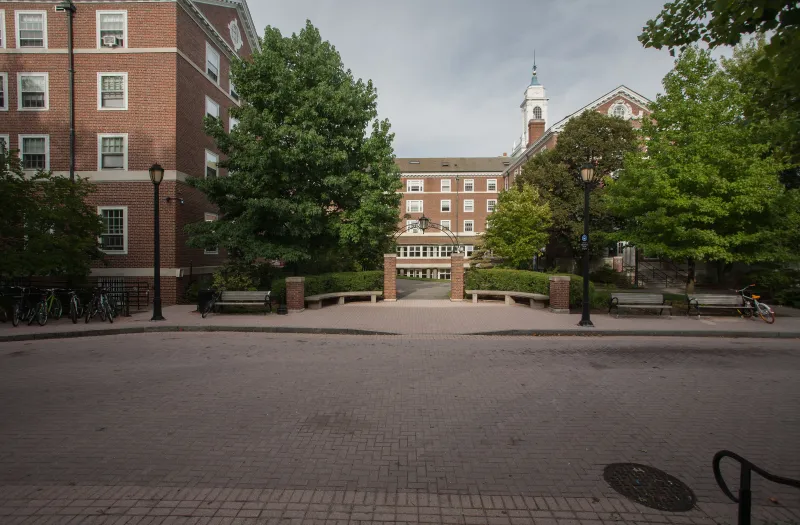
View with main gate, Pforzheimer House, Harvard University. Ralph Lieberman photograph (2013), courtesy of Frances L. Loeb Library, Harvard University Graduate School of Design, 179045.