
Four Harvard College Students named Gates Cambridge Scholars
Two fourth-year students at the Harvard John A. Paulson School of Engineering and Applied Sciences (SEAS) along with one alum and one fourth-year Physical Science concentrator have been named 2026 Gates Cambridge Scholars.
Founded in 2000 with a donation from the Gates Foundation, the program seeks to build a global network of future leaders committed to improving the lives of others by fully funding postgraduate study at the University of Cambridge in the United Kingdom. Eighty scholarships are offered every year, with 25 being available in the United States. Four Harvard students and alumni were selected to the 26-student cohort.
Sharmila Dey ’25
Earth & Planetary Sciences
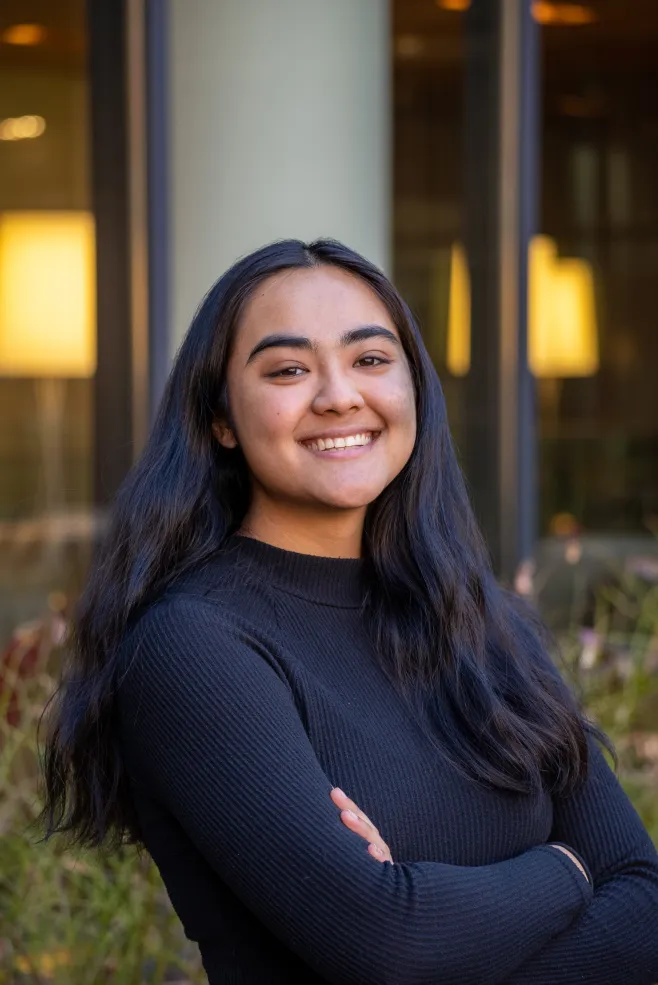
With an interest in the large-scale dynamics of forests and how they interact with the Earth’s global carbon cycle, Dey's senior thesis consisted of large datasets to understand how carbon storage at Harvard Forest has changed over the past three decades. “I have been lucky to benefit from amazing mentors at Harvard,” she said, noting Elsie Sunderland, Fred Kavli Professor of Environmental Chemistry and Professor of Earth and Planetary Science at SEAS, Steve Wofsy, Abbott Lawrence Rotch Professor of Atmospheric and Environmental Science and Director of Graduate Studies at SEAS, Emma Rothschild, Jeremy and Jane Knowles Professor of History and Center for History and Economics Director, and Carrie Jenks, Executive Director of the Environmental & Energy Law Program at Harvard Law School.
Since graduating, Dey has been working as a Research Fellow in Professor Sunderland's lab. “I would greatly encourage other students to find ways that other disciplines connect with their area of interest,” she said. “So much of my Harvard journey has been impacted by classes and opportunities that were outside of my primary academic focus. While some of the answers to questions could be found in my science classes, I found that taking classes in the humanities and social sciences were necessary to understand the true scope of the issue.”
At Cambridge, Dey will be completing a PhD in the Plant Sciences Department, studying how carbon storage in the tropics is affected by different types of logging. In addition to researching logging impacts, she hopes to also make recommendations to improve the sustainability of timber harvesting, and communicate these research outcomes with the public, industries, and governments. “It is no longer sufficient for scientists to stop at conducting research,” she said. “We must be advocates, teachers, and storytellers.”
Mukta Dharmapurikar ’26
Economics & Environmental Science and Engineering
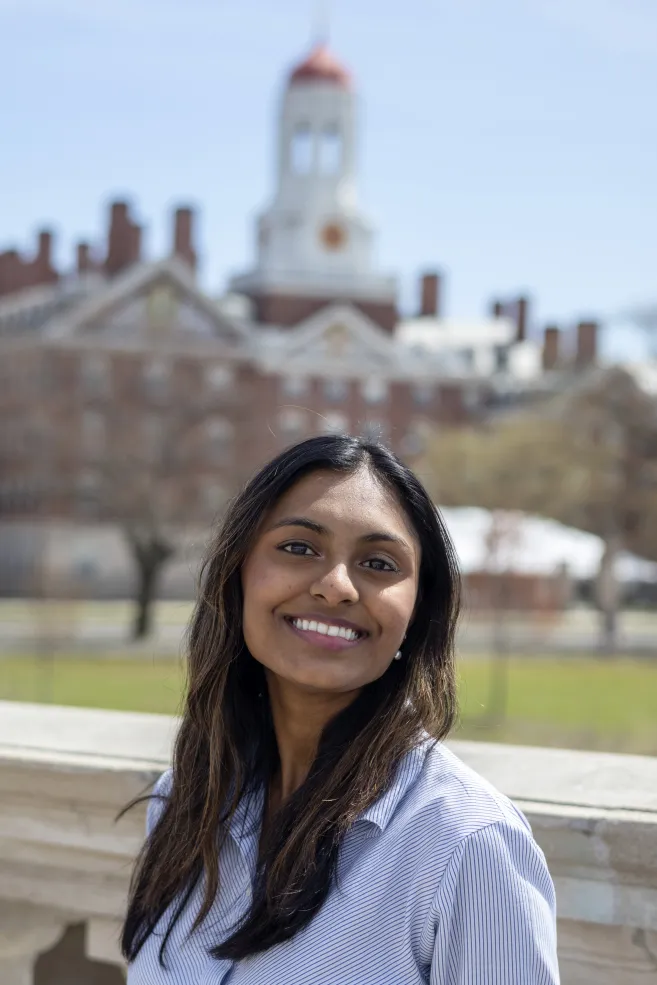
As former president of the Harvard Undergraduate Clean Energy Group (HUCEG), as well as a Chair in Harvard's Institute of Politics (IOP), Dharmapurikar’s interests are driven by her childhood in North Carolina and visits to her family’s farm in India, where she experienced how climate change-driven weather events like droughts and hurricanes can affect communities.
Her interest in the Gates Cambridge program was in part motivated by reading an article about the community that described it as a very open-minded and collaborative group of people. She is especially looking forward to being challenged by students in different fields and from different backgrounds.
“One of my favorite ways I have grown at Harvard is that I think I have become more fearless,” she said. “Harvard has taught me what a gift it is to be one of the least knowledgeable people in the room. Instead of being afraid of those spaces, it has encouraged me to seek them out, and to have both the confidence to believe I am worthy of learning from those around me, and the humility to ask them for help. I have been so lucky to soak up everything Harvard has to offer, [and] feel there's so much more to explore.”
At Cambridge, Dharmapurikar plans to pursue a master’s degree in Environmental Policy in Jesus College. She is especially excited to learn about economic policies that promote decarbonization of industrial goods such as cement and steel, as well as strategies to improve the stability of the electric grid as the share of renewables increases.
Larom Segev ’26
Astrophysics and Applied Physics
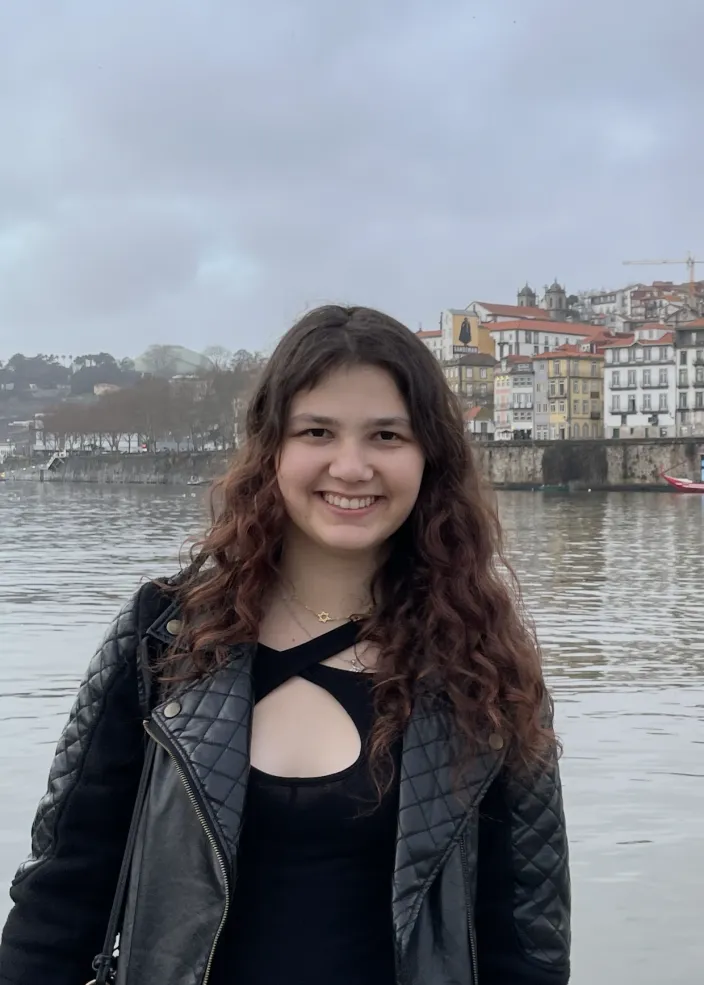
Much of Segev’s time at Harvard was spent pushing the boundaries of understanding the universe.
By working on commissioning instruments and software for space- and ground-based telescopes and experiments, she was able to discover how new scientific tools are built and used. “My biggest takeaway from Harvard has been the value of curiosity paired with initiative,” she said. “Harvard’s research environment has been unparalleled in the range of opportunities it offers. Over the last four years, I’ve been able to explore many different [things], which helped me gradually find the niche that feels most meaningful to me. Harvard gave me both breadth and depth: through coursework in my field, adjacent classes outside of it, and co-curricular experiences that shaped not just how I think as a scientist, but also how I show up as a collaborator, mentor, and community member.”
At Cambridge, Segev will pursue Experimental Astrophysics to continue growing at the intersection of her fields, and is looking forward to joining a similarly supportive community “committed to creating the kind of change they want to see in the world.” “I hope to contribute to advancing the edge of knowledge through research that helps us better understand cosmic origins and the universe at its most fundamental levels,” she said.
Lea Wang ’26
Applied Mathematics & Social Studies
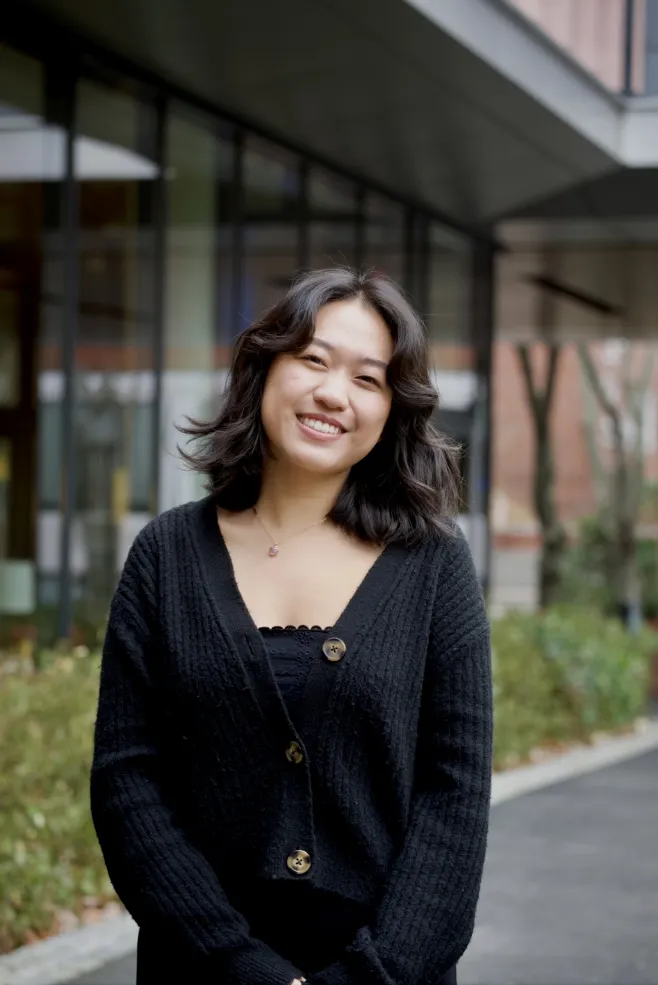
Wang’s Harvard journey included researching malaria transmission as an intern at the Harvard T.H. Chan School of Public Health, co-chairing the Science, Technology and Society Undergraduate Fellowship at Harvard Kennedy School, and interning in the Federal Emergency Management Agency Office of Response and Recovery.
She was inspired to apply to Gates Cambridge program so that she could continue the work she started at Harvard.
Wang is looking forward to joining a community “doing incredible work on climate science and its relationship to some of the most vexed social and political questions that climate change poses.” She credits Harvard with preparing her for this opportunity through its “robust support” for fellowship applicants, “truly heroic mentorship” in the social studies department, and music communities of The Harvard-Radcliffe Orchestra and University Choir.
Wang plans to pursue a master’s degree in History and Philosophy of Science and Medicine at Trinity College. She’s interested in the role of climate models when determining legal responsibility for climate change. “By examining the intersections of technology and politics, I seek to articulate our obligations to one another—especially in confronting the epochal challenges of climate change,” Wang said. “I am honored to join an engaged community of scholars committed to advancing public scholarship where it is needed most.”
As for advice to other students, “take your time to figure out who and what you really care about,” she said, “and follow them wherever they lead.”