
Staying Rooted at Harvard Forest
Amid peak fall foliage at Harvard Forest, students gathered for a weekend Rooted Accountability retreat to reflect on Indigenous history and deepen their understanding of climate science.
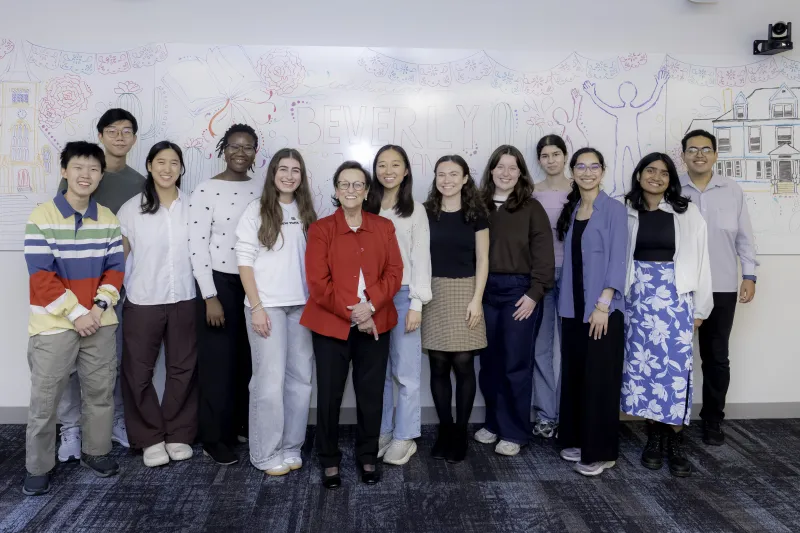
Organized by Mather House tutor Mauro Morabito, the trip brought nearly 40 students and tutors across upperclassmen houses and the Dudley community to Harvard Forest in Petersham, Massachusetts. Founded in 1907, the Forest is a 4,000-acre ecological research site and educational department under the Faculty of Arts and Sciences. The site has hosted long-term studies on global warming, ecology, natural disasters, pollution, insect outbreaks, and more. Undergraduates often get involved with the space through classes in the Department of Organismal and Evolutionary Biology and the Forest’s internship programs.
The retreat offered students an opportunity to learn about and experience the Forest. “We wanted to create a space for students to connect with each other and with the land in a more immersive and reflective way,” Morabito said.
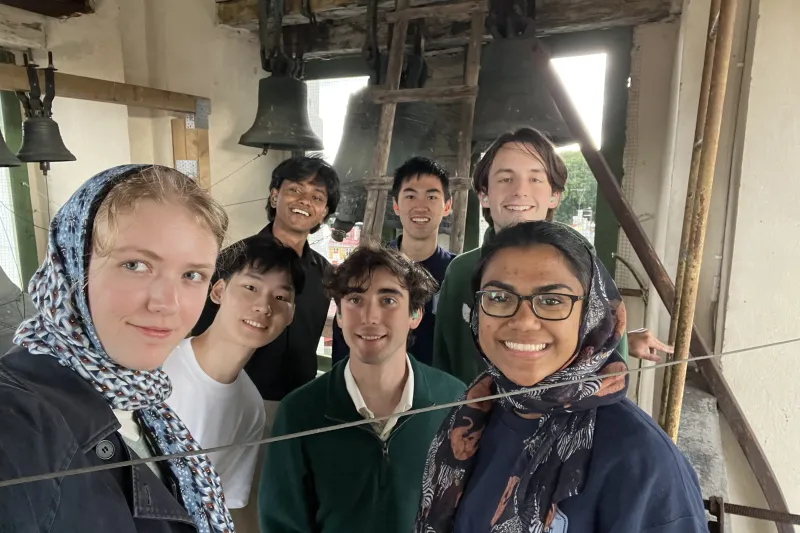
During the retreat, students gathered for two guided trail walks. The first was a research tour that cut through a stretch of the Forest, leading up to a 92-feet canopy-level tower named Hardwood Walk-Up Tower. This tower is one of four research towers in Harvard Forest. Throughout the trail, students also learned about ongoing research projects, such as an experiment on the effects of global warming on soil. In place since 1991, the study has so far revealed that as soil gets gradually warmer, microbial communities change in composition and lead to significant fluxes of carbon release.
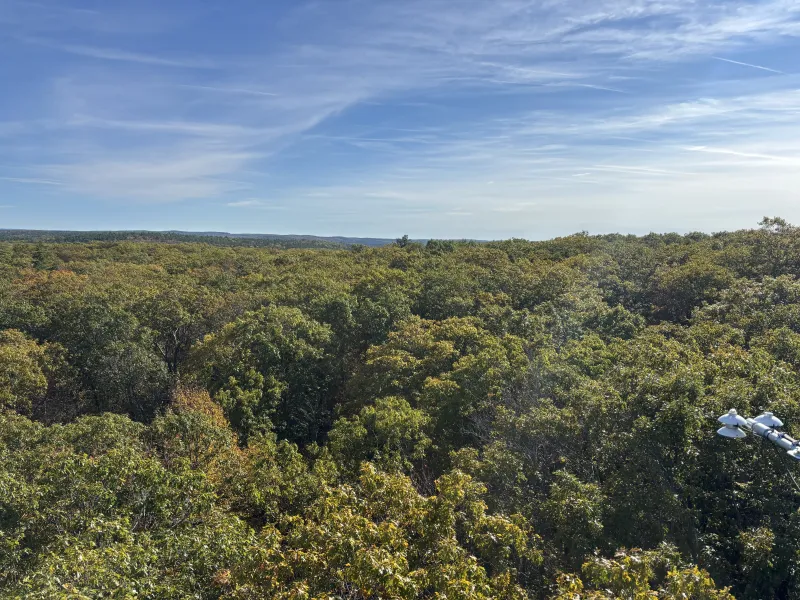
Hardwood Tower's Aerial View
This 92-foot canopy-level tower is one of four research towers in Harvard Forest, providing a breathtaking view overlooking the trees.
Students also walked along the Manchage-Manexit Trail, which was recently installed to honor the Nipmuc tribe, from whom the land was historically dispossessed. Led by a Nipmuc community leader, groups reflected on what it meant to walk a new land, to trespass, and to give back. Group discussions focused on the forced removal and assimilation of the Indigenous people by European settlers in the 18th century, as well as current efforts to preserve and acknowledge their histories.
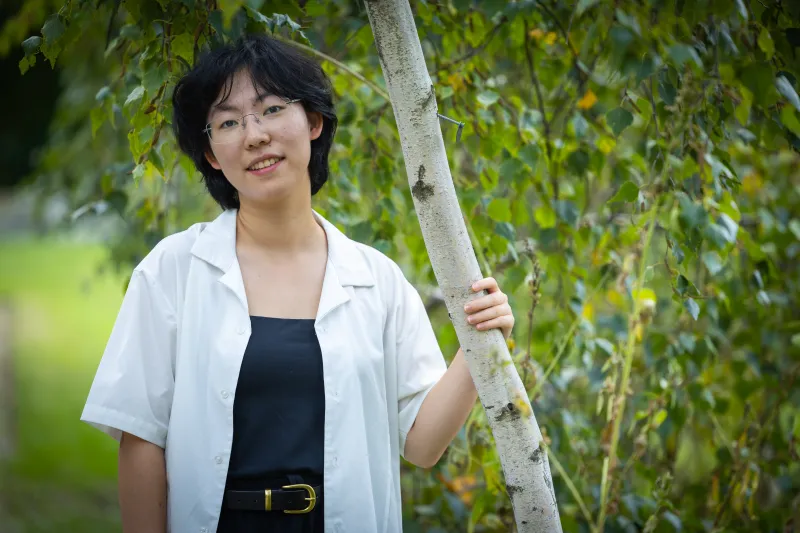
Sarah Chen '25, a visiting undergraduate in Dudley Community, described the retreat as “a break from city life and Cambridge.” In a rather remote area, surrounded by trees and animals, instead of libraries and other students, it was easier for her to slow down and appreciate the serene surroundings. “You could focus on the here and push any study-related deadlines to the back of your mind,” Chen reflected.
Morabito received similar feedback from many of the participants. “The physical experience—walking the trails, listening to Indigenous perspectives, taking time for solo reflection—helped them see both the land and their own social roles differently,” he noted.
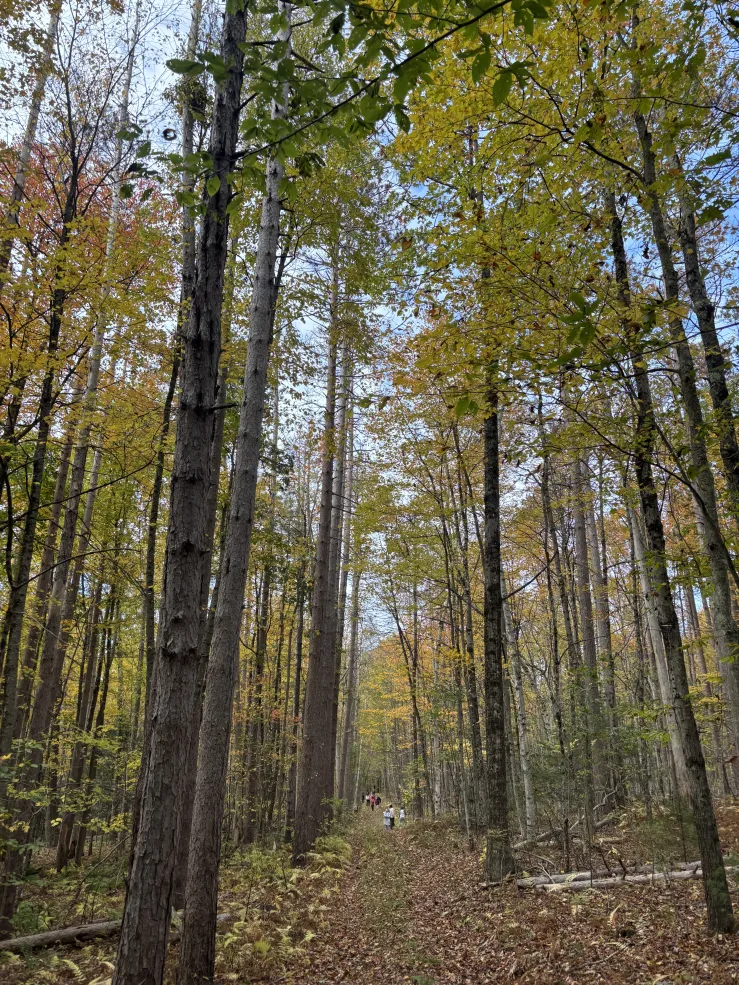
The Trail Less Traveled
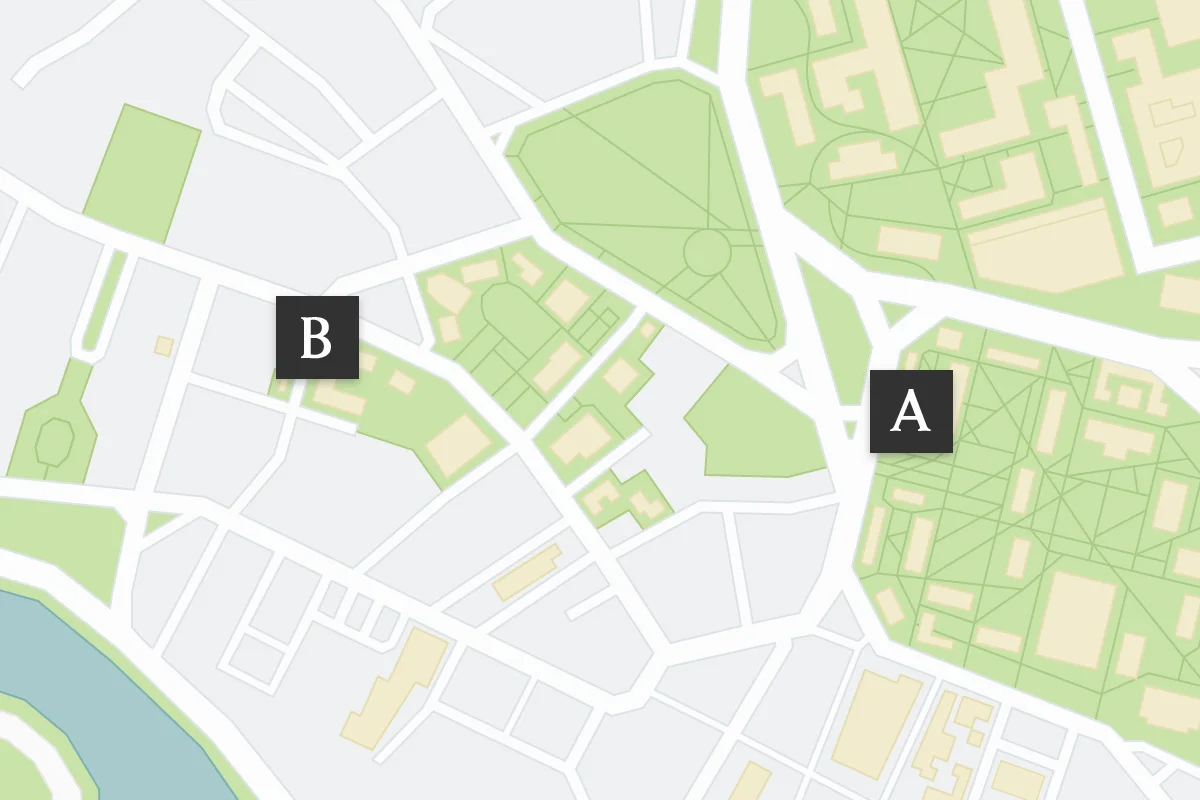
Throughout the Rooted Accountability Retreat, students ventured through Harvard Forest on two trails: a research tower trail and the recently installed Manchage-Manexit Trail.
Overnight, students occupied historical New England houses, which typically serve as dorms for researchers and interns. After programming finished for the day, students had time to play games together. “I had the chance to meet new people and play Pictionary at night, which was a fun bonding experience,” Chen said.
Given the focus on sustainability, the retreat also featured an all-vegan menu ranging from vegan yogurt parfaits and fruit to veggie hummus wraps and salads.
Before heading back to campus, participants took time for a final reflection on climate accountability and viewed the Fisher Museum’s dioramas depicting land changes since early European colonization.
“I truly loved stepping outside the classroom and into nature to reflect on friendship, community, and our connection to the environment,” Gandab Mammadova ’28 remarked. “Every moment there pushed me to reflect on my experience at Harvard and broaden my perspective, and I am grateful for the conversations, the learning, and the sense of belonging I felt.”
Morabito plans to host another retreat at Harvard Forest in the near future and has begun preparations for a sustainability-focused Wintersession program, the Living Communities Camp, in January 2026.
Read more about Harvard Forest:
Harvard’s Action Camp for the Planet
Undergraduate Students: Getting Involved with Harvard Forest