Media
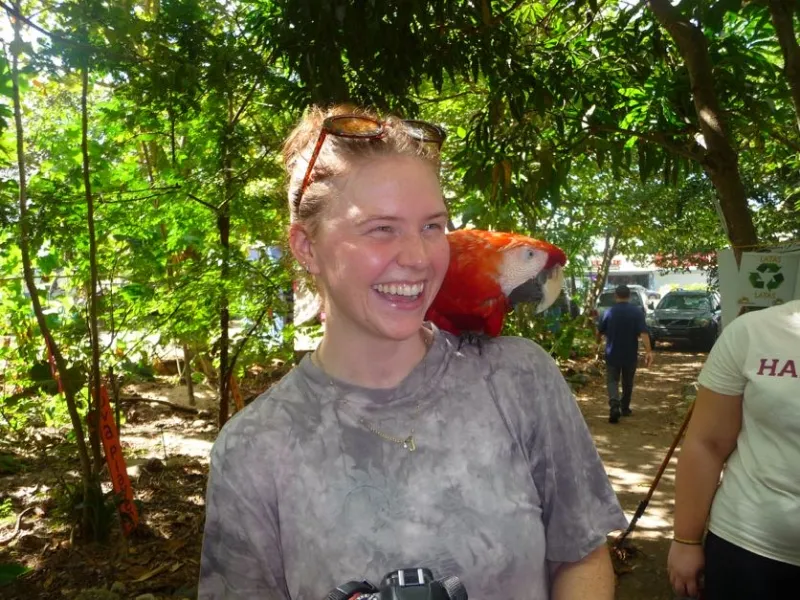 Jessica Cmiel, First-Year Experience Climate and Sustainability Coordinator, posed with a local’s pet parrot, Paco, while on a break from the coastal forest restoration project.

In January 2026, a cohort of 13 Harvard College first-year students and two staff traveled to Puerto Rico for an intensive service-learning expedition focused on environmental sustainability.
The trip was made possible through the Catalyst program, organized by the First-Year Experience (FYE) Climate and Sustainability Team, and funded by the Betty Wold Johnson Foundation Undergraduate Fund for Climate and the Environment.
It served as the practical capstone to the Catalyst Preparatory Dinner Series held throughout the Fall 2025 semester. During the series, students took turns leading discussions on five core topics:
Climate Change and Disaster Resilience in Island Communities
Environmental Restoration and Conservation
Sustainable Agriculture and Food Systems
Ethical Service-Learning and Cultural Competency
Policy and Governance in Climate Adaptation
The Catalyst program allowed students to connect these academic themes to local, community-based action and the practicalities of climate adaptation in a U.S. territory.
In collaboration with Community Collaborations International (CCI), the weeklong itinerary in Puerto Rico featured a range of projects focused on ecological restoration and community infrastructure. The group began with forest restoration efforts before transitioning to a housing improvement project in support of a local community leader. Mid-week, students contributed to invasive species removal operations of an equine therapy farm and conducted beach monitoring in partnership with the National Oceanic and Atmospheric Administration (NOAA) to track coastal debris patterns. The expedition also included marine conservation education at El Escambrón Beach, where students snorkeled among coral reef ecosystems, and a visit to a tree nursery to assist with reforestation maintenance.
For many participants, the trip shifted their academic and personal trajectories. Students noted that the direct engagement with local residents provided great perspective on their work. “[The beach cleanup] let us understand that sometimes more work doesn't mean better work,” Marta Ramos Caimari '29 reflected. “Even if we only cleaned part of the beach, we [collected] data that will have a bigger impact.”
Other students found that the experience redefined their future careers. “I am now a lot more interested in the field work application of environmental sciences,” Uzochi Orji '29 noted. “I am also considering how I can include environmental health [into] my pursuit of medicine.”
Photos by Jessica Cmiel, First-Year Experience Climate and Sustainability Coordinator.
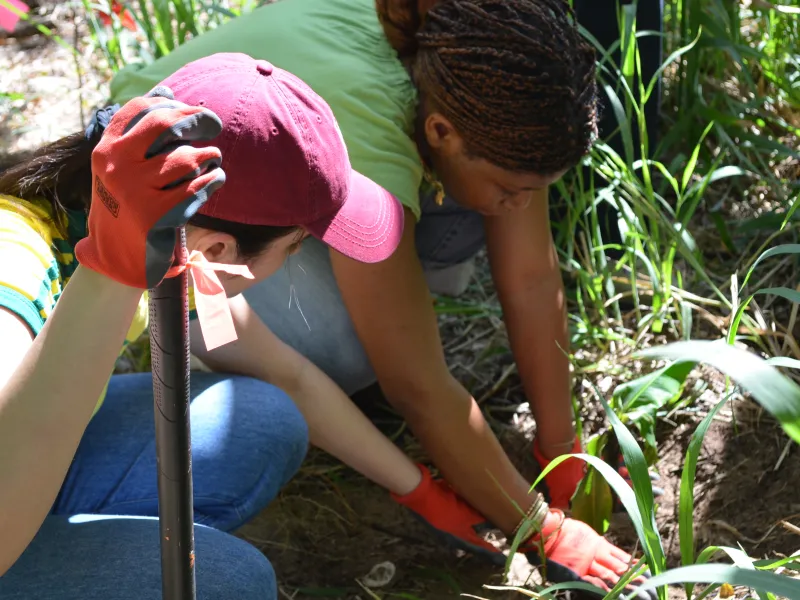 Uzochi Orji ‘29 and Maria Clara Souza Rocha ‘29 planted an insulin plant in a coastal forest.
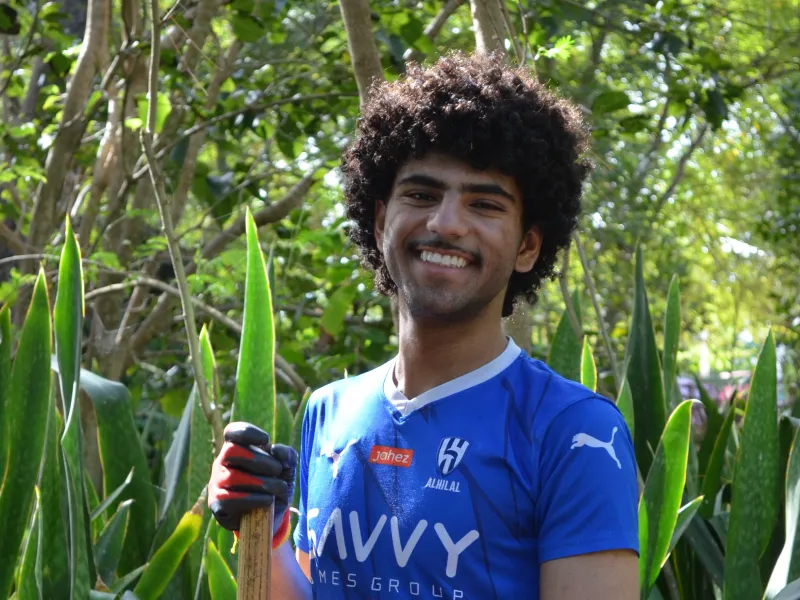 Husam Ramadan ‘29 posed while shoveling debris at a coastal forest worksite.
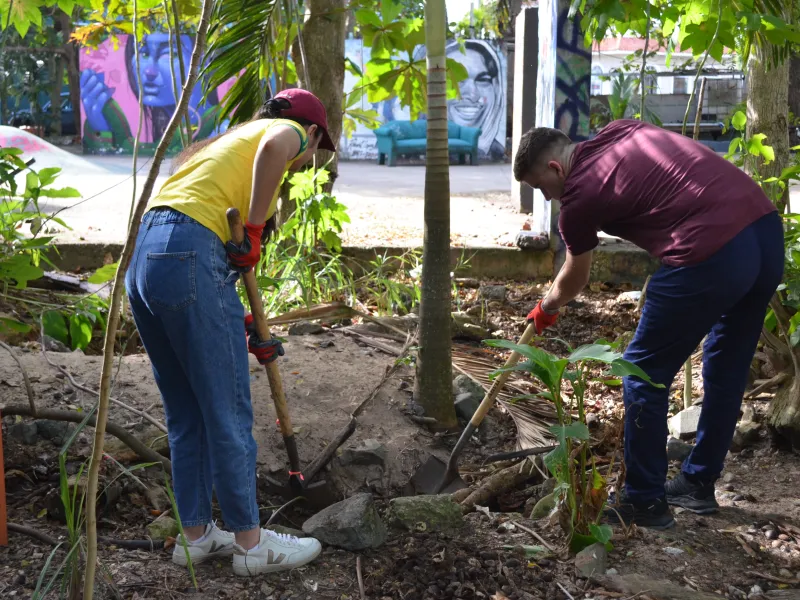 Maria Clara Souza Rocha ‘29 and Benjamin Mujkic ‘29 shoveled out debris from a coastal forest next to a skate park in Luquillo.
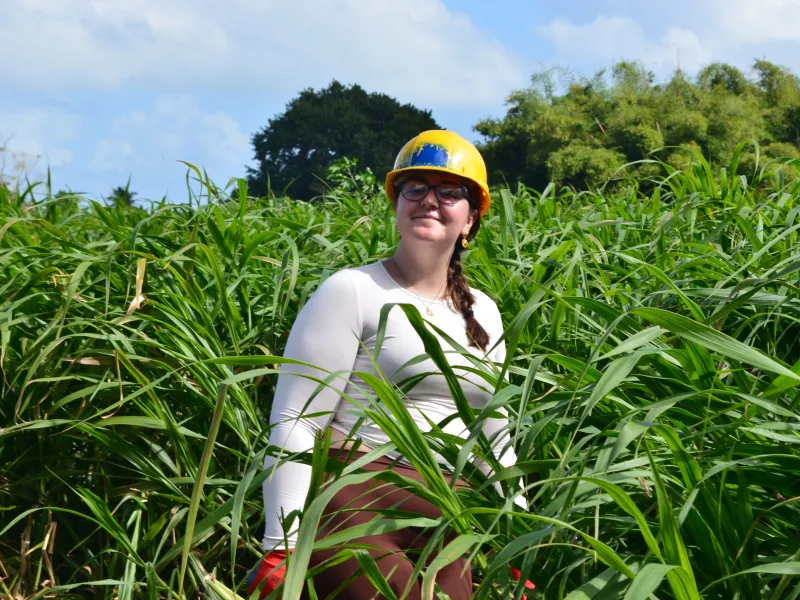 Marta Ramos Caimari '29 stood among the invasive species that she cleared with a machete to identify and tag native tree species.
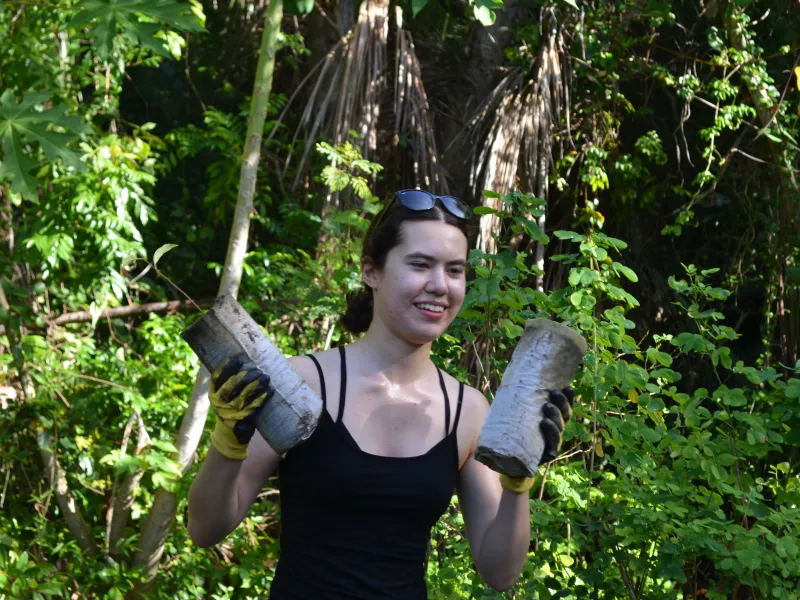 Lauren Huber ‘29 carried tree seedlings across the nursery.
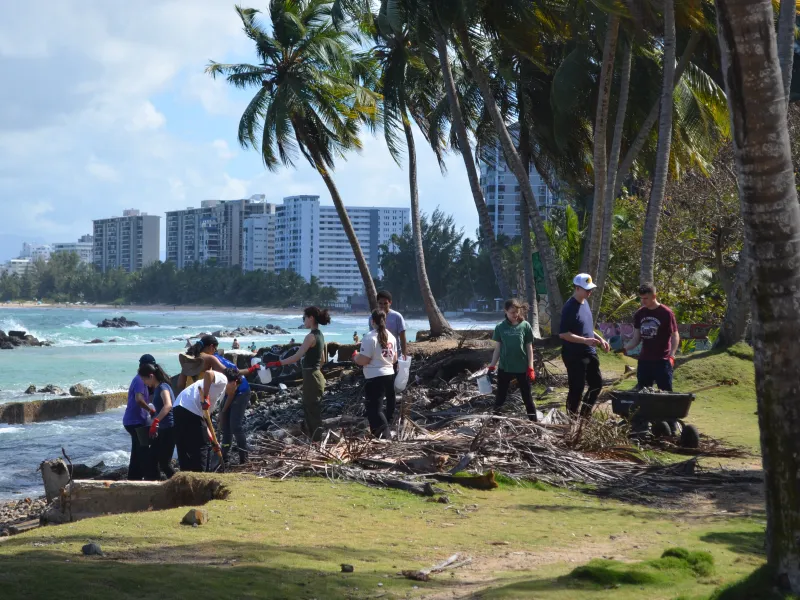 Students worked together to collect rocks from a nearby beach that would be used for restoring a coastal forest.
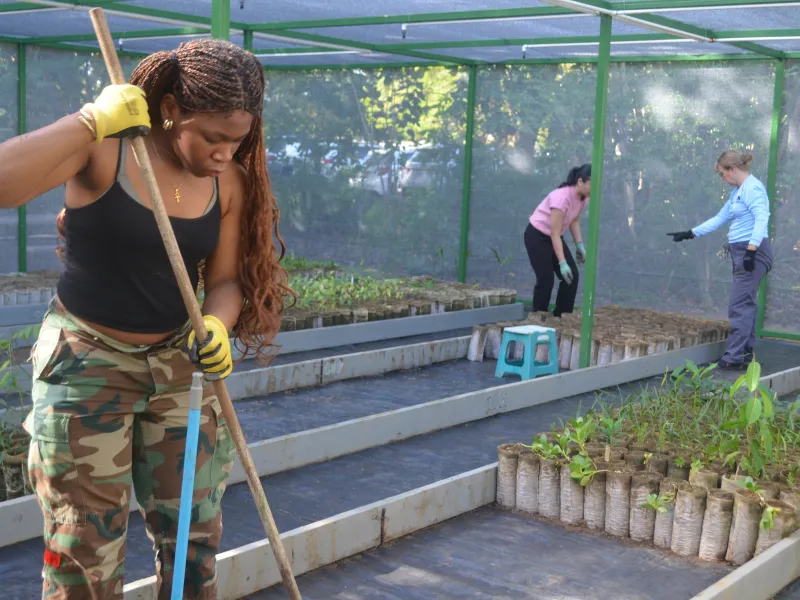 Uzochi Orji ‘29 cleaned up following the sorting of saplings, while Athena Siow ‘29 worked with a local volunteer to identify saplings to be sorted.
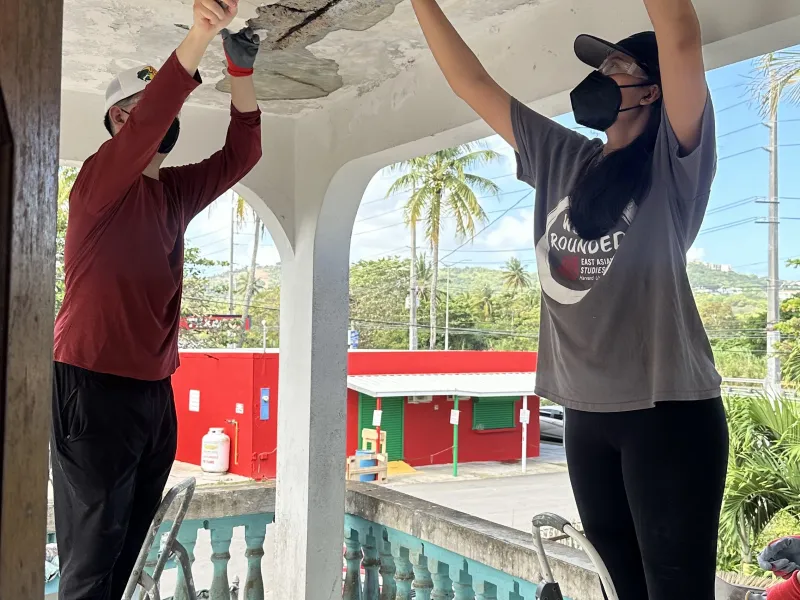 James Miller ‘29 and Diya Patel ‘29 prepared the ceiling of a local community member’s home for repair and resurfacing.
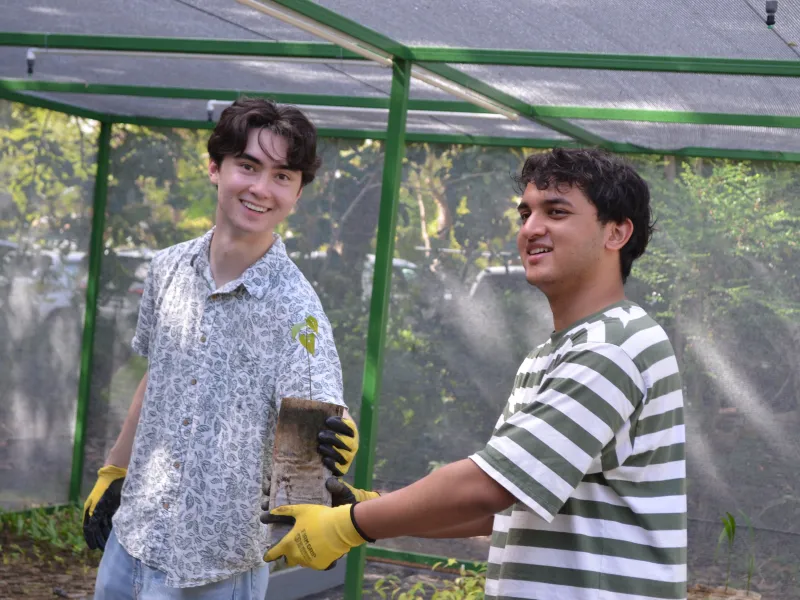 Ezra Rottman ‘29 and Bishwo Jeet ‘29 sorted through and passed along tree saplings to be moved to another stage of the process at the tree nursery.
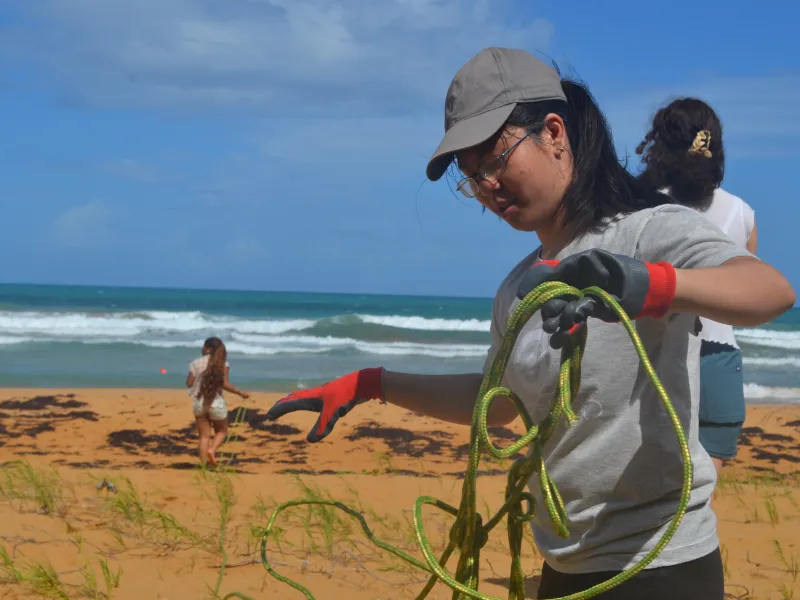 Athena Siow ‘29 prepared a rope to measure a transect of beach during a coastal monitoring project with NOAA.
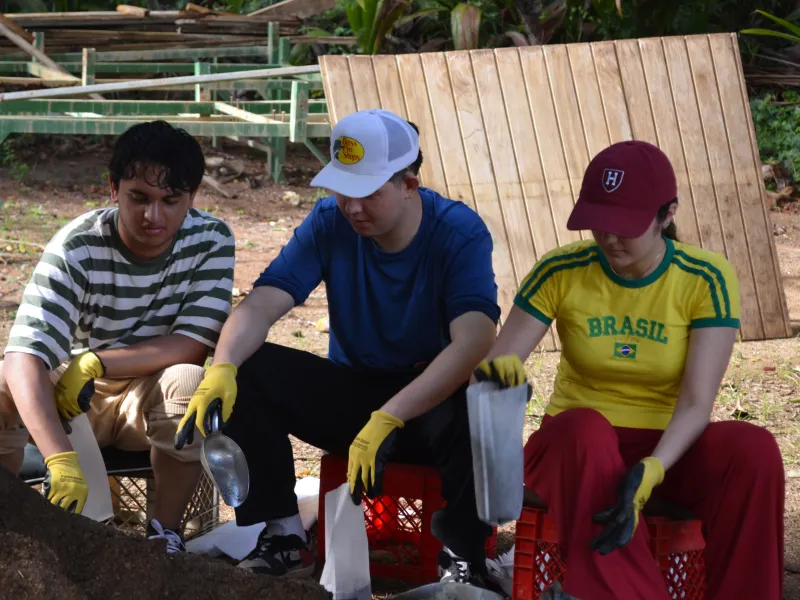 Bishwo Jeet ‘29, James Miller ‘29 and Maria Clara Souza Rocha ‘29 packed nursery bags that will be used to sprout tree seedlings.
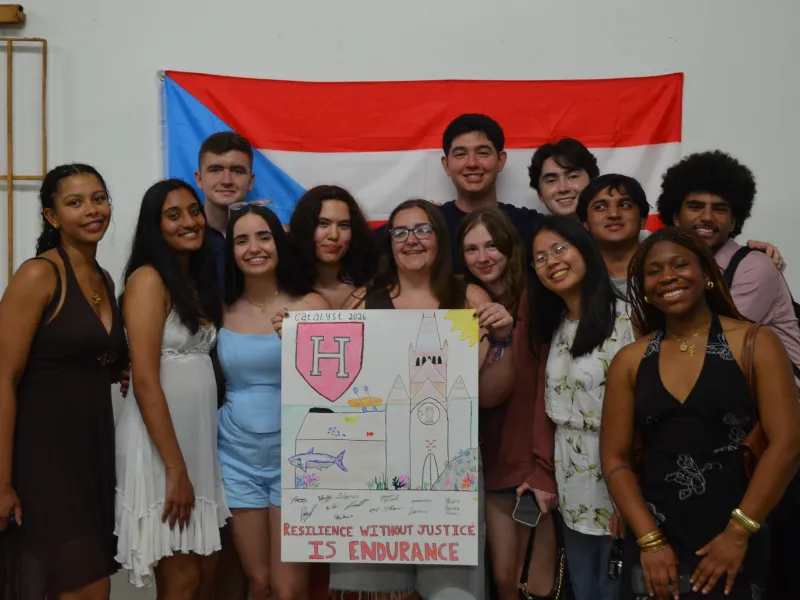 Catalyst students posed with a poster they designed to commemorate their week of service in Puerto Rico.
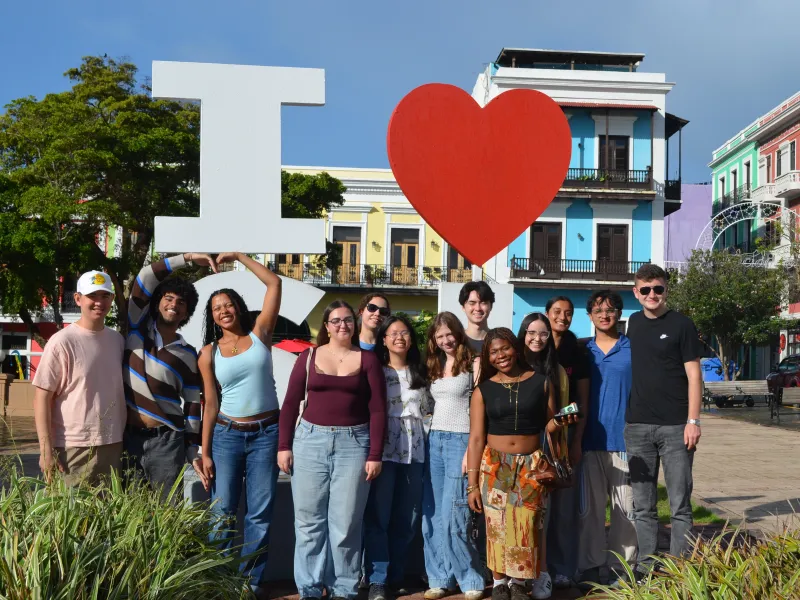 Catalyst students ended their week of service with a day of exploring Old San Juan.
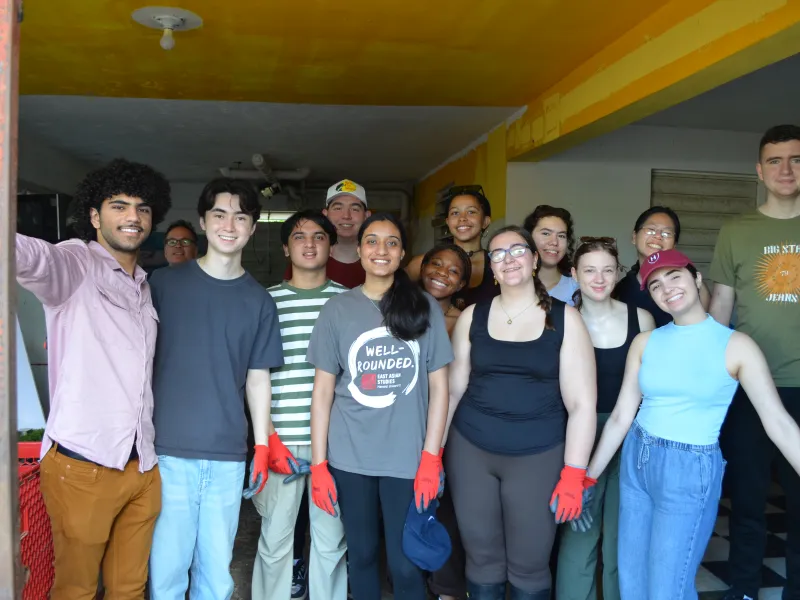 The Catalyst cohort posed in front of the house of a local community member following a day of house repair and restoration.
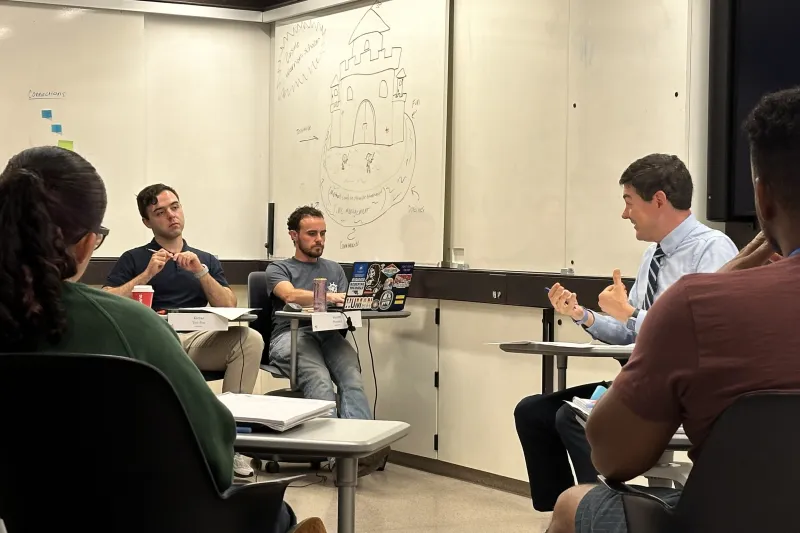
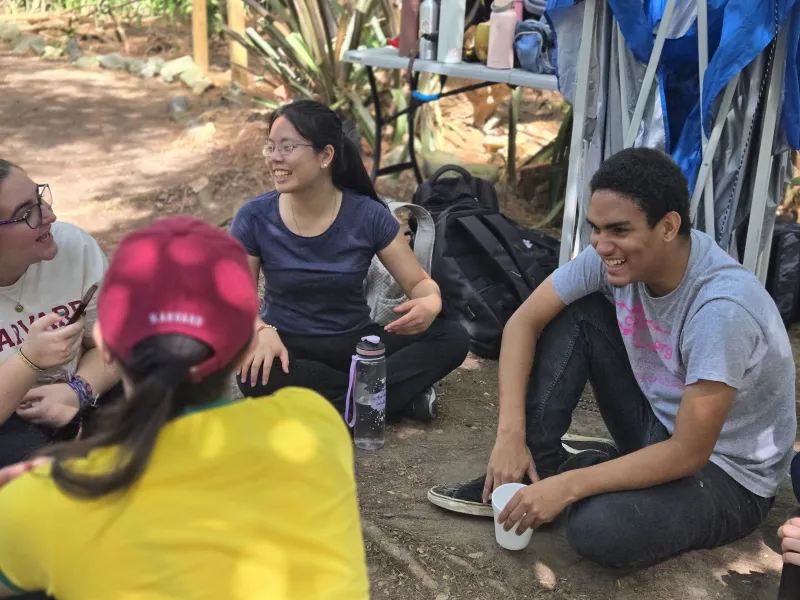 Members of the Catalyst cohort engaged in a group discussion with a local volunteer during a break from service activities.
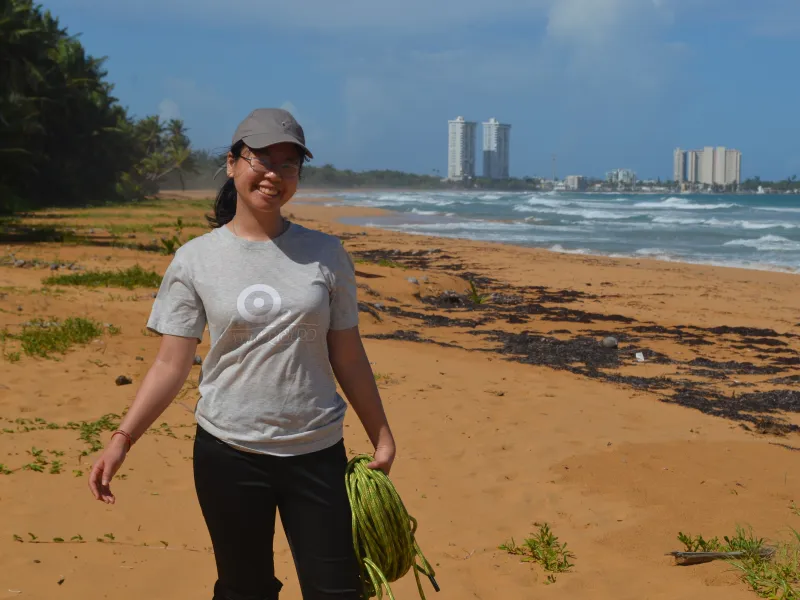 Athena Siow ‘29 posed on the beach during a marine debris monitoring project in collaboration with NOAA.
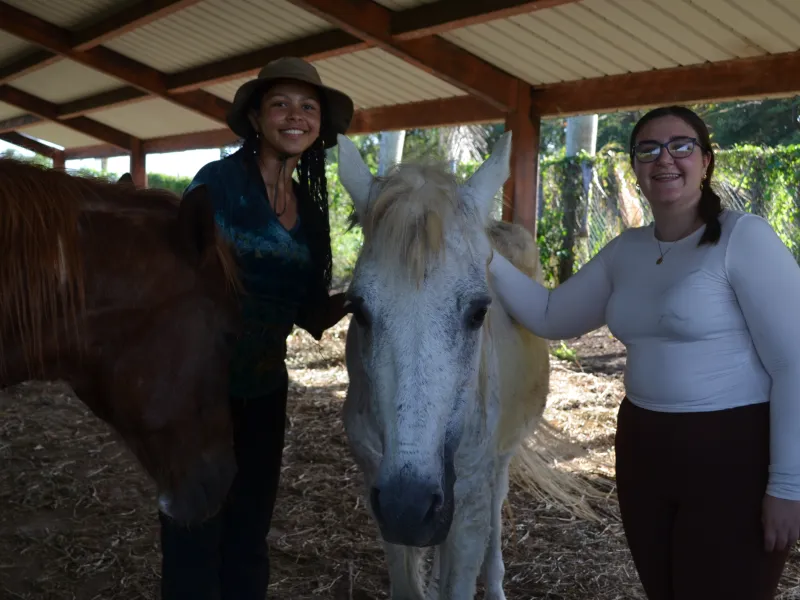 Tiffany Armour ‘29 and Marta Ramos Caimari '29 pet the horses on the equine therapy farm after a day of volunteering.