


As a Recruitment Ambassador for the Harvard Admissions Office, I get to speak with dozens of eager high school students about the dreams and apprehensions they carry into the college application process. Perhaps more than any other, one question gets asked time and time again:
How do I write a strong college application essay?
Since you clicked on this blog, I bet you’re wondering the same question too! I’m here to offer my best essay-writing advice, so you can dive into your next draft with a little more confidence. For broader application tips, check out this webpage.

First, what are college essays even for?
Maybe you’re thinking, “Kaitlyn, the application process has plenty of steps already!” If so, you are absolutely correct. Your grades, activities, test scores, and recommendation letters all help admissions officers understand your past achievements and contributions to your community.
However, your essays provide an important opportunity to tell your story in the ways that feel most meaningful to you. Admissions officers want to learn who you are as a person, what interests and values make you unique, and what qualities you might bring to their campus. You have significant freedom in writing your essays, and it is important to take them seriously to showcase your personality in your application.
What essays does Harvard require?
Harvard asks applicants to write two kinds of essays: the personal statement and the supplemental essays.
The personal statement is what you might imagine when you think of a college essay. In 650 words or less, you get to select one prompt and write a narrative about the core experiences, character traits, and overarching themes that define who you are. This allows you to share insights about your distinct perspective and motivations, especially as these relate to how you may show up on campus.
Harvard also requires five supplemental essays, capped at 150 words each. These prompts ask about specific traits and experiences the College values, including the ways you engage with disagreement and the contributions you hope to make to our campus community. While these essays may initially appear trivial due to their lower word count, each supplement is just as important as the personal statement. Be sure to allocate enough time to crafting each essay with due care and consideration, rather than allowing the supplements to become an afterthought.
You can find more information about the Harvard supplemental essays here, in addition to general information about the first-year application process here.
Now that you understand the purpose of college essays and the requirements specific to Harvard, I am ready to share my strongest recommendations with you!

1. Use your own voice
Your essays are one of your only chances to speak directly with the admissions committee. This means you want to write in your genuine, unique, everyday voice. If you try to impress Harvard by using complex vocabulary without substance, you will not only come across as insincere to readers, but you will also do yourself a disservice by failing to demonstrate your character.
A strong essay will go beyond regurgitating information from your transcript and activities list. Feel free to share anecdotes and reflections that exemplify the greatest lessons you have learned, the things that bring you joy or inspiration, and the dreams you have for your future. Remember that a real person will be reading your essay, and real people gravitate towards authenticity.
One rule of thumb says that if a nameless copy of your essay were to circulate your hometown, your friends, relatives, teachers, and community members should be able to identify your essay and return it to you. In short, be you.
2. Brainstorm, brainstorm, brainstorm
Since you have the flexibility to write about practically anything, it can be overwhelming to select a specific focus for your essay. I recommend taking 15 minutes to create a list of everything you might want colleges to know about you, and then narrowing that list to a handful of essential themes. For example, if I wanted a college to know I play the flute and write poetry, I might consolidate those activities under the theme of creativity, which I would aim to convey in my essay.
It is also essential to choose a topic that actually matters to you. Do you ever notice that it is easy to tell when a person is talking about something they truly care about, versus something they don’t? The same logic applies to your essay. You can write about a moment as small as cooking with your grandma, or a moment as big as winning the lottery, as long as you can clearly articulate why the moment was meaningful to you.
Two notes here. First, don’t be afraid to write about tough topics. Admissions officers welcome stories about challenges and, more importantly, how you have overcome them.
Second, remember that the personal statement is not your only space to speak about the unique obstacles and circumstances you may feel are relevant to your experience. You can also expand on these subjects in your five supplemental essays and the Additional Information section of the Common App. In other words, you do not have to choose the greatest challenge of your life as the highlight of your personal statement (although you can if you would like), and you can effectively communicate your lived experiences across the different application components.

3. Start writing, and write a lot
Writer’s block is a serious phenomenon. Unfortunately, the only way to overcome the anxieties that accompany a blank page is to fill it. This means you have to give yourself ample time to sit down and write (as in, not forcing yourself to complete your entire personal statement on the night it is due).
You might feel awkward writing your initial drafts, and you might hate the first hundred sentences you come up with, but the important point is that you are actively writing. Each discarded essay brings you one step closer to the essay you will love. Find an accountability buddy you trust, or set a goal to write one page every day, even if that page feels like gibberish. Eventually, a coherent essay will begin to take form.
When that happens, you must also give yourself ample time to revise and rewrite. Experiment with different versions of your essay to see what you like best. Consider how an admissions officer might read and interpret your essay. Play around with tone, figurative language, dialogue, and more. The writing process should feel messy, and you should walk away with a variety of drafts.
4. Ask for feedback
After throwing yourself into the writing and rewriting cycle for hours on end, it can be easy to get stuck in your own head. This is why it is important to ask others to read your essay and offer their feedback.
Select a few individuals who know you well and whose opinions you trust. These may include your English teacher, your best friend, or your soccer coach. Above all, these people must be able to gauge whether your essay accurately reflects your personality, and they must be comfortable sharing honest and constructive feedback with you.
That being said, be mindful about the number of people you ask to review your essay. Listening to too many external opinions can cloud your judgment and your voice. At the end of the day, your essay should still belong to you.
5. Give yourself grace
Writing college essays can be complicated, time-consuming, and stressful. When you feel overwhelmed, recognize that no masterpiece was developed overnight, and give yourself the grace to take breaks and maintain your needs. You can’t write a great essay if you are running on empty anyway.
Final thoughts
Thanks for reading to the end! I hope that integrating these tips into your practice will help you feel better prepared to tackle your college essays. I remember my own college application season feeling highly overwhelming, and I am proud of you for trusting the process as you continue to exert meaningful effort.
Harvard Recruitment Ambassadors like me are always happy to answer your questions and provide guidance along the way. You can reach us at AskAStudent@fas.harvard.edu or at our webpage. Additionally, our team recently put together this helpful video about writing a strong college essay, and we offer a thorough list of frequently asked questions you may be wondering about Harvard.
Keep up the great essay-writing work! You've got this!


 A photo of myself looking at the Zanzibari waters


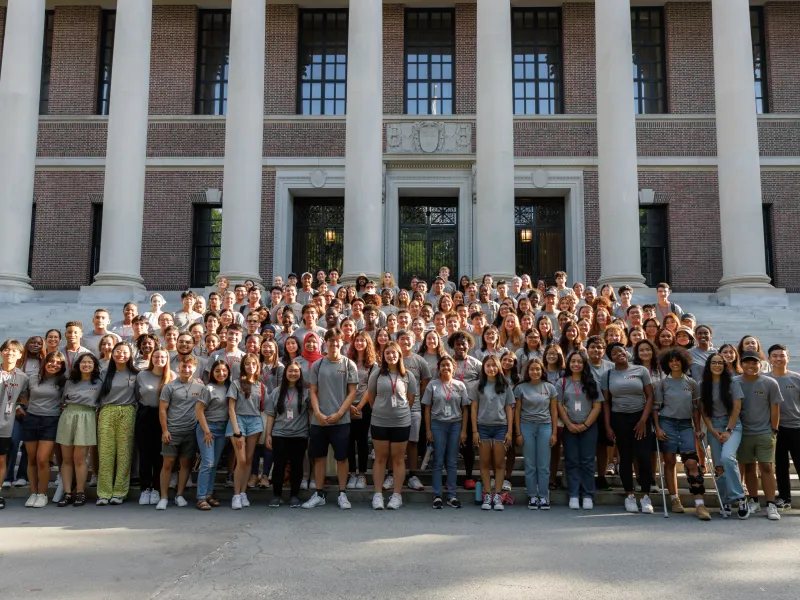
 I got to take photos with my thesis (or at least the first 25 pages of it) on the steps of Widener Library!
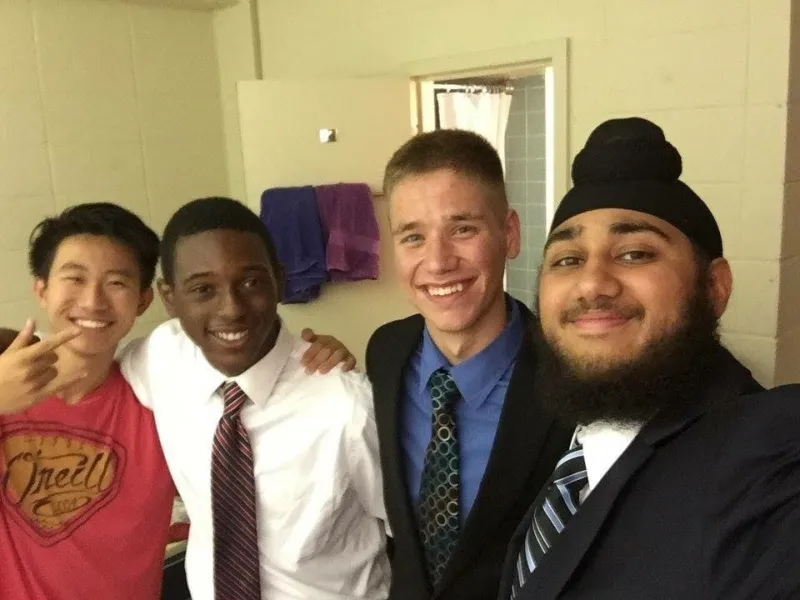 Here's Harpreet and I with our best friends back in high school!





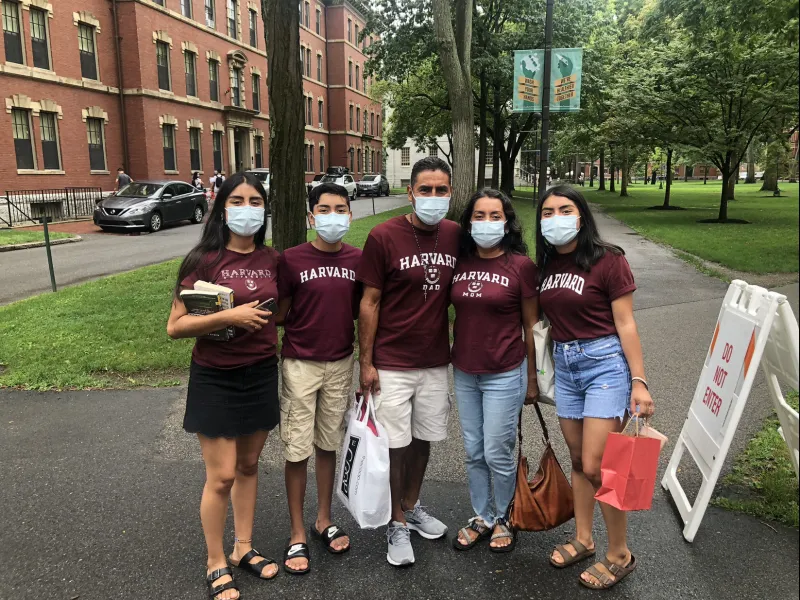 My family and I during my move in.

 A screenshot I took from my college admissions decision from Harvard.

 I miss doing reading for my English and creative writing classes on my Winthrop House dorm room!
 My friends and I love hanging out in the roof-top common room in Winthrop House!

 I make the most of my Zoom-ed reality by taking calls outside!


 I've gotten to make some incredible friendships during my time here, and these lovely people are some of my closest friends.




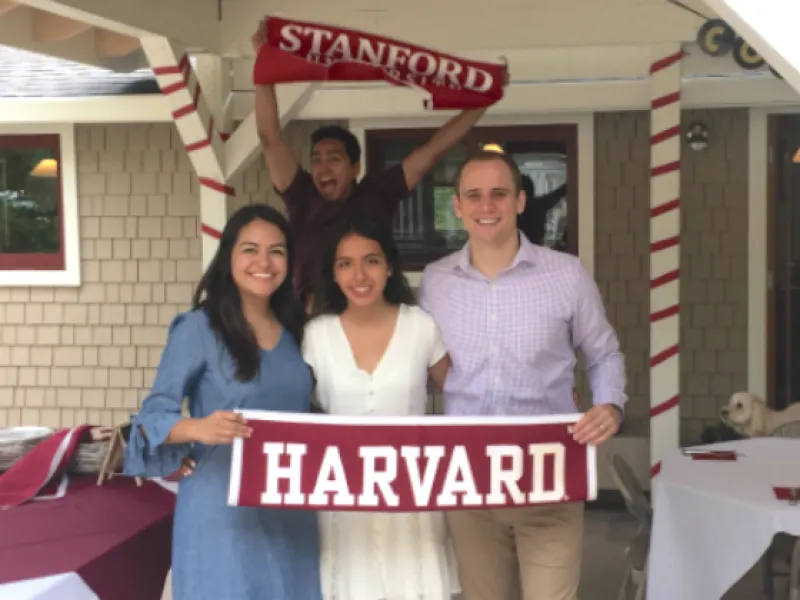
 Harvard Primus's President Brandon and I at our table at this year's activities fair!