
One of the first things you’re told when you matriculate to Harvard is, “Don’t be afraid to explore!"
Coming from a high school with a pretty set curriculum, I was excited for the opportunity Harvard’ presented to learn new things for the sake of learning, rather than same academic goal. I saw the potential to uncover a hidden academic interest, learn a new skill, or meet interesting scholars across disciplines. Thankfully, the curriculum at Harvard facilitates exploration well through its Divisional Distribution requirements. Here’s all the classes I’ve taken so far, and how each has shaped my educational
The Divisional Distribution Requirements
There are three divisional distribution requirements that undergraduates must complete in order to graduate: Arts and Humanities, Social Sciences, and Science and Engineering and Applied Science. As someone whose interests are solidly grounded in the social sciences, fulfilling these requirements pushed me to explore how scholarly learning took shape in other fields of study. I would like to think that each required class contributed to diversifying my perspective on a variety of topics, and I’ve even been able to implement a lot of the content in my concentration classes.
Arts and Humanities — EMR 154: Migration, Refugees, and Human Rights
To fulfill the Arts and Humanities requirement, I took a class within the Ethnicity, Migration, Rights secondary about refugees and migration across the world. The class left me with great insights about the nuances of migration policy and their impact on both migration patterns and outcomes for varying classes of migrants and refugees. The class was taught by Professor Jacqueline Bhabha, who has done extensive research on child migration and refugee protection. The class is also cross-registered with the Harvard Kennedy School and Harvard Law School, which meant my classmates also had extensive professional experience in a lot of the content areas the class discusses, like coverage of refugee issues in the news, refugee protection and advocacy efforts, and more. I worked on a group presentation about how refugees interact with education systems globally (spoiler alert: they very often are left unconsidered and underserved), and it even inspired me to pursue a thesis studying how migration impacts education policy in an American context.
Science and Engineering and Applied Science — SCRB 120: Biotech Ethics
I was most afraid of attempting to fulfill the Science and Engineering and Applied Science requirement. STEM-related content has never come easy to me, and I was afraid that there wouldn’t be a course available that would both teach me something new and be vaguely aligned with my interests. However, I took a chance on Biotech Ethics after a friend recommended it to me, and that was one of the best decisions I’ve made while at Harvard. The class looked at major philosophers, like Immanuel Kant and Aristotle, in the context of the biotech industry and the newest developments in it. We covered topics like procreative beneficence, the production of in vitro meat, and human challenge trials. The class pushed me to reconsider philosophy as a relevant medium for assessing the modern world and helped me see science as more than just lab work and formulas. I’ve since recommended the class to every friend looking for an interesting class to fulfill this requirement, and also recommend the class as a great opportunity to take part of interesting conversations with a diverse community of students.
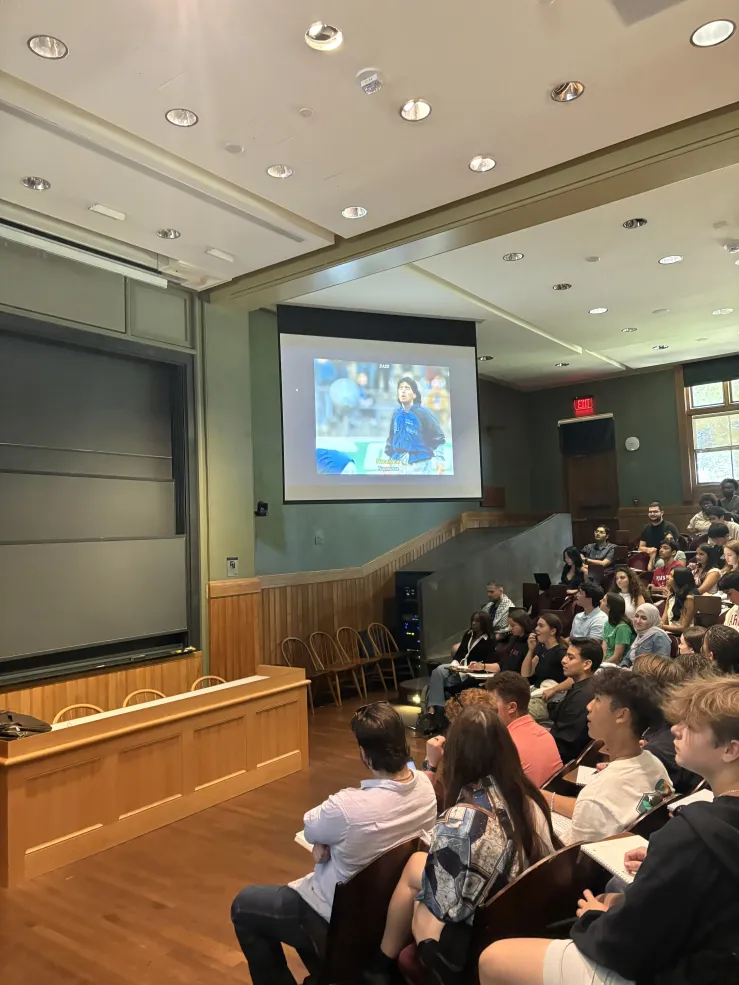
Social Sciences — SOCIOL 1203: Conspiracy Culture
The Social Sciences requirement was the easiest requirement to fulfill, as it’s the field I have the most experience in. However, I didn’t want to waste any opportunity to explore a concentration that I’ve never taken a class in. I’m also interested in how political belief and participation is shaped, especially in an era in which conspiracy theories are a significant consideration for many voting-age Americans. So, I enrolled in Conspiracy Culture in the Sociology department. The class explored how conspiracy beliefs can be studied as part of a larger conspiracy culture, in which conspiracy theories and beliefs help people create meaning in the lives and the world around them. We covered many modern, popular conspiracy theories, such as QAnon and Pizzagate. I’ve taken many of the insights from that class into other government classes, and I continue to find that the course has lots of overlap with my current work.
Course exploration has been an extremely valuable part of my education here at Harvard. It seemed daunting at first, but taking a chance on myself even when I wasn’t sure I would thrive easily has been an especially rewarding experience.
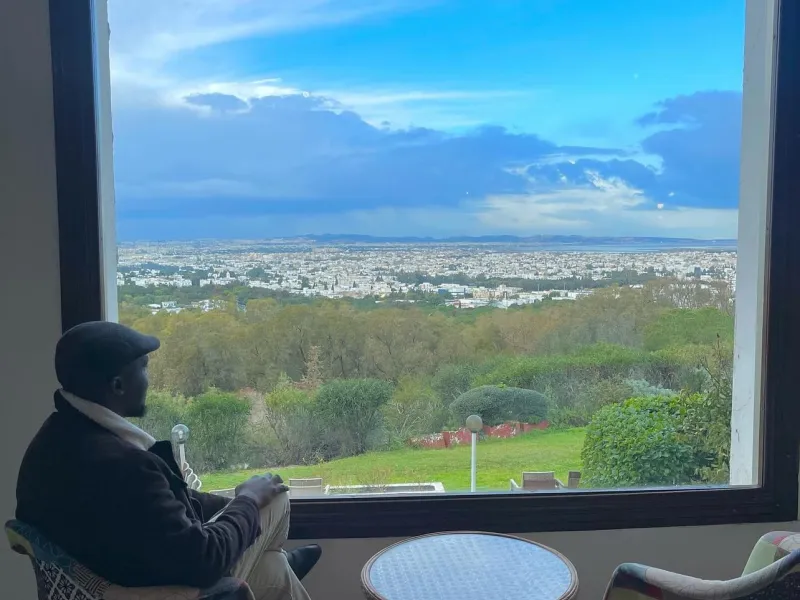 View from the hotel in Sidi Bou Said, Tunis
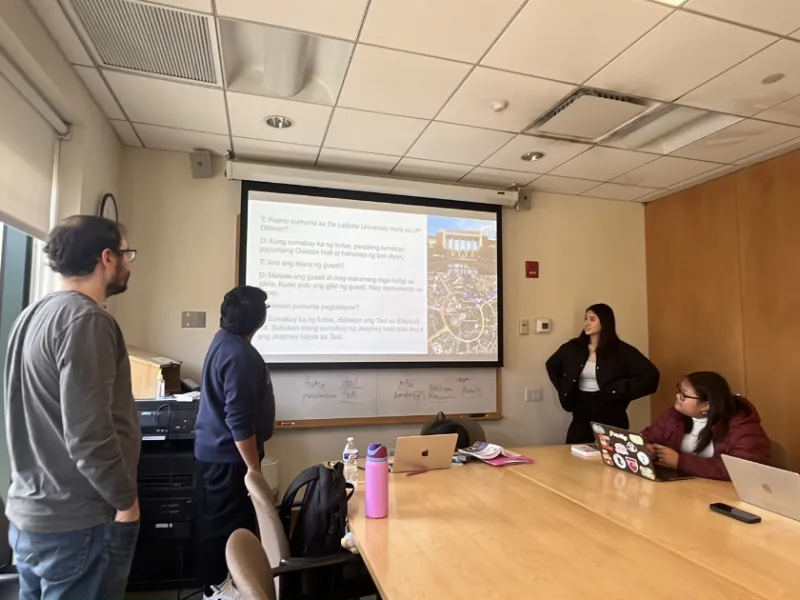 Intermediate Filipino Class

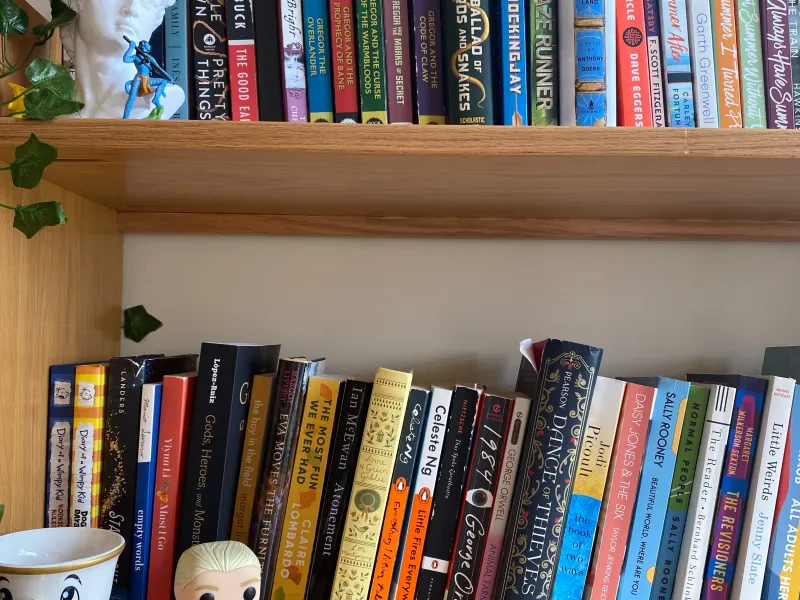 My bookshelf in my dorm!