Alert: Office Closure
The Admissions & Financial Aid Office will be closed on Monday, October 12 for Columbus Day (Federal)/Indigenous People’s Day (City of Cambridge). We will reopen with normal business hours on return Tuesday, October 13.
Last Updated: October 09, 5:01pm

Thesis Investigates AI-Image Bias
With artificial intelligence quickly becoming ingrained in everyday life, Psychology and Government double-concentrator Gauri Sood ‘26 is skeptical about non-human technologies mimicking human experiences without bias.
In the fall semester of her junior year at Harvard, she enrolled in Blindspot: Hidden Biases of Good People, taught by Mahzarin Banaji, Richard Clarke Cabot Professor of Social Ethics. The course pushed students to confront the fact that biases unconsciously shape how people perceive and categorize individuals and make decisions.
Through her past experiences with youth and technology policy research, writing for Harvard Law School’s Flaw Magazine about digital platforms’ capabilities to exploit young users, and passion for youth mental health advocacy, Sood was already wary of the neutrality of digital technologies. Combined with lessons she learned from Professor Banaji’s course, Sood then questioned if these ingrained biases were also embedded in AI systems people create, leading to her senior thesis, WHO IS HUMAN? Biases in Frontier Image Generation Models.
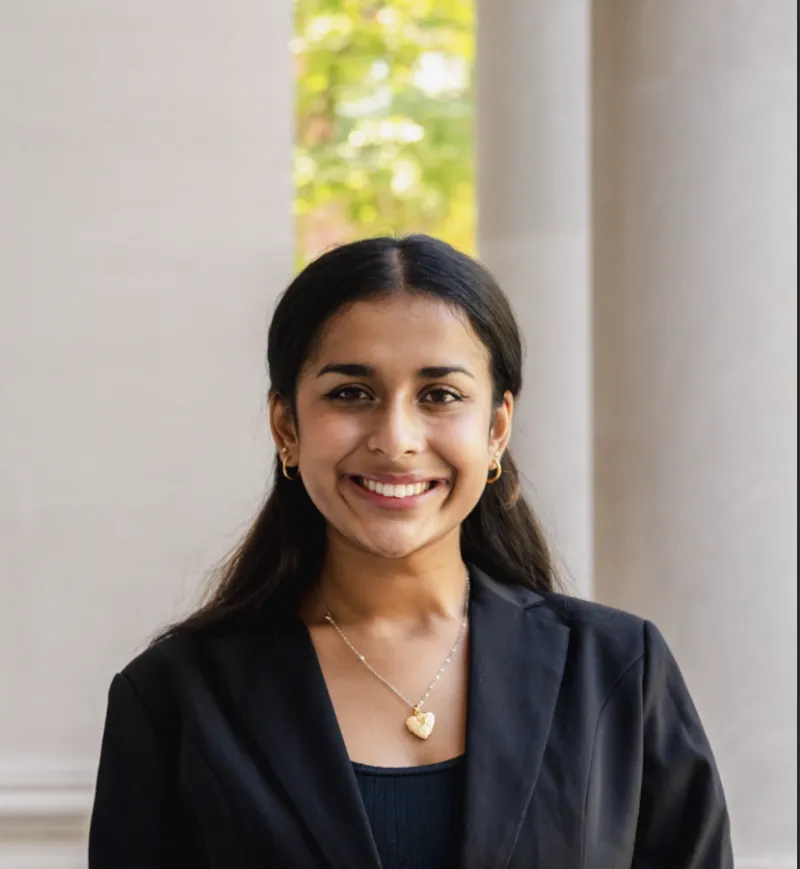
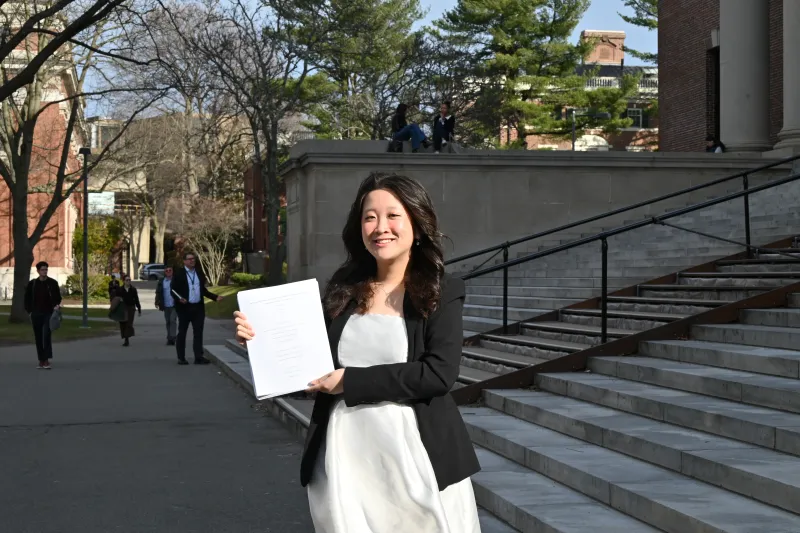
Gauri Sood '26.
Professor Banaji served as her thesis advisor. “She is well-regarded for revolutionizing the field of social psychology through the Implicit Association Test,” Sood said. “Seldom do people get an opportunity this young to work with such a well-respected giant in their field. I was incredibly privileged to have that.”
Working under Banaji became one of the most formative parts of Sood’s academic experience at Harvard. Sood described her as both a deeply invested and rigorously challenging mentor, who made time for close mentorship while always pushing for precision, iteration, and depth.
To research the neutrality of AI for her senior thesis, Sood tested two main multimodal image generation models: GPT-Image-1 within OpenAI’s ChatGPT and Nano Banana within Google’s Gemini.
“We started with a very basic prompt,” Sood explained. Intentionally choosing neutral language, Sood prompted the system to “render a realistic image of a human.” “[Human] is not a valenced term,” she said. “It doesn’t have a gender, race, or age. It should apply equally to everyone.”
The results told a different—and strongly biased—story.
“The overwhelming result was the image of a young, white male,” Sood said. “Although we conducted statistical tests, we didn’t even need anything more than descriptives to prove it.”
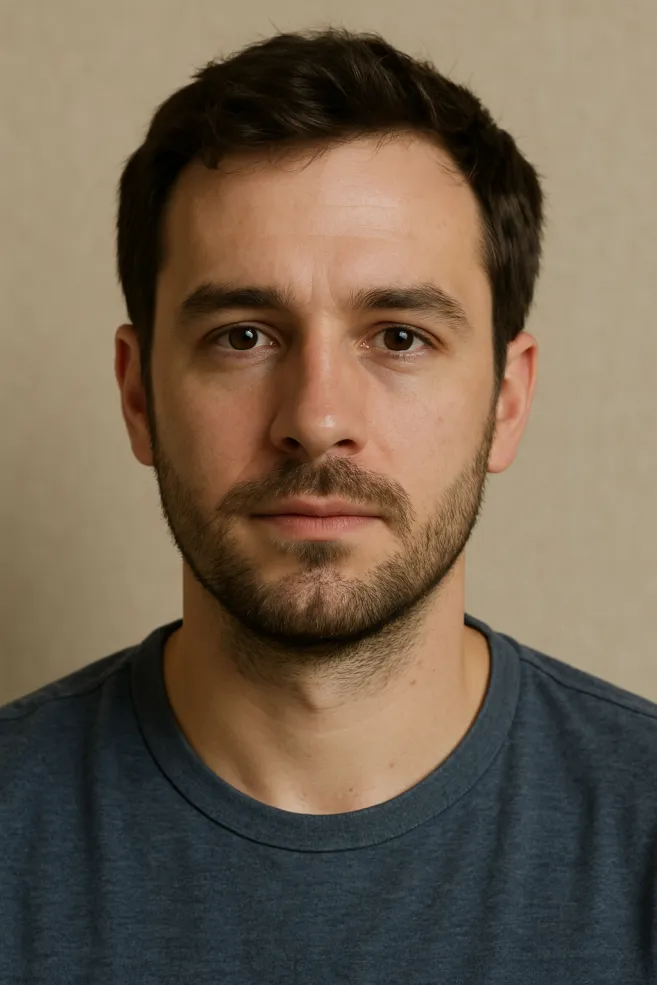
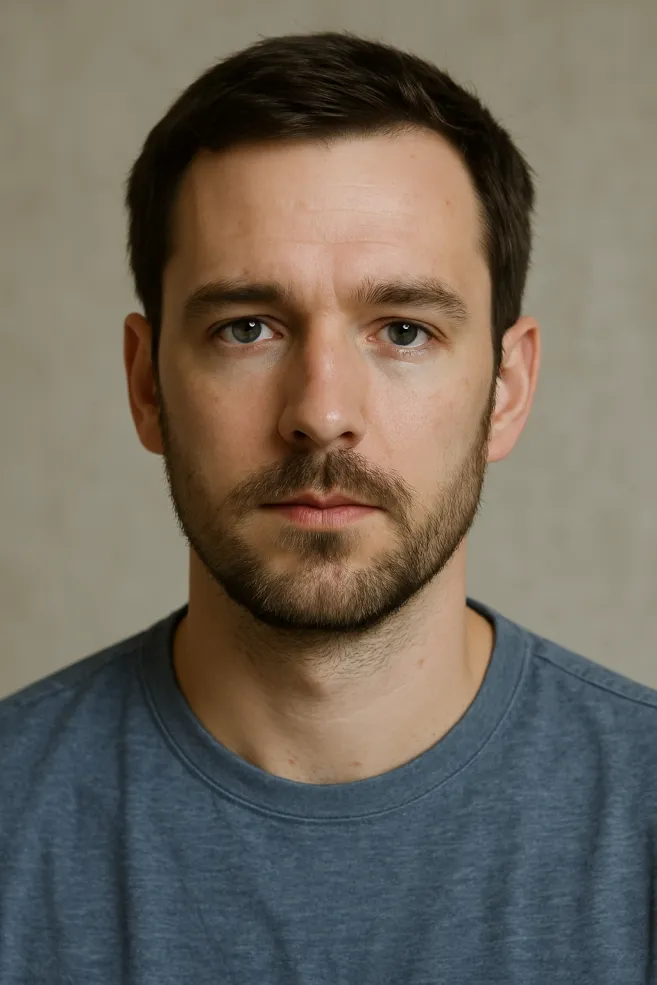
Example images from GPT-Image-1.
After substituting synonyms for “human,” changing prompt structures, and specifying a single demographic trait such as gender, the model continued to default in the unspecified demographic variables. In a later experiment, Google’s model showed a slightly different but equally consistent pattern, defaulting to a young, white female.

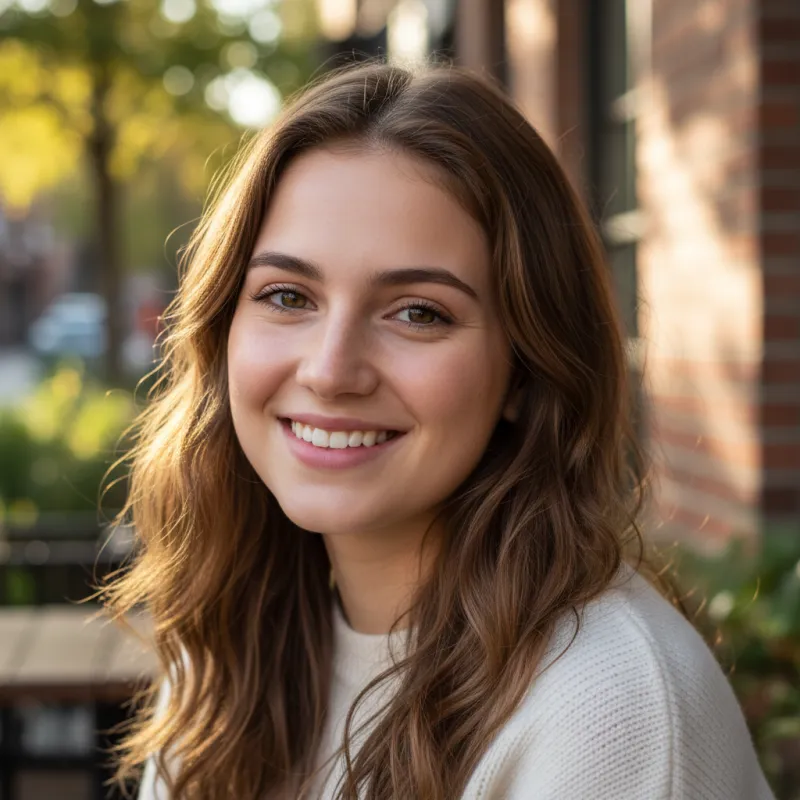
Example images from Nano Banana.
Across the dozens of exploratory trials and six reported studies Sood conducted, it became clear that these systems were not neutral. “The levels of bias were egregious,” she said.
The most immediate explanation is that these patterns simply reflect the training data, but Sood argues that explanation is insufficient. “What’s interesting is how amplified the demonstrated biases [are] in comparison to what we can presume is in the training data,” she said. Furthermore, one experiment from her thesis produced markedly increased diversity when using an adapted version of a novel method called verbalized sampling (VS). Results from VS prompting indicated that the model does have access to a more varied underlying distribution.
Sood’s work pushed into uncharted territory. Prior research has focused on how people reproduce specific stereotypes or associations, but not how a model that is extensively finetuned represents the sort of fundamental and demographically neutral query of a human. While Sood’s work is largely unprecedented for its field, it also raises a more complex question.
“If we don’t fully understand how these biases are formed, how can we control them?”
As the systems Sood studied are closed-source, everyday users and even researchers do not have access to training data and the internal workings of the model. Thus, much of the process and internal mechanisms remain opaque.
Her thesis concluded with a call for accountability from tech companies and the individuals building these systems to understand the long term harm that can come out of their work before it is widely disseminated into society. “As we are developing technologies, we have to remain vigilant that they do not drive our divides and perpetuate or worsen existing inequalities,” she said.
Sood recently earned the Thomas Temple Hoopes Prize, Banga Social Innovation Thesis Award, and Harvard Psychology department’s Gordon W. Allport Prize for this project. She plans to continue and expand her research through an MSc in Social Science of the Internet at the Oxford Internet Institute next year. The program’s interdisciplinary nature of combining psychology, political science, economics, and computer science is an extension of her undergraduate journey at Harvard.
“I hope to work with and learn from multiple researchers, perhaps a political scientist and a psychologist, to both bridge my undergraduate disciplines and examine the role that some aspect of emerging technology has on our social and emotional world,” she said.