


One of the first things I learned at Harvard is that it's a lot closer to Camp Half-Blood than I ever expected—just without the Helm of Darkness, pens that turn into swords, or Yankees caps that make you invisible.
But, it has almost everything else.
I've loved Percy Jackson ever since I was a kid, so when I saw a first-year seminar called Creature Feature: Fantastic Animals in Myth and History, I knew I had to take it. Throughout the semester, we explored mythical creatures and monsters from cultures and religions around the world. We met legendary Greek figures like Python, as well as famous horses like Xanthos and Balios, while also examining myths far beyond ancient Greece.
One of the highlights of the course was a field trip to the Harvard Art Museums.
The Harvard Art Museums are one of Harvard's greatest resources, whether you're looking to admire incredible artwork, dive into history, or simply spend an afternoon exploring something new. Better yet, admission is free for both Harvard students and the public, making the museums one of the University's most accessible cultural spaces.
During our visit, we had the rare opportunity to examine original artifacts from Japan, including newspapers and comics that had been brought out of the archives specifically for our class. Holding history that isn’t on display is truly an unforgettable experience.
As exciting as that was, I was even more thrilled to discover the museum's incredible collection of items from Ancient Greece. Walking through the galleries felt like stepping into the pages of Percy Jackson. Everywhere I looked were scenes, heroes, gods, monsters, and myths that I had first encountered through Rick Riordan's books.
So, let's take a look at some of my favorite pieces.
Drachma
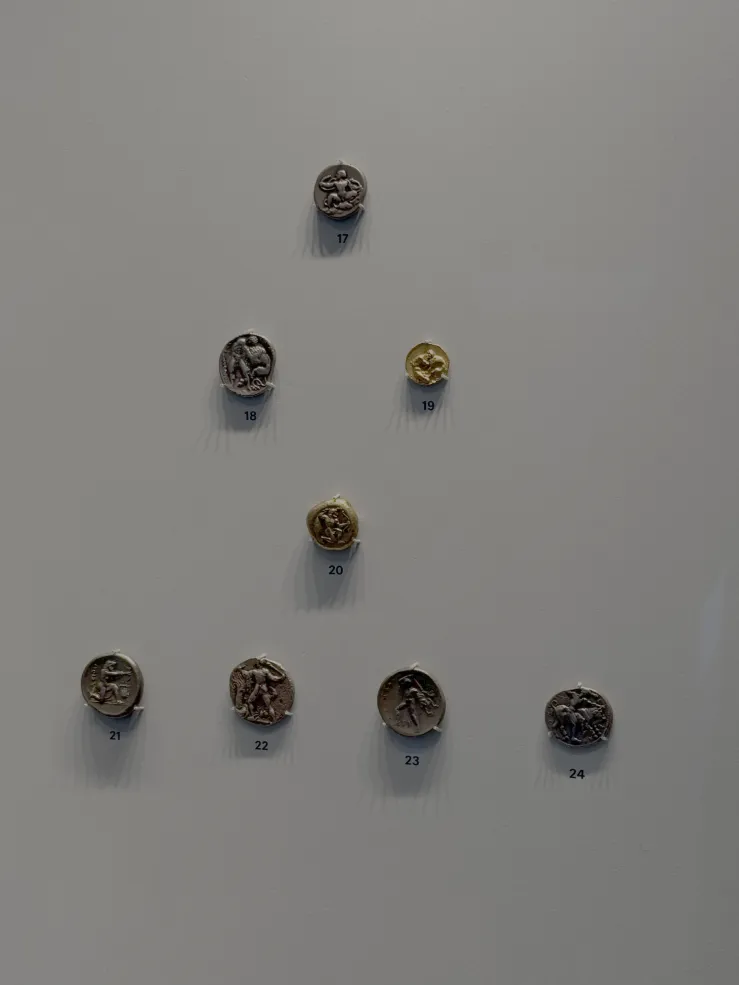
Drachma
Various regional Drachma coins
In The Lightning Thief, readers are introduced to the drachma, the currency of the ancient Greek world. Chiron, the wise centaur who mentors Percy and the other demigods, explains that there are two kinds: silver drachmas, which were used by mortals, and golden drachmas, which were reserved for the gods. Throughout the series, drachmas are used to pay for everything from transportation to Iris Messages, the mythological equivalent of a divine FaceTime call.
What the books don't really explore is how diverse these coins actually were. In the ancient Greek world, each city-state minted its own drachmas, often decorating them with images of gods, legendary heroes, mythical creatures, and symbols unique to their city. Seeing authentic Greek coins at the Harvard Art Museums was a reminder that this small detail from Percy Jackson has deep historical roots.
Minotaur
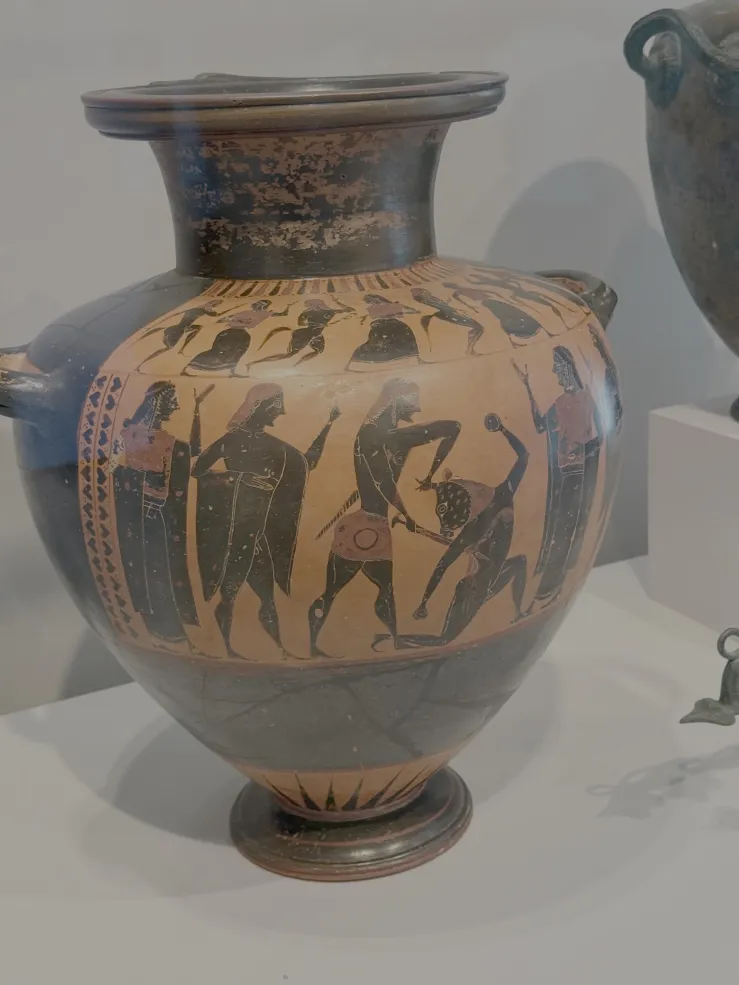
Vase with Minotaur
Vase depicting Theseus slaying the Minotaur
One of the most known creatures in Greek Mythology is the Minotaur which is described as a man with the head of a bull. In the original myth, the Minotaur lived within King Minos's Labyrinth until the Athenian hero Theseus entered the maze and slew the monster.
In the Percy Jackson series, however, monsters never stay gone for long. The Minotaur returns and becomes the very first monster Percy Jackson defeats, attacking him just before he reaches the safety of Camp Half-Blood.
The Harvard Art Museums even house an ancient Greek vase depicting Theseus' legendary battle with the Minotaur. Scenes like this were common on Greek pottery, which often served as a visual record of famous myths and heroic exploits. Standing in front of the vase felt like looking at an illustration pulled straight from the pages of Percy Jackson- except it was created over two thousand years ago.
Hercules and the Nemean Lion
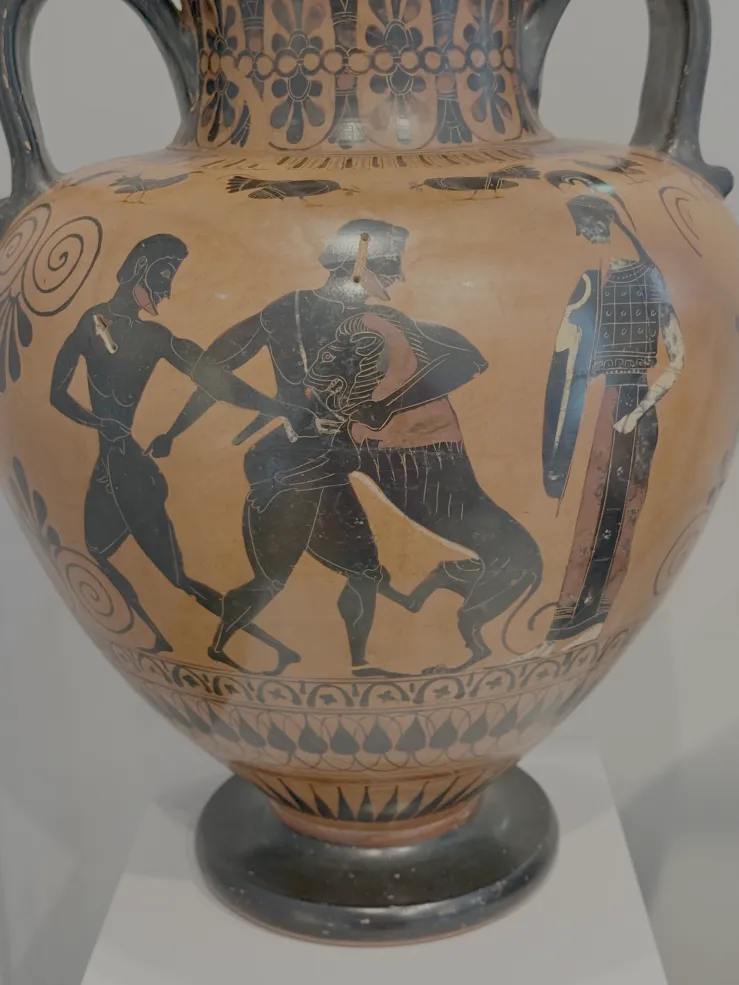
Hercules slaying the Nemean Lion
A vase depicting the epic myth
No figure in Greek mythology is more famous than Hercules, whose legendary Twelve Labors have inspired stories for centuries. Although Hercules never physically appears in the Percy Jackson series, his legacy is felt throughout the books. Demigods constantly compare themselves to his feats, and his name has become the gold standard for heroic accomplishment.
One of Hercules' most famous labors was slaying the Nemean Lion, an enormous lion with an impenetrable fur that had terrorized the region of Nemea. The Harvard Art Museums preserve this legendary moment on an ancient Greek vase, offering a glimpse into how the Greeks themselves celebrated one of their greatest heroes.
The Nemean Lion also makes its way into the Percy Jackson universe. Percy catches a brief glimpse of the beast in The Lightning Thief before eventually confronting it in The Titan's Curse. Seeing the same creature represented in artwork that predates the novels by over two millennia was a surreal reminder of how enduring these myths truly are.
While there were countless things that drew me to Harvard, the generous financial aid, the Government department, and the incredible opportunities available to students, I never expected one of my favorite parts of campus to be a real-life Percy Jackson crossover. Walking through the Harvard Art Museums felt like stepping into Camp Half-Blood, where the myths I'd grown up reading about suddenly became tangible pieces of history. It was a reminder that some of the best parts of Harvard aren't just found in classrooms. Sometimes they're hidden in the stories waiting to be rediscovered.



 My view from atop a hill near a mining camp.

 Me giving out homemade awards to my MFP students!